Static vs Vibratory Roller: The 5-Minute Job-Site Decision
Static (dead-weight) compaction wins on thin asphalt lifts, near structures, bridges and buried utilities, and for a smooth, mark-free finish. Vibratory compaction wins on granular soil, aggregate base and thicker asphalt lifts where density is the priority. The material, the lift and the site decide, not habit.

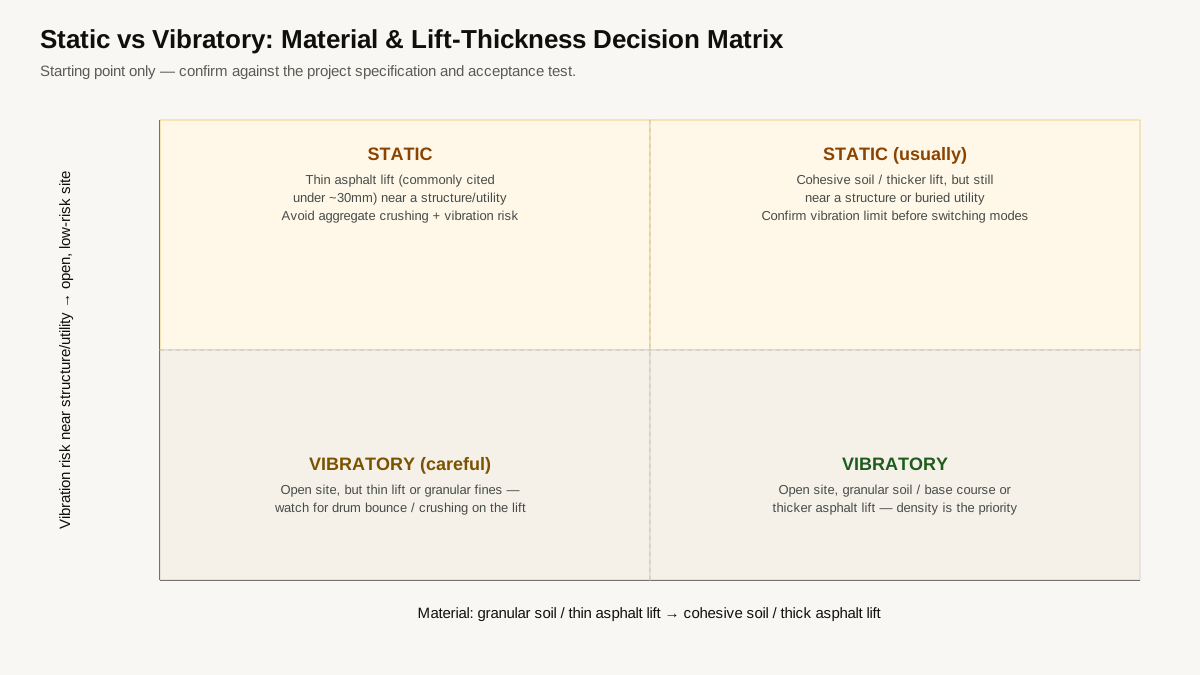
Direct answer: choose static (dead-weight) compaction first when the lift is thin (asphalt guidance commonly cites roughly 30 mm / 1.2 in as the threshold), when the work sits near buildings, bridges, buried utilities or vibration-sensitive equipment, or when a smooth, non-crushed finish matters more than maximum density. Choose vibratory compaction first for granular soil, aggregate base, thicker asphalt lifts and any job where density is the priority and there is room to vibrate safely. Most TerraCub vibratory rollers can also run in static mode, so on many jobs the real decision is which mode to select on the same machine for each pass and each material, not which machine to buy. Always confirm drum type, amplitude/frequency, actual (not nominal) lift thickness and the project's own acceptance test before compacting; there is no universal number that fits every job.
The two mechanisms, in plain terms
A static roller compacts using only its own weight and drum contact pressure. Static rollers apply a high static linear load, and the weight of the roller and the width of the drum are the critical variables; the operator's speed and the drum's contact pressure create the shearing action that presses material down.
A vibratory roller adds a second force on top of that static weight: a rotating eccentric weight inside the drum creates dynamic loading. That vibration reduces internal friction and aggregate interlock during compaction, letting particles rearrange into a denser final position than static weight alone can achieve. Most vibratory rollers, including TerraCub's own range, can also run with vibration switched off, which turns the same machine into a static roller for that pass — there is generally little benefit to running a vibratory roller in static mode on ordinary soil or base material, since the smooth-drum vibratory design is already built around the dynamic mode being the main compaction path.
Frequency (vibrations per minute) and amplitude (drum throw distance) are the two controllable variables on a vibratory roller. In general, low frequency combined with high amplitude suits cohesive material or thicker lifts, while high frequency combined with low amplitude suits granular material or thinner lifts. A machine specified around roughly 75 Hz frequency and a 0.5 mm nominal amplitude, for example, sits toward the higher-frequency, lower-amplitude end of that range — a starting point to confirm against the material and lift, not a fixed setting for every job.
For the meaning and reporting basis of those specifications, understand frequency and nominal amplitude specifications.
Match the mechanism to the material
Soil and aggregate suitability depends on how much cohesive (clay/silt) content the material has, not on drum count or operator format.
| Material | Typical starting mechanism | Why | Confirm before compacting |
|---|---|---|---|
| Sand, gravel and other granular soils | Vibratory, smooth drum | Vibration rearranges loose granular particles and removes voids trapped in the loose material | Moisture content, lift thickness, target density/relative compaction |
| Mixed soils with some cohesive content | Vibratory, smooth drum | Smooth-drum vibratory rollers are commonly used on materials with up to roughly 10% cohesive content | Whether the specification allows smooth-drum vibratory or requires a padfoot/sheepsfoot pattern |
| Clay, silt and other plastic/cohesive soils | Static (sheepsfoot/padfoot) or padfoot vibratory | A sheepsfoot roller is most effective on plastic soils like clay or silt and always runs in static mode, using foot penetration rather than surface vibration; padfoot vibratory can add kneading action up to roughly 50% cohesive content | Foot penetration depth, pass count and whether the layer needs scarifying between lifts |
| Asphalt base/binder course, thicker lift | Vibratory | Thicker asphalt lifts tolerate vibration and benefit from the added density it produces | Mix temperature window, target density and the paver's compaction pattern |
| Asphalt surface/finish course, thin lift | Static | See the lift-thickness section below | Actual compacted lift thickness, not the nominal design thickness |
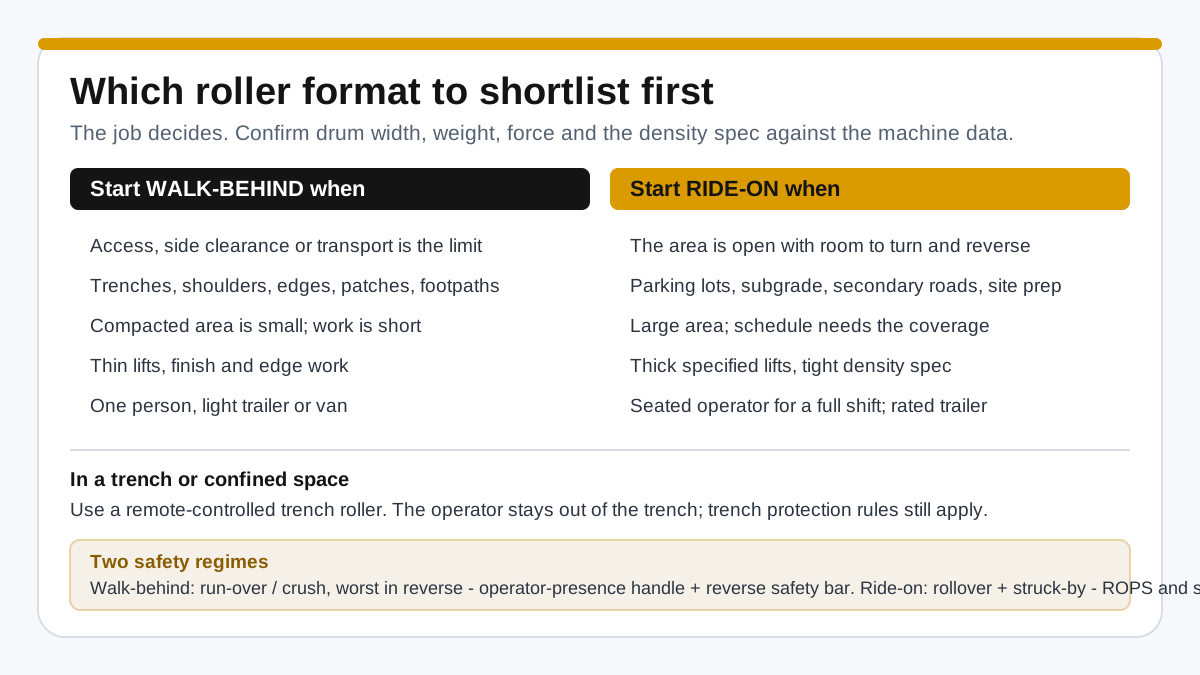
Reject the drum/seat shortcut: the single-drum-vs-double-drum decision is about layout and finish, and the walk-behind-vs-ride-on decision is about access and productivity. Static vs vibratory is a third, separate decision about how compactive force is generated, and it applies to single-drum, double-drum, walk-behind and ride-on rollers alike.
Asphalt lift thickness: the aggregate-crushing risk on thin lifts
Lift thickness is the clearest hard boundary between the two mechanisms on asphalt work. Industry compaction guidance gives frequency and amplitude ranges of roughly 1,600–3,600 vibrations per minute and 0.25–1.02 mm respectively, and ties the mode choice directly to lift thickness:
- Thin lifts (commonly cited under roughly 30 mm / 1.2 in): operate in static mode. Under vibratory mode, the drum can begin to bounce on a thin mat, which can cause the asphalt to shove and become less dense instead of more dense — and some of the aggregate in the mix may be crushed by the repeated impact.
- Lifts in the roughly 30–65 mm range and thicker lifts: high frequency combined with low amplitude is a common starting setting, subject to the mix and the paver's rolling pattern.
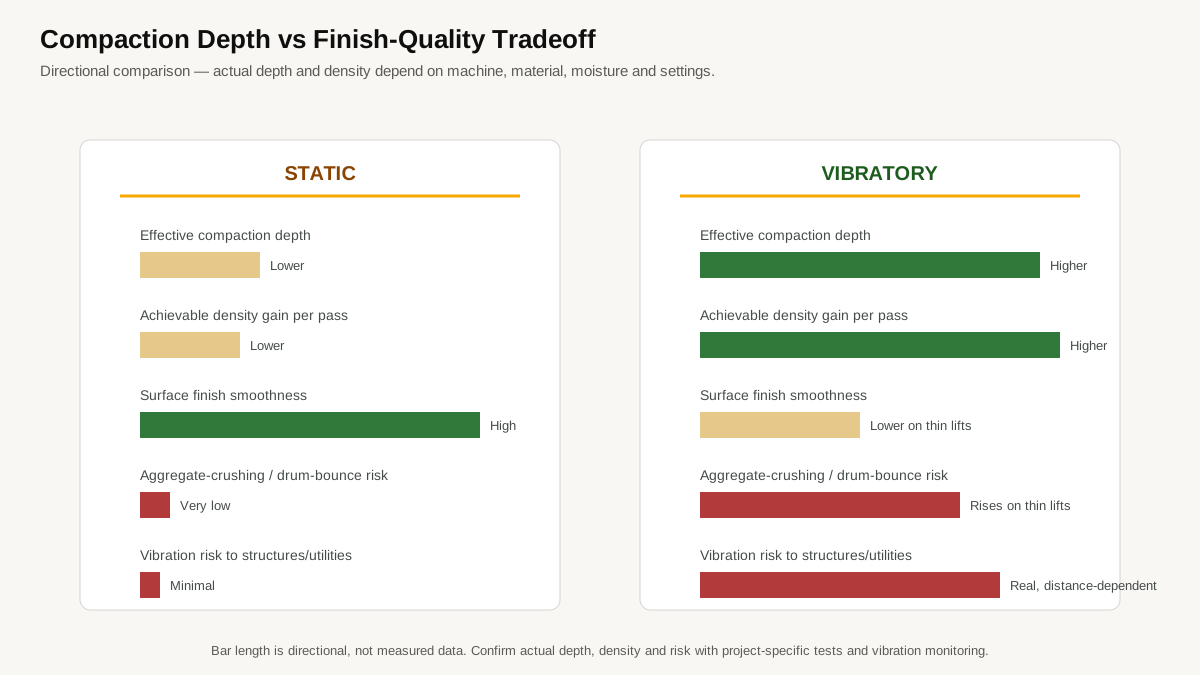
The mechanism matters here for two separate reasons. First, drum bounce on a thin lift can reduce density instead of increasing it — the opposite of the intended result. Second, high-frequency impact against a thin, poorly supported mat can fracture (crush) coarse aggregate in the mix, which is a durability problem independent of density. An alternative technology, oscillatory compaction, uses a shearing rather than an impacting drum motion specifically to reduce this aggregate-fracturing risk, but that is a different, non-standard drum design and not the same as simply switching a conventional vibratory roller to static mode.
Treat the lift-thickness figures above as commonly cited planning ranges tied to the source below, not a fixed rule for every mix, machine or specification. Always confirm the actual compacted lift thickness — not the nominal design thickness — and the paver/roller pattern approved for that mix before choosing a mode.
Vibration risk near structures and buried utilities
Static compaction exists as a real, separate choice for one more reason beyond material type: vibration itself is a hazard to sensitive things nearby, not only a compaction technique.
Near buildings and other structures. Vibratory compaction equipment produces ground vibration that construction-vibration guidance treats as a genuine risk factor for nearby structures, particularly older or historic buildings, and the risk depends on soil composition (clay, sand and mixed soils transmit vibration differently), proximity, and machine energy. Standard risk-management practice for ground-improvement and compaction work near sensitive structures includes a pre-project site evaluation, continuous vibration monitoring with seismographs or accelerometers positioned between the work and the structure, pre-set allowable vibration thresholds, and operational adjustments — reducing energy, running more lower-energy passes instead of fewer high-energy ones, or switching to a lower-vibration method — if monitored levels approach those thresholds. This is consistent with general guidance that static rollers are the preferred choice in tight, residential areas or near bridges, where vibration could be a real risk, even though a vibratory roller could physically compact the same material faster.
Near buried utilities. Compacting backfill directly over or immediately around a pipe or other buried utility carries a related but distinct risk: dynamic (vibratory) earth pressure from the compactor can add to the static pressure already imposed by excavation equipment, and general trench-backfill practice is to reduce compaction force in the pipe zone rather than run full-size vibratory equipment directly over shallow cover. Larger vibratory equipment is commonly reserved for once sufficient backfill cover exists above the utility, with lighter, often static or hand-guided, compaction used immediately around and just above the pipe zone itself. This is general industry practice rather than a single universal cover depth, so always confirm the specific utility owner's or project specification's required compaction method and any minimum cover before selecting a mode near a known utility.
No universal safety number: do not treat any specific vibration distance, particle-velocity limit or cover depth in this article as a universal safety threshold for your site. Site-specific vibration monitoring, the utility owner's requirements, and the project's geotechnical or structural engineer govern the actual limit; TerraCub cannot set that number for a job it has not surveyed.
Surface finish and over-compaction risk
Beyond material and safety, mechanism choice affects the finished surface. Static rolling is closely associated with the final finishing pass on asphalt and other bituminous surfaces because it presses the mat smooth without adding drum-bounce marks; static compaction is also the standard choice for surface-level or light-compaction tasks such as residential and landscaping finish work where deep compaction is not the goal.
Vibratory rolling done well past the point of useful density gain does not simply "compact more." Once a layer approaches its practical density limit under the current settings, continued vibratory passes mainly add drum wear, fuel use and, on thin or marginal lifts, the aggregate-crushing and drum-bounce risks described above — without a matching density benefit. This is one reason a project's own density or stiffness acceptance test, not a fixed pass count, should decide when to stop, on both static and vibratory work.
Most rollers do both — the real decision is per-pass mode
A dedicated static-only roller (most commonly a sheepsfoot/padfoot pattern machine) and a vibratory-capable roller are not always two different products to shop between. Vibratory rollers commonly include a switch to turn vibration on or off, so the same drum can run static for a thin lift, a finish pass, or a structure/utility-sensitive section, and vibratory for a granular base or a thicker lift on the same job. TerraCub's own walk-behind and ride-on vibratory rollers — for example the smooth-drum TC-YL600A walk-behind single-drum roller, the double-drum TC-YLS600A walk-behind double-drum roller, and the tandem TC-JSY700 ride-on roller — carry a stated exciting force, amplitude and frequency for their vibratory mode alongside a static travel mode, so selecting a family is a separate step from selecting the compaction mode for each pass and each material on the job.
For the layout decision (single drum vs double drum) see the single drum vs double drum road roller guide. For the operator-format decision (walk-behind vs ride-on) see the walk-behind roller vs ride-on roller guide. This guide covers the third, separate axis: which compaction mechanism to run.
Match compaction mode to the material and the site
Send TerraCub the material, lift thickness, proximity constraints, finish requirement and acceptance method. We can compare current static-capable and vibratory road roller configurations against those inputs.
Request a road roller configurationSend a roller quote data pack
- Material: soil/aggregate type and approximate cohesive content, or asphalt mix and course (base/binder vs surface).
- Lift: loose thickness and target compacted thickness, measured, not nominal.
- Proximity constraints: distance to structures, bridges, buried utilities, or vibration-sensitive equipment.
- Finish requirement: whether a smooth, mark-free surface is part of the acceptance criteria.
- Acceptance: the project's density, stiffness or proof-roll test.
- Geometry and access: working width, edge clearance, slope and turning space.
- Logistics: destination, transport limits and packing method.
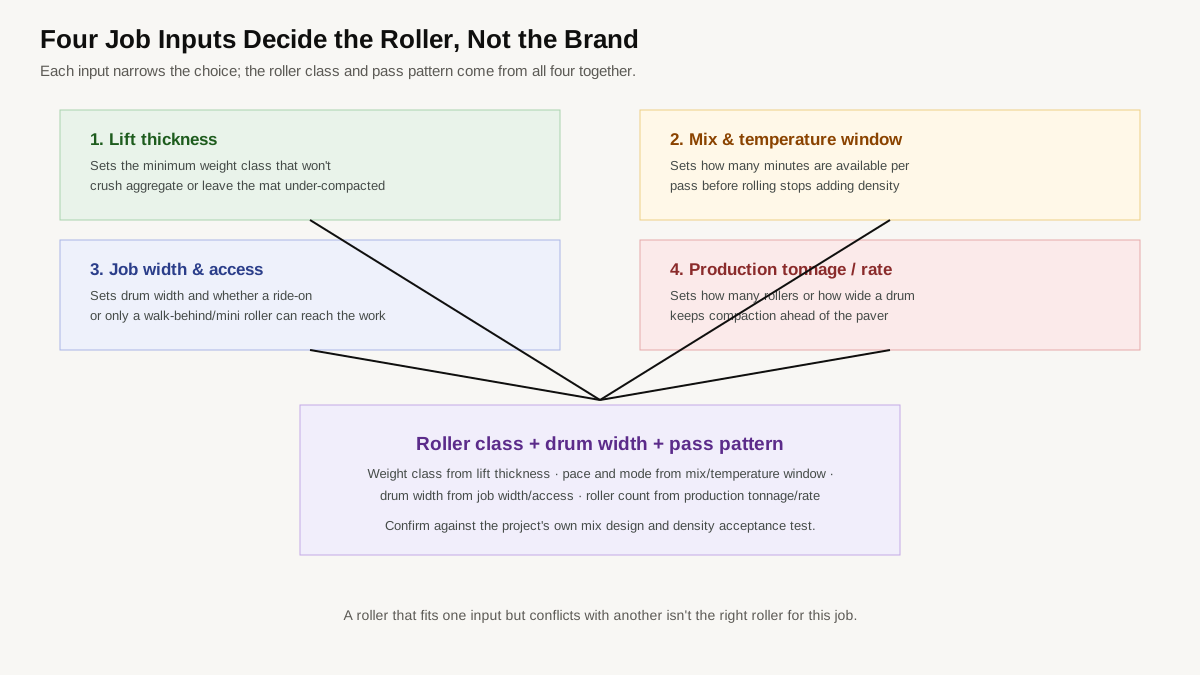
Send the same data pack to every supplier so the recommended static/vibratory mode, drum type and settings can be compared on the same basis, not on a generic model name. If the roller class or drum width is still open, use the asphalt road roller selection by job inputs guide to match lift thickness, access and production rate before requesting a configuration. See About TerraCub for how the company supports machines and configuration questions after the sale.
FAQs
Is a static roller or a vibratory roller better?
Neither is universally better. Vibratory compaction generally reaches higher density faster on granular soil, aggregate base and thicker asphalt lifts. Static compaction is the safer and often required starting point for thin asphalt lifts, work near structures, bridges or buried utilities, and finish passes where a smooth, non-crushed surface matters more than maximum density.
Can a vibratory roller be used as a static roller?
Yes. Most vibratory rollers, including TerraCub's walk-behind and ride-on models, can switch vibration off and run purely on their own weight for that pass. A dedicated sheepsfoot/padfoot static roller is a different, cohesive-soil-focused machine rather than simply a vibratory roller with the vibration off.
Why does vibrating a thin asphalt lift risk crushing the aggregate?
On a thin, poorly supported mat, the repeated high-frequency impact from a vibrating drum can fracture coarse aggregate particles in the mix and can also make the drum bounce, which shoves the mat and can reduce density instead of increasing it. Static mode avoids both risks on lifts commonly cited as under roughly 30 mm (1.2 in), subject to the mix and specification.
How close can a vibratory roller work to a building or a buried pipe?
There is no single universal distance; it depends on soil type, machine energy, the structure's condition and, for utilities, the depth of cover and the utility owner's requirements. Real vibration-risk guidance calls for a site-specific evaluation and, near sensitive structures, continuous vibration monitoring with pre-set thresholds rather than a fixed setback number. Confirm the applicable limit with the project's structural/geotechnical engineer or the utility owner before compacting near either.
Does more vibratory rolling always mean more density?
No. Once a layer reaches its practical density limit under the current settings, additional passes mainly add wear and, on thin or marginal lifts, the aggregate-crushing and drum-bounce risks described above, without a matching density gain. Use the project's own density or stiffness acceptance test to decide when to stop, not a fixed pass count.
What should I send when requesting a static/vibratory roller quote?
Send material and cohesive content, actual (not nominal) lift thickness, proximity to structures/bridges/buried utilities, whether a smooth finish is required, the acceptance test, working width/access and destination/transport limits.
Sources and limitations
- Pavement Interactive, "Compaction Equipment" (static vs vibratory mechanism, frequency 1,600–3,600 vpm / amplitude 0.25–1.02 mm ranges, thin-lift-under-roughly-30mm static-mode guidance, drum-bounce and aggregate-crushing risk on thin asphalt lifts; general planning ranges, not a project specification)
- Forester Media / Stormwater.com, "How to Select a Soil Roller" (sheepsfoot static-only operation on plastic/cohesive soils, smooth-drum vibratory suitability up to roughly 10% cohesive content, padfoot suitability up to roughly 50% cohesive content, frequency/amplitude vs lift thickness)
- Conplant, "A Simple Guide to Compaction" (static roller mechanism and preference in tight residential areas or near bridges where vibration risk matters; vibratory rollers switching between static and dynamic operation)
- Densification.com, "How to Minimize Vibration Impact During Ground Improvement Near Structures" (vibration risk factors near structures, monitoring practices with seismographs/accelerometers and pre-set thresholds, operational adjustments)
- General trench-backfill industry practice on reducing compaction force in the pipe zone and reserving full-size vibratory equipment for once adequate cover exists above a buried utility (qualified as general practice, not a universal cover-depth figure).
- TerraCub product data for the TC-YL600A, TC-YLS600A and TC-JSY700 stated exciting force, amplitude, frequency and static travel capability.
This guide gives a decision framework. It does not set a universal vibration distance, cover depth, lift-thickness cutoff, frequency, amplitude or pass count for any specific job. The project specification, the applicable utility owner's requirements and a qualified geotechnical/structural engineer govern the actual limits for a given site.
Recommended Products
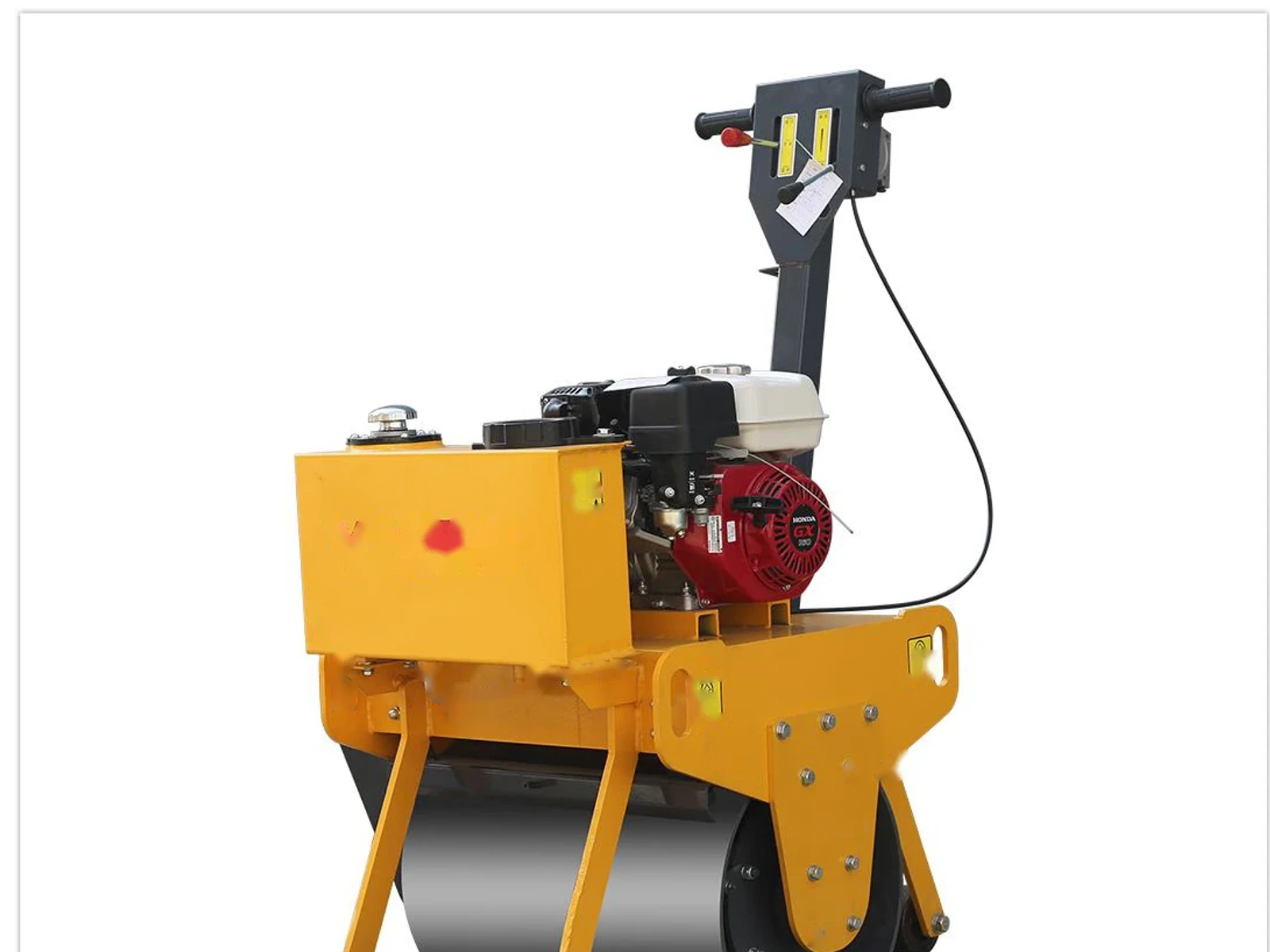 Walk-Behind Single-Drum Road Roller TC-YL600A
Walk-behind single-drum roller widely used to compact asphalt surfaces, gravel and sandy engineering foundations; high performance, easy operation, long service life.
View Product →
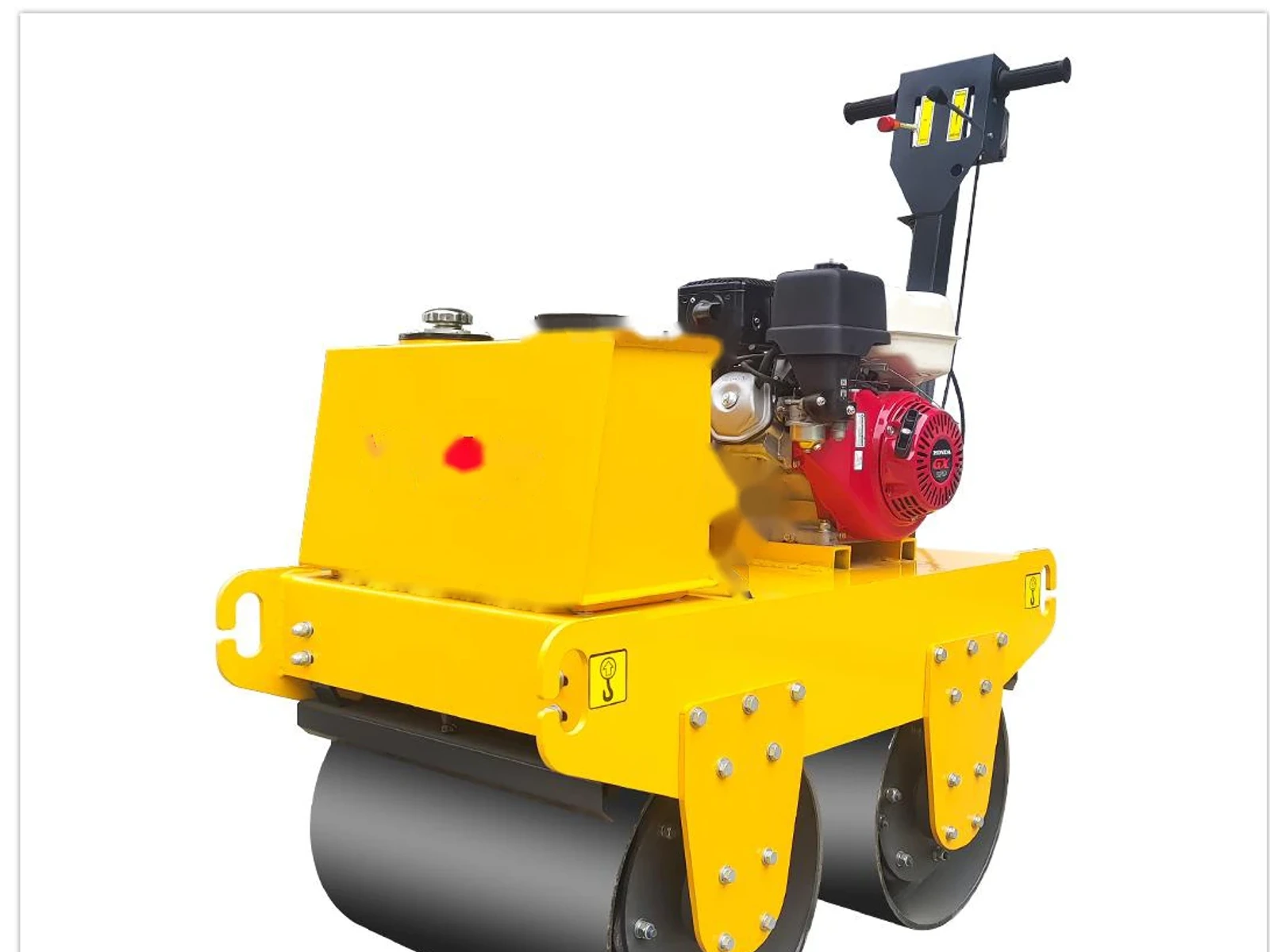 Walk-Behind Double-Drum Road Roller (Gasoline) TC-YLS600A
Genuine Honda gasoline engine, brand-guaranteed quality — excellent performance, easy starting.
View Product →
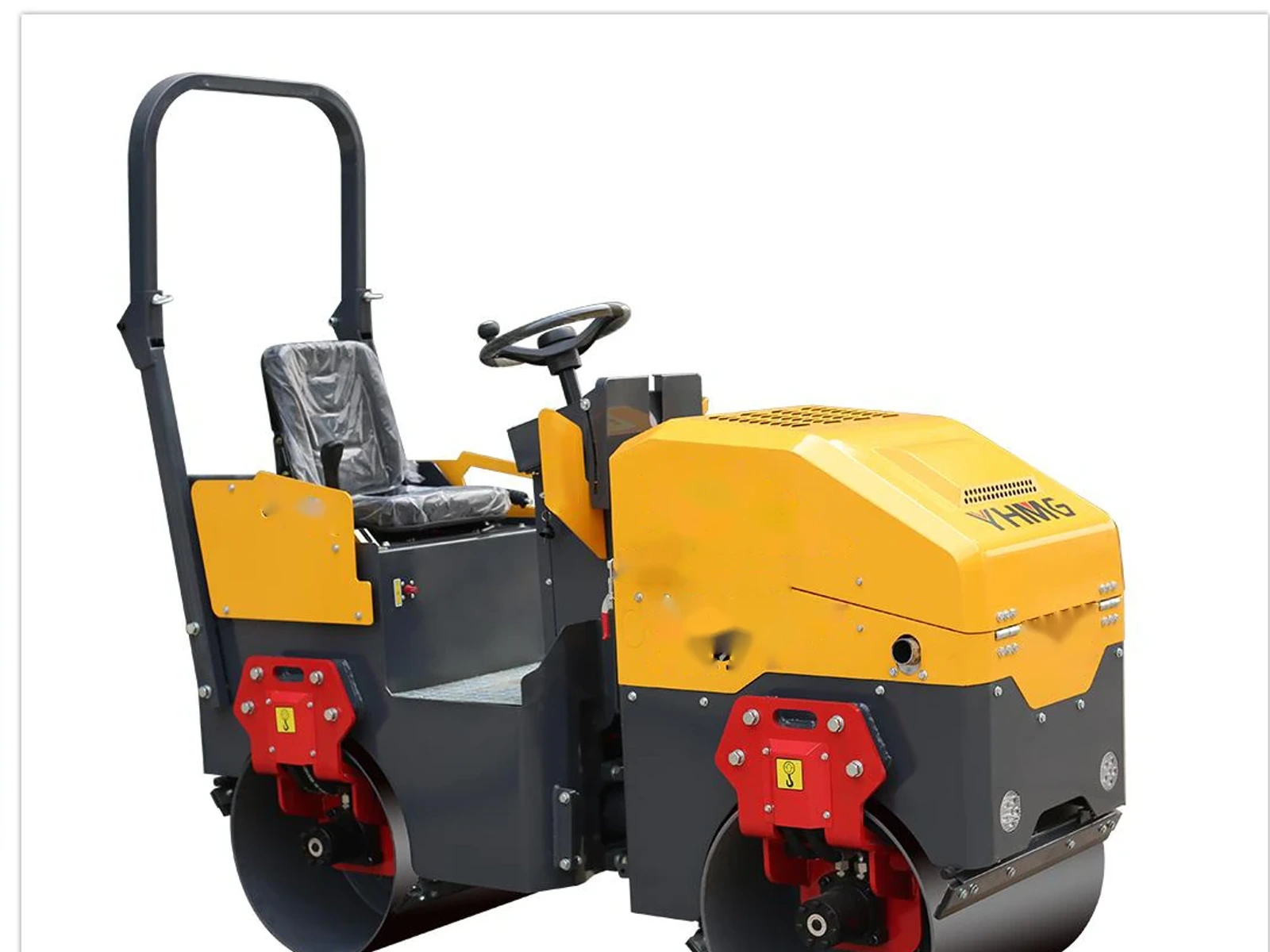 1-Ton Tandem Vibratory Road Roller TC-JSY700
1-ton fully hydraulic tandem vibratory roller, mainly used for vibratory compaction of water-stabilised base courses, lime soil, sand & gravel, asphalt pavement and pipe-trench backfill.
View Product →