Vibratory Roller Frequency vs Amplitude: Check Both Before You Request a Quote
Compare vibratory roller frequency and amplitude, check units and reporting basis, and prepare clear specification questions before requesting a quote.

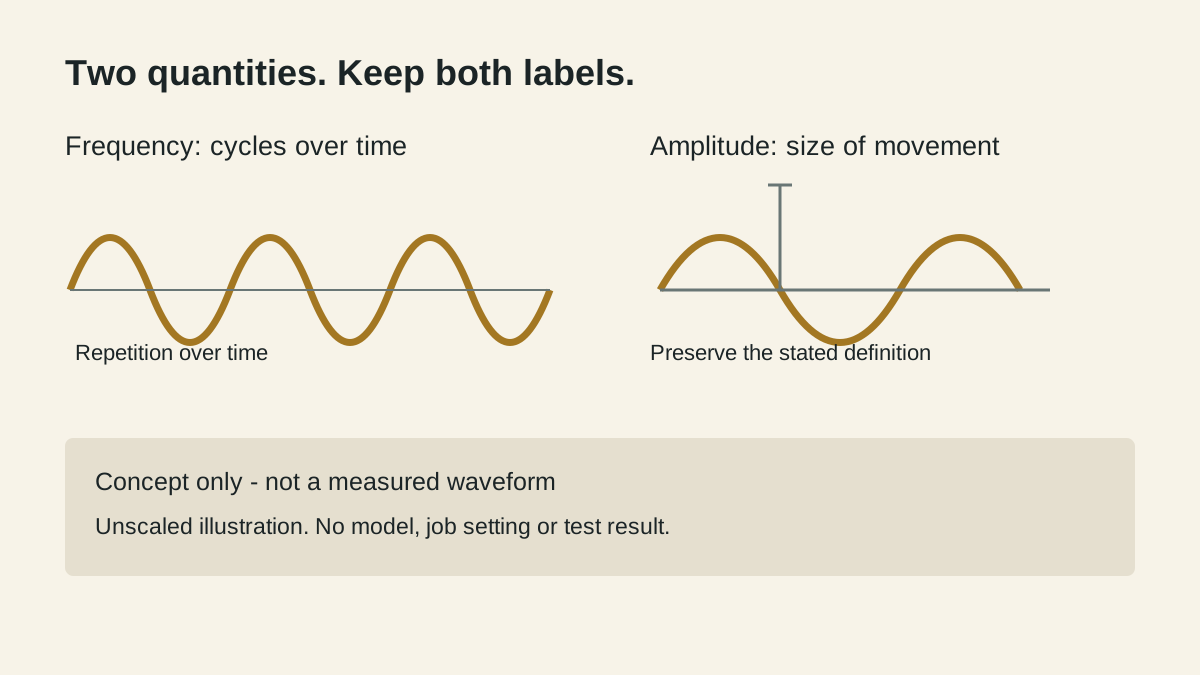
Frequency describes how often a roller's vibration repeats. Amplitude describes the size of that movement, using a stated definition. They answer different questions, so a higher number in one column cannot replace a missing number in the other. Before comparing quotations, keep each value with its unit, amplitude definition, model and operating mode.
Read the frequency and its units
Frequency counts complete vibration cycles over time. The AEM Vibratory Roller Handbook, published in 1994, lists hertz (Hz) and vibrations per minute (VPM) as frequency units. Its definitions are useful for reading specifications; they do not establish which setting your job needs.
| Field on the sheet | What it describes | Unit to retain |
|---|---|---|
| Vibration frequency | How often a complete vibration cycle repeats | Hz or VPM |
| Nominal amplitude | A calculated specification for the size of drum movement | Usually mm or inches; retain the stated definition |
Check the unit before deciding that two frequency figures differ. Hertz means cycles per second, while VPM counts them per minute. Multiply Hz by 60 to get VPM, or divide VPM by 60 to get Hz.
For a simple arithmetic example, 50 Hz × 60 = 3,000 VPM. Those two figures express the same cycle rate. This is a hypothetical conversion, not a TerraCub specification or a recommended operating setting.
If the quotation gives only “frequency: 50,” write “unit unconfirmed” in your comparison record. Ask for the source unit rather than guessing from the size of the number. Keep the supplier's original value beside any conversion so another reader can check the calculation.
Check what the amplitude figure means
A specification headed “nominal amplitude” needs a different reading from a measurement taken while the drum works on material. In the AEM handbook's terminology, nominal amplitude is calculated from the eccentric moment divided by the vibrating mass. The eccentric moment combines the unbalanced rotating mass with its distance from the centre of rotation.
You do not need to calculate that value from machine parts to compare quotations. You need to preserve the label. A number marked “nominal amplitude” should stay marked that way in your record.
The same handbook separates three terms that can otherwise cause confusion:
- Nominal amplitude: the calculated quantity described above.
- Double amplitude: the full peak-to-peak vertical movement of a freely suspended drum. In that definition, it is twice nominal amplitude.
- Actual double amplitude: movement measured under operating conditions. The handbook says it varies with the condition of the material and the vibration frequency.
The “twice” relationship therefore has a specific scope. It does not mean that the drum will move through twice a catalogue's nominal value on your job. It also does not turn the nominal value into a measured depth of penetration into soil or asphalt.
Where a sheet says only “amplitude,” ask whether the figure is nominal, double amplitude or an operating measurement, and which definition the supplier uses. Do not silently rename it. The 1994 handbook gives an attributed terminology reference; it cannot prove that every current supplier follows the same reporting convention.
Keep the mode and optional equipment with the number
A figure can lose useful meaning when it is copied away from the row heading beside it. Keep words such as “standard,” “optional,” “high” and “low” with the value.
For example, the retrieved Cat CP17 specification page separates standard vibratory frequency, an optional variable-frequency range, and high and low nominal amplitudes. This is a reporting example from that named model and regional page. It is not a statement about TerraCub equipment or another roller's available features.
The useful lesson is to ask separate questions: which frequency is standard, whether a variable-frequency option is included in the quotation, and which amplitude mode the quoted value describes. Do not assume that every frequency and amplitude listed on a sheet can be paired together.
AEM's definition of variable nominal amplitude describes a change in eccentric moment independent of frequency. That explains why the two quantities are distinct. It does not prove that a particular machine lets the operator change either one. Confirm the controls and allowed combinations for the exact configuration being offered.
Build a comparable specification record
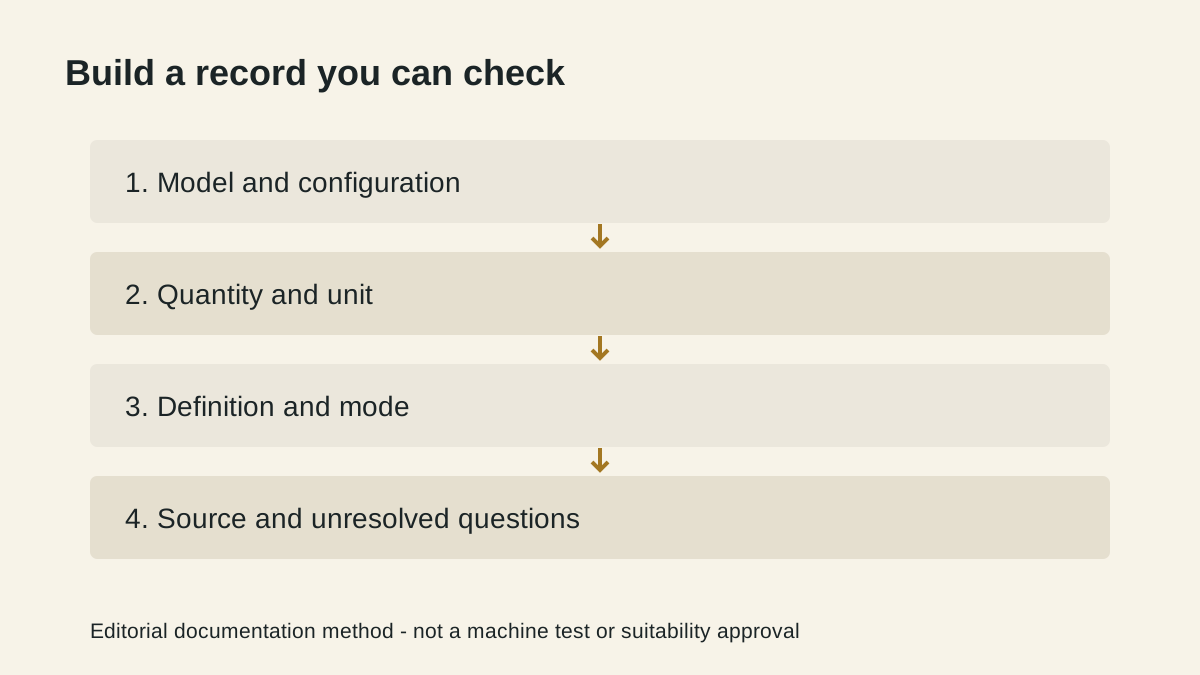
Use one record for each quoted model and configuration. The table below is an editorial documentation method, built from the definitions and separate specification fields above. It is not a machine test or a suitability approval.
| Record field | Copy or request | If it is missing |
|---|---|---|
| Machine identity | Exact model and quoted configuration | Mark configuration unconfirmed |
| Source | Specification sheet or quotation reference, with revision or date if stated | Request the matching document |
| Frequency | Original number and unit; any stated range | Mark the unit or range basis unconfirmed |
| Amplitude | Original number, unit and complete field label | Ask for the amplitude definition |
| Mode | Mode attached to each quoted value and any allowed combinations | Ask which pairing the value describes |
| Standard or optional | Whether the listed feature is included in this quotation | Keep the option unresolved |
| Open questions | Each unanswered point and the requested supporting document | Leave it open until a reply addresses it |
Work through the record in order. First identify the machine and source. Then copy the two quantities without changing their labels. Convert a frequency unit only when the original unit is known. Finally, check modes and options before putting the record beside a competing quotation.
If a reply supplies a number but leaves the definition or configuration unclear, the record is still incomplete. Preserve the reply and ask the remaining question. A blank marked “unconfirmed” is more useful here than an assumed value that appears settled.
Keep specification comparison separate from job settings
This check helps you understand what a quotation says. It does not choose a frequency or amplitude setting for the work. The distinction between nominal and actual operating movement is one reason the two catalogue numbers cannot, by themselves, establish a compaction result.
Use the exact machine's instructions and the project's requirements for the operating and acceptance decision. This guide gives no universal setting, layer-depth rule, pass count or promised density. It also makes no claim that a higher frequency or amplitude is the better purchase.
Keep other specification decisions separate too. If the quotation mixes kilograms and kilonewtons, the guide to operating weight and centrifugal force explains that different pair of quantities. You do not need to repeat that comparison inside the frequency and amplitude record.
Send a clear specification enquiry
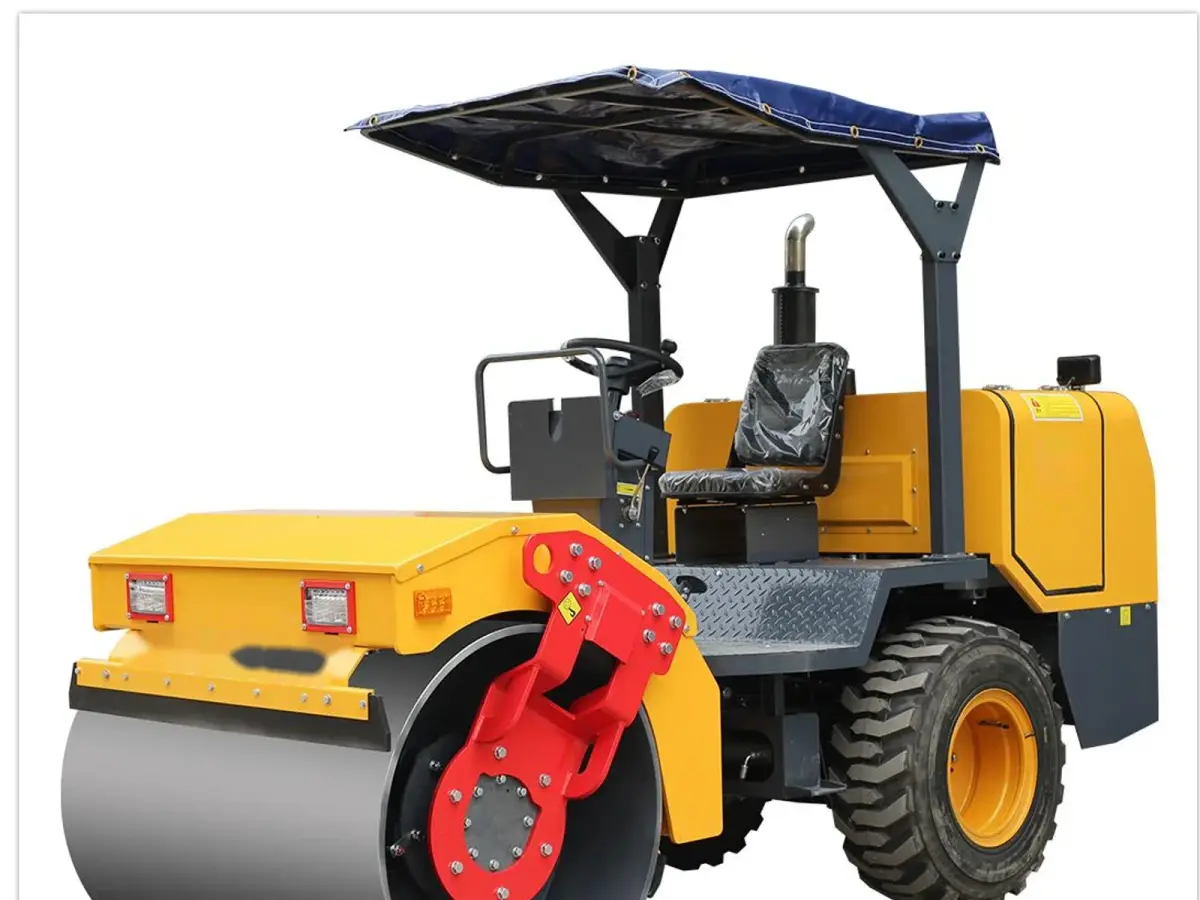
If you are considering TerraCub mini road rollers, identify the model first and attach the sheet or quotation you are reading. Include the frequency and amplitude exactly as written, then list the missing units, definitions, modes or option details.
Keep the intended material and task with the enquiry as context for later assessment. Ask which source applies to the quoted configuration and which questions still need a machine manual or other documentation. This is a request for evidence, not a claim that every requested document or feature is available.
When your record is ready, send a specification enquiry with the model, source reference and unresolved questions. Keep machine selection and operating approval open until the relevant evidence has been reviewed.
FAQs
What is the difference between roller frequency and amplitude?
Frequency counts how often vibration repeats. Amplitude describes the size of the movement using a stated definition. Retain both quantities and their units; one cannot stand in for the other.
How do I convert Hz to vibrations per minute?
Multiply Hz by 60 to get VPM. Divide VPM by 60 to get Hz. For example, a hypothetical 50 Hz equals 3,000 VPM; this conversion does not recommend a job setting.
Is nominal amplitude the same as measured drum movement on the job?
No. The cited AEM handbook defines nominal amplitude as a calculated quantity and distinguishes it from actual double amplitude measured during operation. It says actual movement varies with material conditions and vibration frequency. Confirm the supplier's reporting definition.
Does high and low amplitude mean the roller also has variable frequency?
The amplitude labels alone do not establish that feature. Check frequency controls and options separately, as well as the allowed combinations for the quoted configuration. The Cat CP17 page illustrates separate reporting; it does not establish another model's equipment.
Can I choose a job setting from frequency and amplitude figures alone?
No. First establish what the figures describe, then use the exact machine instructions and project requirements for the operating decision. The specification record helps identify missing evidence; it does not prescribe settings or promise a compaction result.
Sources used in this guide
- AEM, Vibratory Roller Handbook, 1994: terms and definitions for frequency, nominal amplitude, double amplitude and actual double amplitude. Historical handbook retrieved from a supplier-hosted PDF; used for attributed definitions, not a current compliance claim.
- Caterpillar, CP17 specification page, Indonesia locale: separate standard-frequency, variable-frequency-option and high/low nominal-amplitude fields. Used only as an example of labelled reporting for that model.
Recommended Products
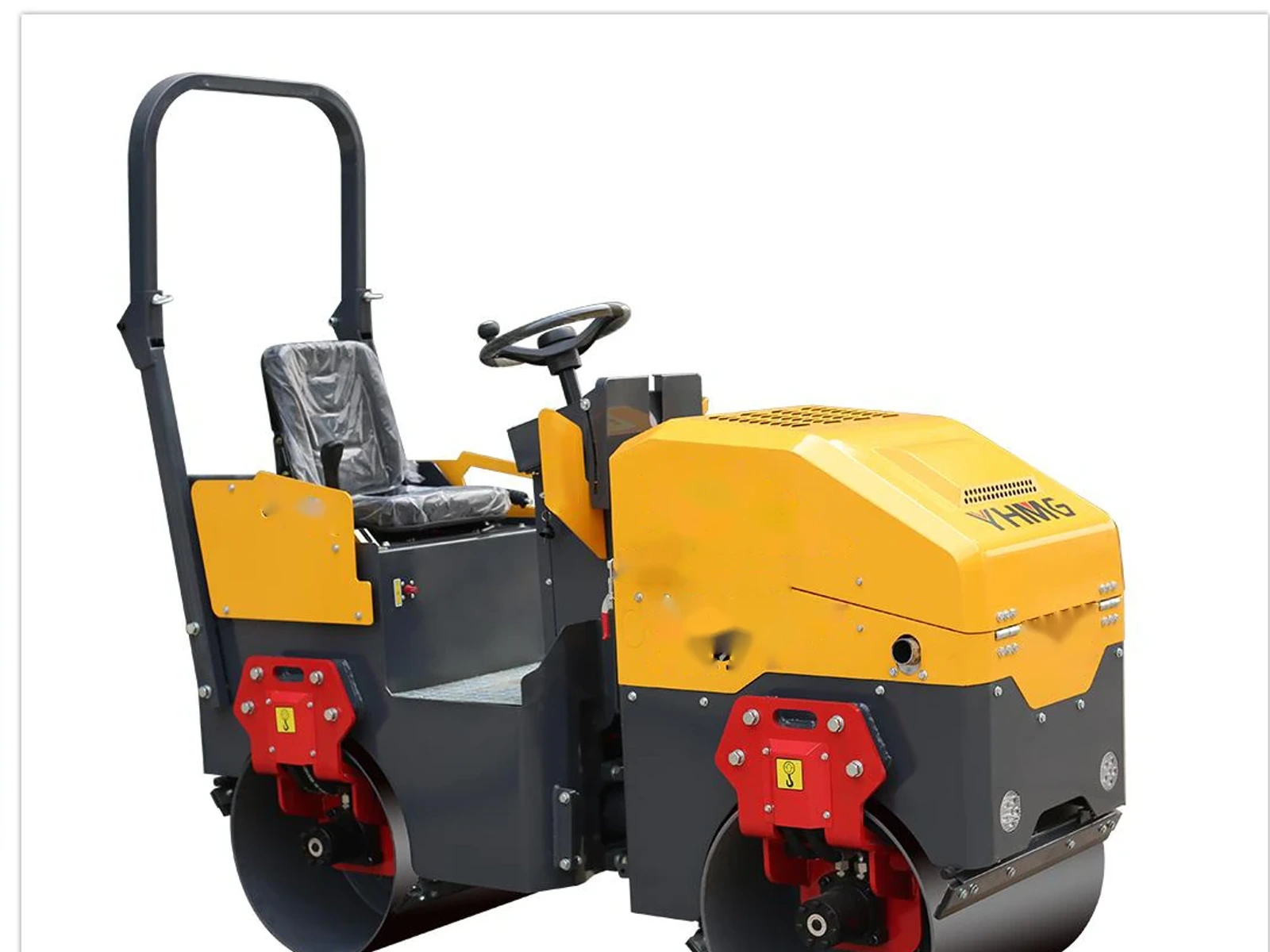 1-Ton Tandem Vibratory Road Roller TC-JSY700
1-ton fully hydraulic tandem vibratory roller, mainly used for vibratory compaction of water-stabilised base courses, lime soil, sand & gravel, asphalt pavement and pipe-trench backfill.
View Product →
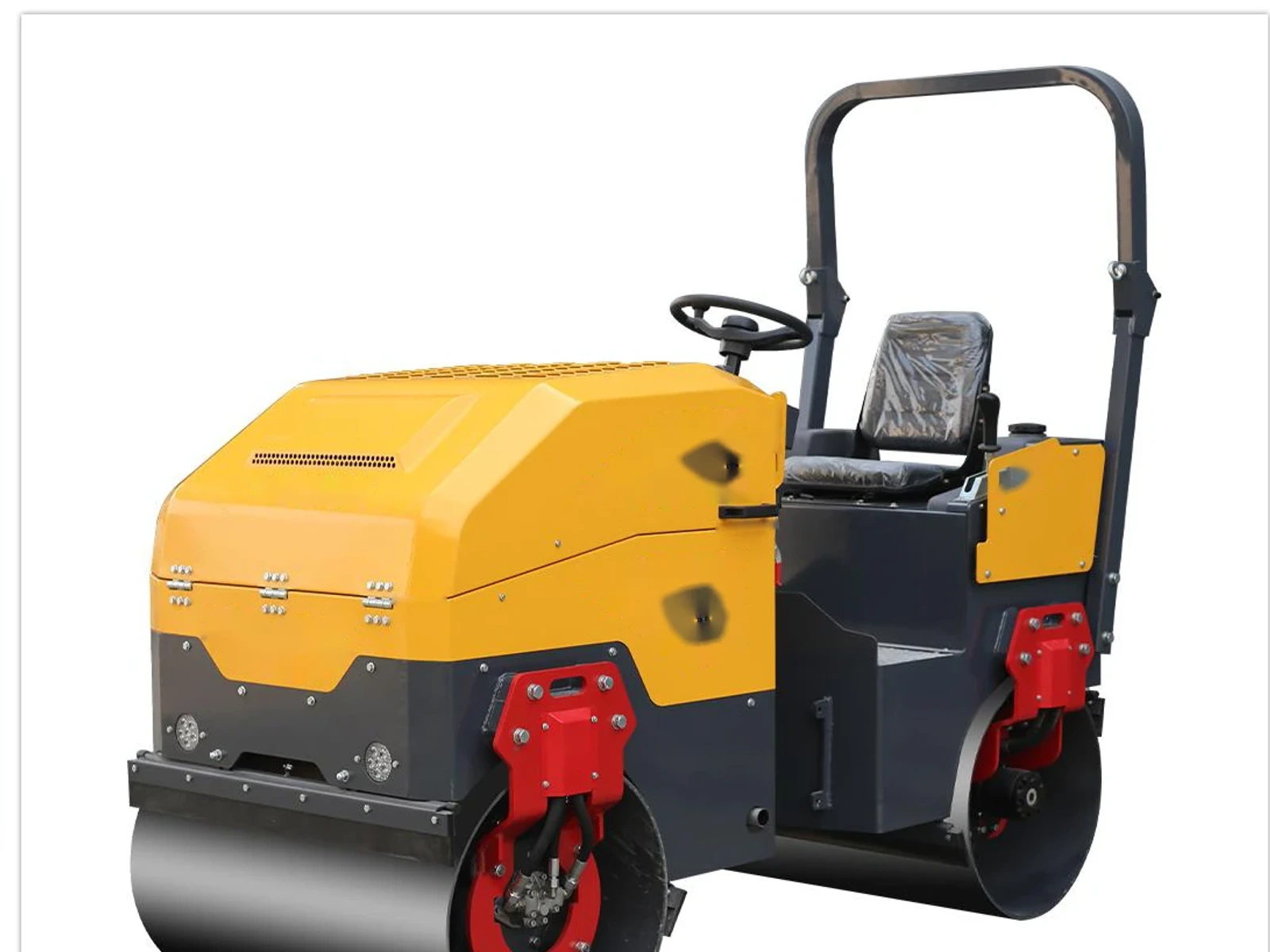 2-Ton Fully Hydraulic Tandem Road Roller TC-JS1000
2-ton fully hydraulic tandem vibratory roller, mainly used for vibratory compaction of water-stabilised base courses, lime soil, sand & gravel, asphalt pavement and pipe-trench backfill.
View Product →