Fencing and Post Installation
A fence line is two jobs that look like one. First the posts have to go into the ground, evenly spaced and plumb, at a depth the frost line and the wind loading decide. Then, on most modern fences, something has to run along the line underground: mains power to a gate motor, low-voltage cable to a camera, an electric fence earth return, or an irrigation lateral.
A crew that digs the post holes with a machine and then trenches the cable run by hand has only mechanised half the job. The two attachments on this page cover both halves from the same carrier, which is why fencing contractors are among the heaviest attachment buyers in compact equipment.
Products
Related Products
Site Work
What actually happens on a fence line
Fencing work is repetitive and measured in posts per day. These are the tasks where a compact carrier and the right attachment change that number.
Setting posts to a consistent depth
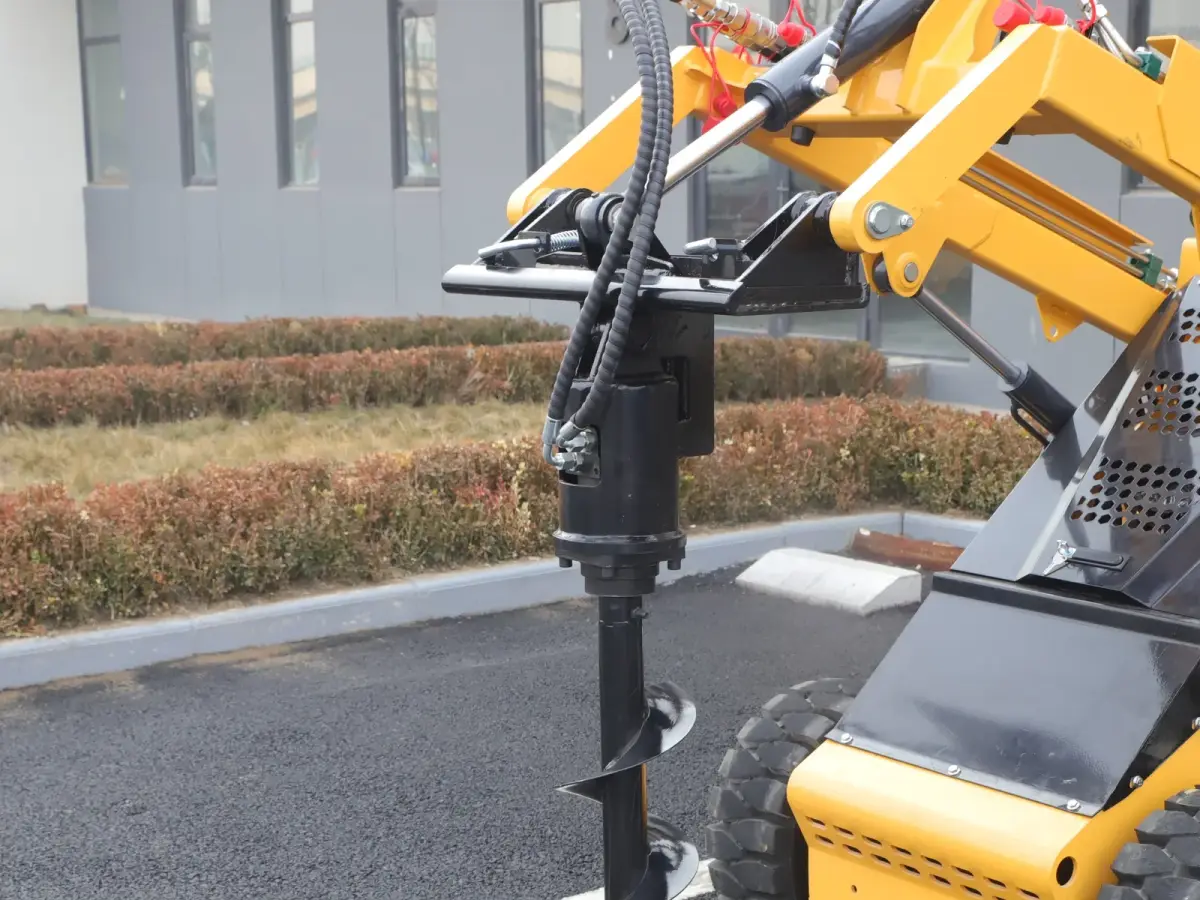
Hand digging produces holes that vary in depth and diameter, which means variable concrete consumption and posts that need packing to stand plumb. A hydraulic auger cuts a clean cylindrical hole to the same depth every time, so the concrete volume per post becomes predictable and quotable.
Working a boundary line with no vehicle access
Fence lines follow property boundaries, not roads. They cross soft ground, run behind buildings, and pass through gates. A compact tracked carrier reaches the line where a tractor-mounted post driver cannot, and it turns inside the corridor rather than reversing the length of the fence.
Trenching the cable, power, or irrigation run
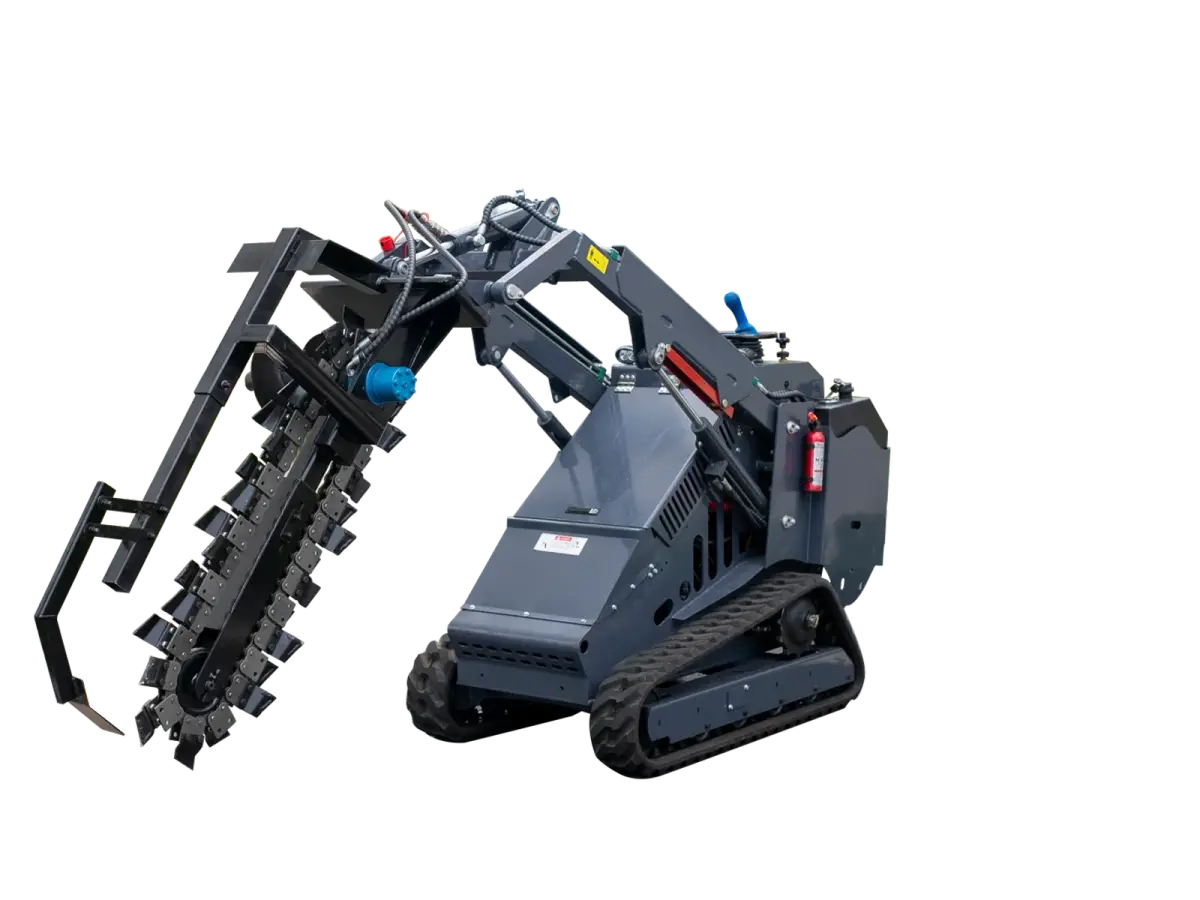
A chain trencher cuts a narrow continuous slot along the same line the posts follow. Narrow matters here: the less spoil the machine lifts, the less has to be backfilled and compacted, and the less the finished line shows.
Handling spoil and material along the run
Auger spoil and trench spoil have to go somewhere, and posts, concrete, and rolls of wire have to come the other way. The carrier that drills the hole is also the machine that moves the material, provided the attachment can be swapped without a workshop.
Hitting rock, roots, and buried services
Real fence lines contain surprises. An auger that stalls on a root and a trencher that shears a tooth are normal events, not failures. What matters commercially is whether the wear parts are cheap, in stock, and changeable on the line without a service call.
Specification
What to confirm before ordering an attachment
Attachments fail commercially for one of four reasons, and none of them is price. Confirm each of these against the specific carrier before the order is placed, not after the attachment lands at the port.
Check
Hydraulic flow, in litres or gallons per minute
This is the figure that decides whether an attachment runs at all. An auger drive or trencher rated above what the carrier delivers will turn slowly, overheat the oil, and stall in the cut. Match the attachment flow range to the carrier auxiliary circuit before anything else.
Check
Working pressure of the carrier circuit
Flow moves the attachment; pressure gives it torque. Two carriers with the same flow but different working pressure will not drill the same hole in the same ground. Ask for both figures together and treat a supplier who quotes only one as unverified.
Check
Output shaft and mounting standard
Drive heads terminate in a hex or round output shaft, and bits are matched to it. The carrier side needs a coupler standard that fits the plate. Confirm both interfaces, because either one being wrong makes the attachment scrap on arrival.
Check
Wear parts and replacement planning
Auger teeth, trencher chain teeth, and shear pins are consumables on a fence line, not spares. Ask which wear items are included, which need separate planning, and how replacement support works before the first failure.
FAQ
Fencing FAQs
Do I need an auger, a trencher, or both?
The auger sets the posts and is the attachment almost every fencing contractor buys first. The trencher only earns its place if the fence lines you build carry power, cable, or irrigation underground. Contractors who install gate motors and security fencing usually run both from the same carrier.
What hydraulic flow does a skid steer auger need?
It depends entirely on the drive head, and it is the single most important number in the quote. An attachment specified above the carrier flow will stall in the cut. Send the carrier model and its auxiliary flow and pressure figures with the inquiry and the correct drive head can be matched to it.
Can one auger drive head cover every post size?
Usually yes. The drive head stays on the machine and the bit is changed to suit the post diameter and ground conditions. Buyers ordering for a mixed fencing business typically take one drive head and a small set of bits rather than multiple drives.
Why use a chain trencher instead of digging with a bucket?
A trencher cuts a narrow slot with near-vertical walls, so it removes a fraction of the spoil a bucket does. Less spoil means less backfill, less compaction, and a finished line that does not show. On a long fence run the difference is measured in days.
What happens when the auger hits a rock or a root?
It stalls, which is the correct behaviour. What matters is what breaks. A well-specified drive protects itself with a shear pin that is cheap and replaceable on the line. Confirm the shear pin design and that spares ship with the attachment.
What should be sent in the first inquiry?
Carrier make and model, its auxiliary hydraulic flow and working pressure, typical post diameter and depth, ground conditions including whether rock is expected, whether a cable or irrigation run is part of the job, quantity, and timeline.
Quote
Equipment for Fencing and Post Installation
Email info@terracub.com with your site conditions, quantity, destination, and required equipment format. We will help narrow the right machine path before model selection.