Construction Sites
Most jobsite delays are not caused by a machine running out of rated capacity. They are caused by a site gate that is 36 inches wide, a temporary ramp at 18 degrees, or loose aggregate that a wheeled loader sinks into before it reaches the pour.
Compact tracked equipment exists for the last thirty metres of a site, where the excavator has already left and a full-size loader was never going to fit. The machines below are chosen for ground pressure and turning envelope first, and for headline payload second.
Products
Related Products
Site Work
Where compact equipment earns its place
These are the tasks that decide whether a compact machine pays for itself on a site, and the numbers worth checking before a buyer commits.
Backfilling trenches after utility work
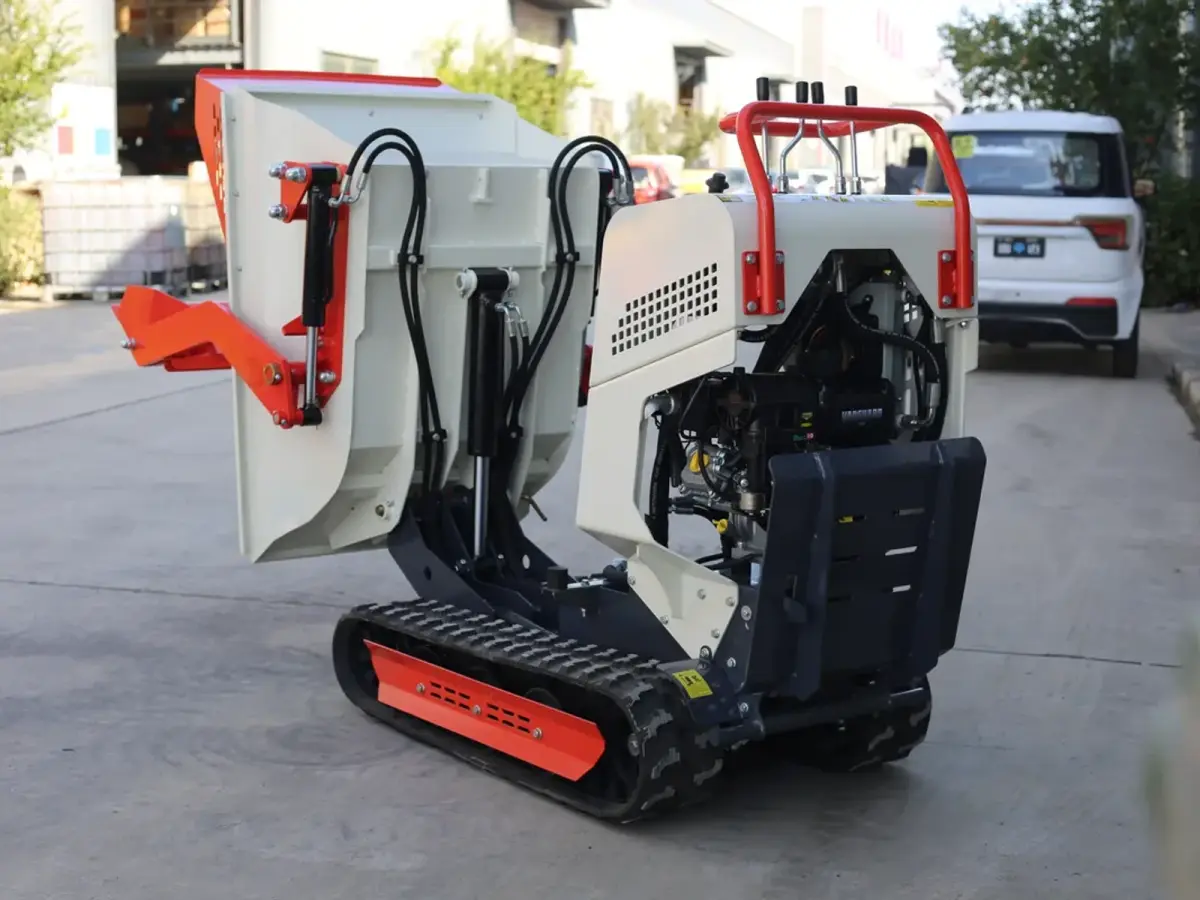
A 1-ton tracked dumper carries roughly 0.6 m3 per trip and turns inside the trench corridor itself, so the spoil pile is never double-handled. On a narrow reinstatement the saved handling, not the payload, is what shortens the day.
Moving material up temporary ramps
Rubber tracks hold gradient where pneumatic tires break traction. Ask for the rated climb angle under load, because on most units the loaded and unloaded numbers differ by five to eight degrees.
Feeding a pour where the truck cannot reach
A self-loading mixer or a high-tip dumper covers the gap between the delivery point and the formwork. High-tip discharge matters when the receiving edge sits above knee height, which is the usual case at a foundation wall.
Compacting reinstatement and patch work
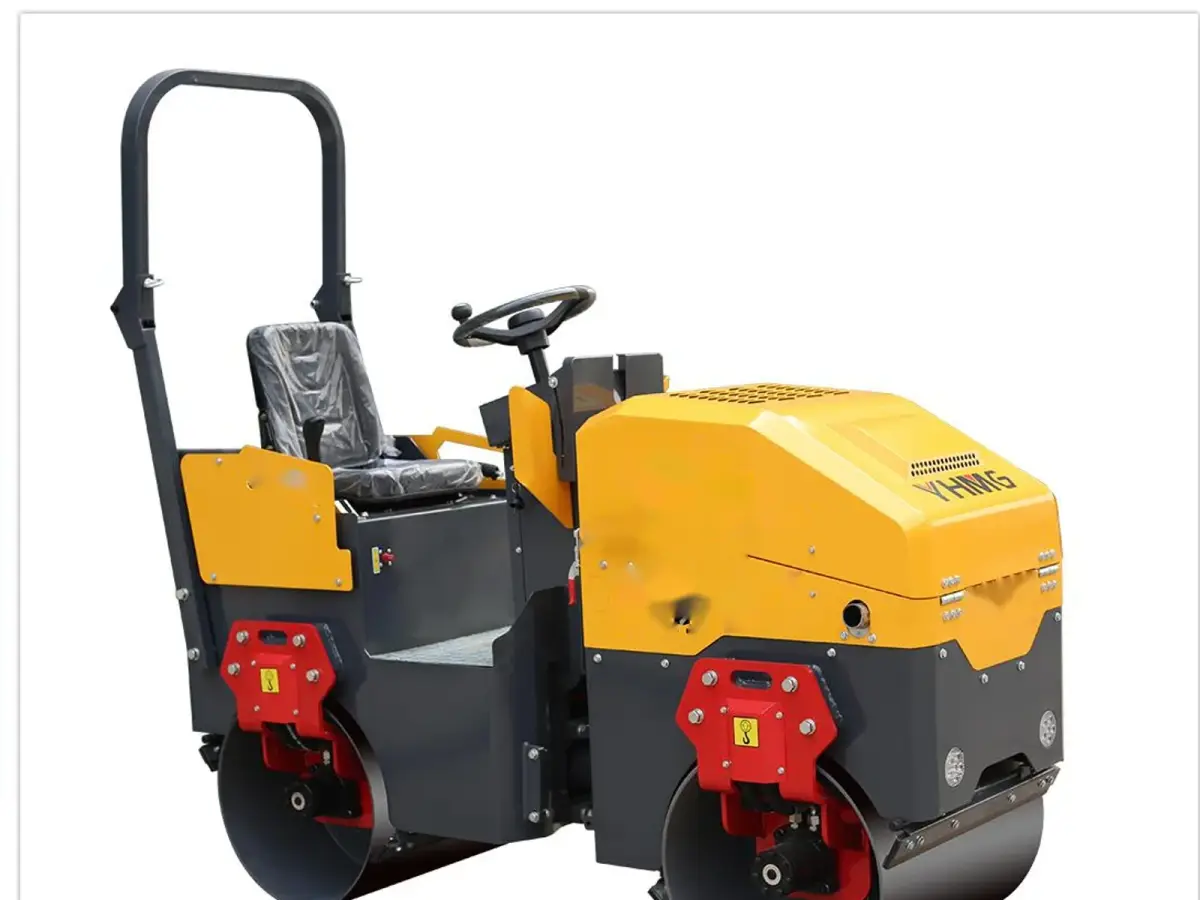
A 1.5-ton double drum roller reaches the strips a 10-ton machine cannot enter and still finishes to the same density specification. Vibration frequency, not tonnage, is what closes an asphalt patch cleanly.
Clearing and loading in a confined yard
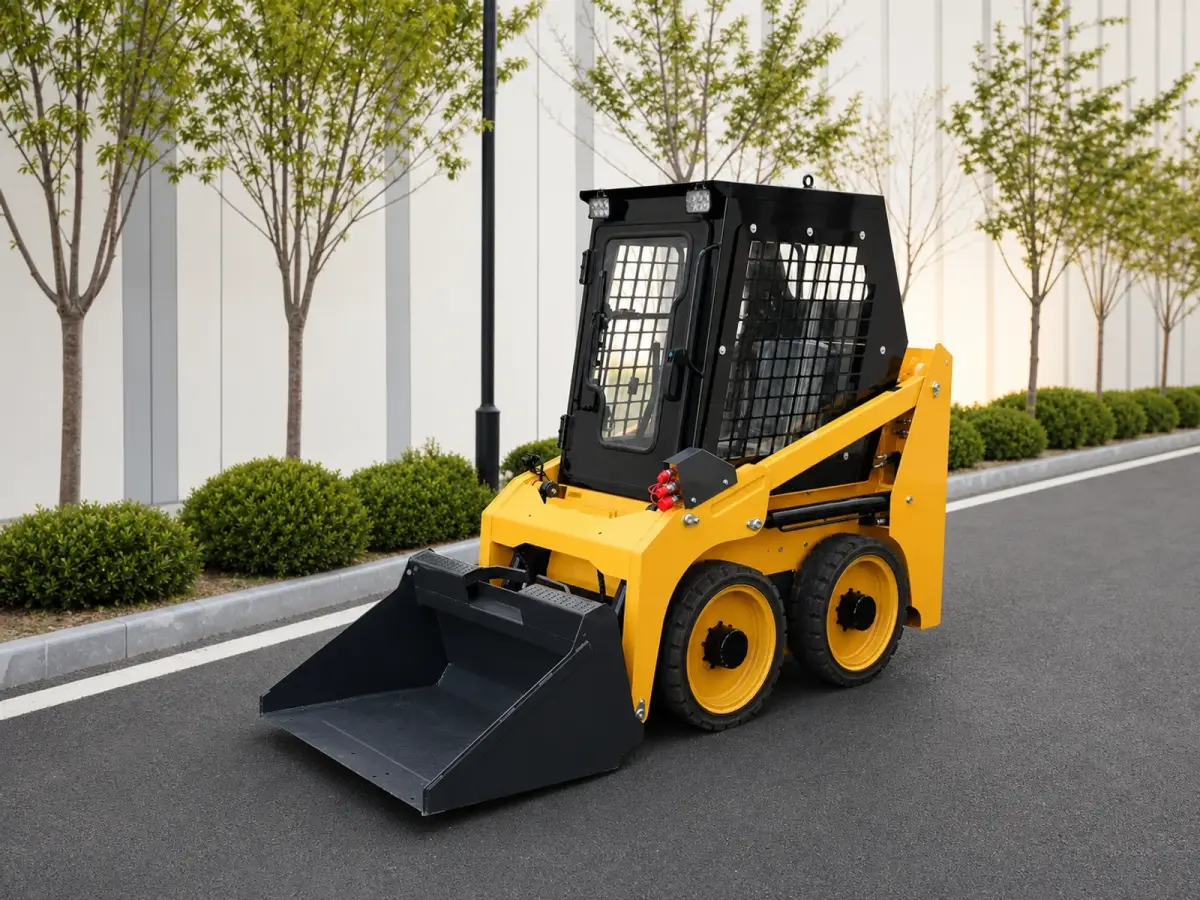
A construction skid steer with a bucket and a grapple replaces a crew with wheelbarrows on demolition strip-out and material staging, provided the machine can pivot inside the yard without a shunt.
Specification
What to check before buying for site work
Site buyers and rental yards read a spec sheet differently from a landscaping customer. These are the figures that decide whether a machine is still working in February.
Check
Ground pressure over payload
On soft or recently backfilled ground the limiting figure is kPa, not kilograms. Track width and undercarriage type determine whether the machine floats or sinks; a higher payload on a narrow track is often the worse buy.
Check
Loaded climb angle
Ramps, spoil heaps, and site access roads are where compact machines stall. Request the tested figure under full load. A supplier who only quotes the unloaded angle has not tested it.
Check
Engine class and duty cycle
A site machine runs six to nine hours a day, not one hour on a Saturday. Engine class, cooling, and service interval separate a machine that survives a season from one that does not.
Check
Wear parts and service support
Downtime on a site costs more than the part. Confirm which wear items are covered in the first support pack and which items need separate planning before the first failure.
FAQ
Construction FAQs
How steep a ramp can a tracked dumper climb when loaded?
Most 1-ton tracked dumpers are rated between 20 and 25 degrees unloaded and between 15 and 20 degrees under full load. Always specify the load condition when you ask, and treat any figure quoted without a load condition as unverified.
Is a construction skid steer different from a standard skid steer loader?
The frame is the same. The difference is duty specification: heavier undercarriage, higher hydraulic flow for attachments such as breakers and augers, and an engine class rated for continuous daily operation rather than intermittent use.
Do I need a licensed operator for a 1-ton machine on a commercial site?
This depends entirely on the jurisdiction and on the site principal, not on the machine weight. Many commercial sites require a competency card for any powered plant regardless of tonnage. Confirm with the site principal before the unit arrives.
Can a mini road roller meet the same compaction spec as a full-size roller?
For reinstatement strips and patch work, yes. Density is achieved through vibration frequency and pass count, not static weight alone. For a full carriageway lift, a compact roller is a finishing machine, not a replacement for the primary roller.
Quote
Equipment for Construction Sites
Email info@terracub.com with your site conditions, quantity, destination, and required equipment format. We will help narrow the right machine path before model selection.