Mortar Mixer vs Concrete Mixer: Choose by Material, Aggregate and Mixing Action
A drum concrete mixer and a paddle mortar mixer are built for different materials. Choose by what is in the mix, and get written approval before using one for the other.

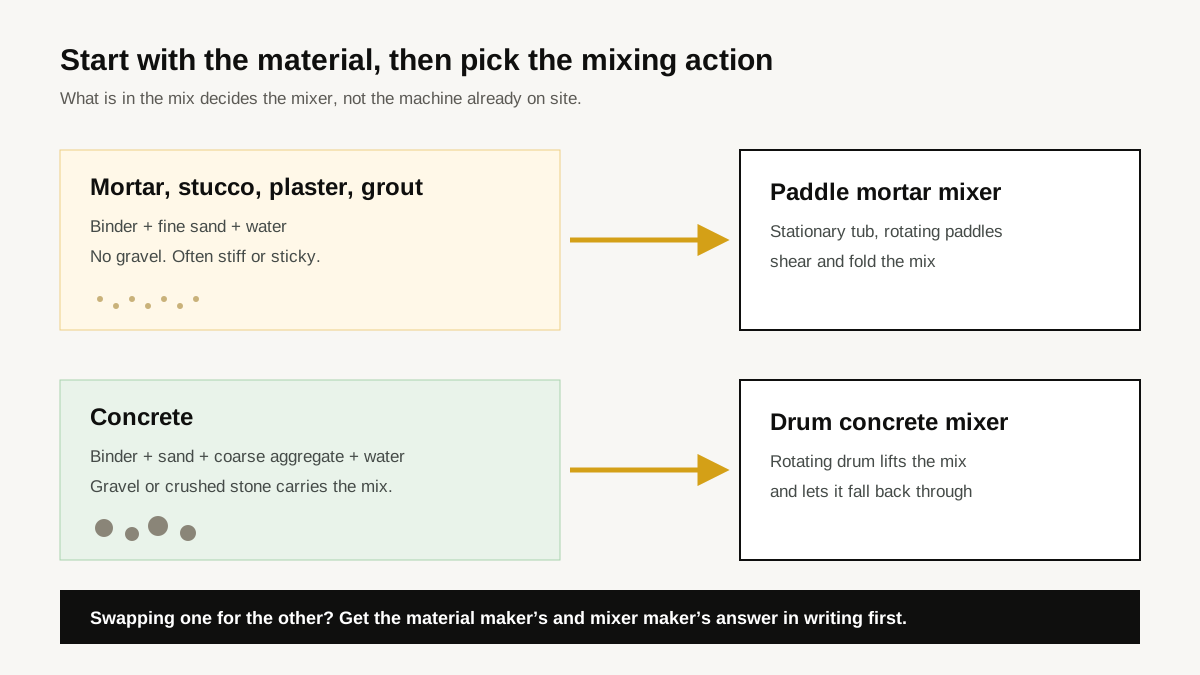
Direct answer: a mortar mixer and a concrete mixer are built for different materials. A concrete mixer turns a drum so the mix is lifted and dropped, which suits concrete that contains coarse aggregate such as gravel. A mortar mixer keeps the tub still and turns paddles through the mix, which suits sand-only mixes such as brick and block mortar, stucco, plaster and grout. Pick the mixer by the material your job specifies, not by the machine you already have. Sources disagree on whether a drum mixer can make acceptable mortar, and paddle mixers wear or jam on coarse aggregate, so treat any substitution as a question for the mortar or concrete product maker and the mixer manufacturer, and get their answer in writing before you rely on it.
Start with the material, not the machine
Mortar and concrete share a binder, but they are not the same mix. Mortar maker Amerimix describes mortar as cement, fine sand and lime, used to bond masonry units together, while concrete is cement, sand and gravel or other coarse aggregate, used for foundations, slabs, walls and paths. Amerimix is also direct that the two materials are not interchangeable: mortar is formulated for bonding, concrete for strength.
That difference in ingredients is what drives the mixer decision. Coarse aggregate changes how a mix moves, how much it abrades the inside of a mixer and how it needs to be folded together. Grout, stucco and plaster sit on the fine side with mortar: sand-based, often stiff or sticky, with no gravel skeleton. So the first line of any mixer enquiry should be the material and its product name, not the mixer size.
Drum vs paddle: how each mixer moves the mix
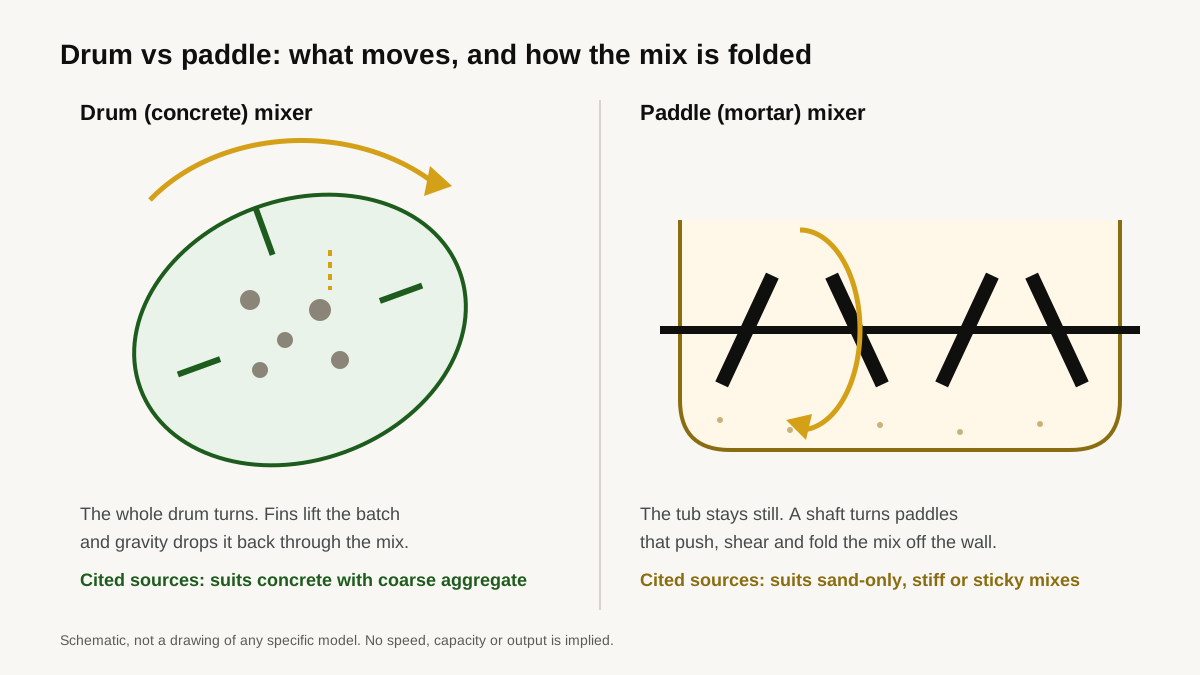
A concrete mixer, often called a drum or barrel mixer, rotates the drum itself. Fins inside the drum lift material as it turns and let it fall back through the batch. Mixer manufacturer Collomix calls this a free-fall mixer: the drum rotates and the material is mixed by gravity. That tumbling action works well when there is gravel in the mix to carry the fold and when the mix is fluid enough to fall freely.
A mortar mixer works the other way round. The tub or trough stays still while a shaft turns paddles through the material. Rental company Rentalex describes a stationary barrel with a rubber-stripped paddle that scrapes the barrel wall as it turns, and QUIKRETE's dealer training describes mortar mixers as rotating blades inside a stationary tub, designed for fine sand mixes. Because the paddles push, shear and fold the mix rather than waiting for it to fall, they handle stiff and sticky material that would cling to the wall of a turning drum.
Material-to-mixer matrix
The table below condenses what the manufacturer and equipment-seller sources in this guide say about each material. It is a starting point for the conversation with your supplier, not a substitute for the instructions printed on the product you are mixing.
| Material | Mixer direction in the cited sources | What to confirm before you buy or rent |
|---|---|---|
| Brick and block mortar | Paddle mortar mixer. QUIKRETE says machine-mixed mortar should use a mortar mixer, not a barrel type mixer. | The mortar product's own mixing instructions and the specified mortar type |
| Stucco, plaster, grout | Paddle or forced-action mixer. Collomix places plaster and grout with forced-action mixers; Contractors Direct places stucco with paddle mortar mixers. | Whether the product maker names a mixer type; batch size the crew can place |
| Concrete with coarse aggregate | Drum mixer. Collomix and Contractors Direct both place gravel mixes in drum mixers. | Maximum aggregate size and slump the mixer maker allows; usable batch output |
| Fluid concrete with small aggregate | Contractors Direct says mortar mixers can manage fluid concrete with aggregate up to 3/8 in, with significantly more paddle wear. | Written confirmation from the mortar-mixer manufacturer, and who pays for paddle wear |
Why substitution needs written approval, in both directions
This is the part most comparison pages skip, and it is where the sources disagree.
Mortar in a drum mixer. QUIKRETE's training material tells users machine-mixing its mortar to use a mortar mixer, not a barrel type mixer. Collomix goes further and lists free-fall drum mixers as unsuitable for fine-grained or viscous materials such as mortar. Quikspray, a mortar and plaster equipment company, takes a softer line and says some cement mixers can produce mortar. When the maker of the material and the maker of a mixer both say one thing and another page says the opposite, the safe reading is simple: the answer depends on the specific product and the specific machine, so ask them.
Concrete in a mortar mixer. Here the sources agree more closely. Rentalex says coarse mixes such as concrete wear down the rubber strips on the paddle and that rock or gravel can block the paddle. Quikspray warns that the small paddles in a mortar mixer may break if used for cement mixes, and Contractors Direct says heavy aggregate significantly increases paddle wear even where fluid small-aggregate concrete is possible.
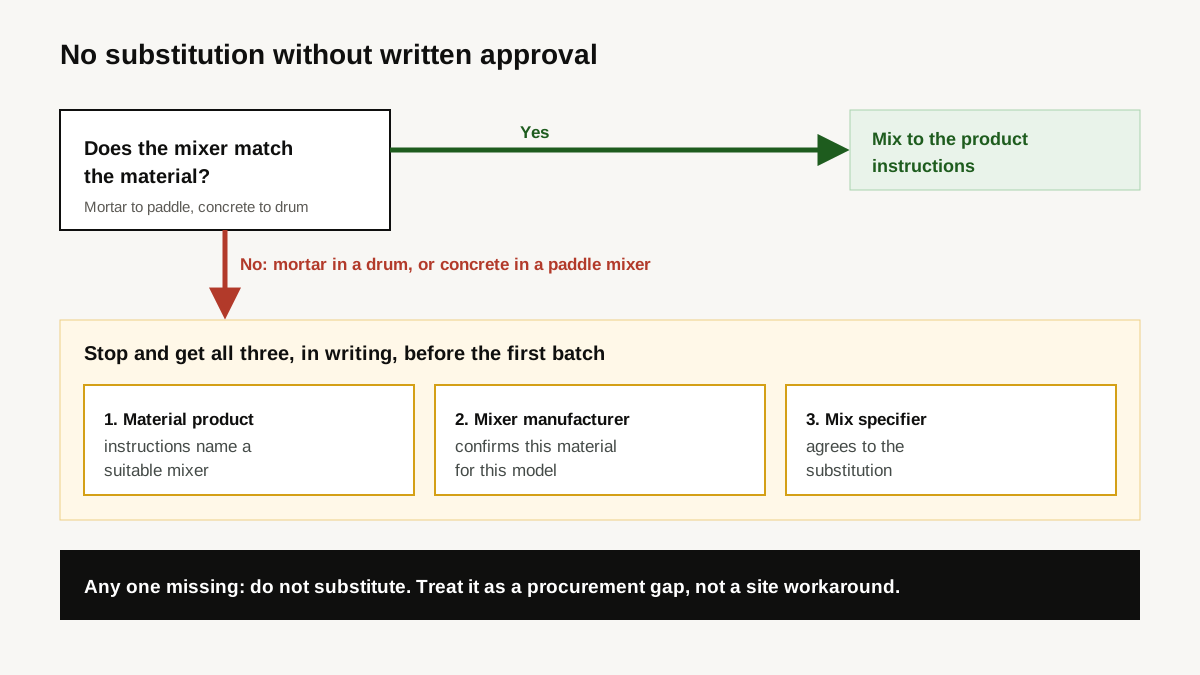
Our recommendation follows from that evidence. Do not plan a job around one mixer doing the other mixer's work unless you have three things: the mortar or concrete product's instructions, the mixer manufacturer's written confirmation for that material, and agreement from whoever specified the mix. If any one of those is missing, the gap is a procurement risk, not a technique problem to solve on site.
Batch and cycle inputs to confirm
Whatever mixer you choose, the output you need is consistent material, batch after batch. The Concrete Masonry & Hardscapes Association's technical note on concrete masonry construction (TEK 03-08A) says site-mixed mortar should ideally be mixed in a mechanical mixer for 3 to 5 minutes, with the same quantities of materials added in the same order each time. The same note says mortar can be retempered with a little water for only about 1.5 to 2.5 hours after initial mixing, depending on site conditions.
Two quote questions come out of that. First, can the mixer you are pricing turn out batches small enough that the crew uses each one inside its working window? Second, what does the manufacturer state about mixing time and loading for the material you will run? Keep the mix proportions and water content with the product instructions and the project specification; this guide does not replace either.
For concrete, the size question is a separate topic. A drum capacity label is not the same as usable output per batch, and we cover how to check that in our guide to concrete mixer capacity and usable batch output. Settle the material question here first, then size the machine.
Cleaning between materials
If one machine will handle more than one material, ask how it should be cleaned between them. The masonry guidance above ties batch consistency to adding the same materials in the same quantities each time; residue from a previous, different mix left in the drum or tub is an ingredient nobody measured. Ask the mixer manufacturer for its cleaning procedure between material changes, and plan the time and water for it on site. We cannot give a universal cleaning method, because the right one depends on the mixer's construction and the materials involved.
Power and site constraints
Both mixer types are sold with petrol or electric drive. Contractors Direct notes that smaller electric units use motors from around 1.5 HP, while larger ones with 5 HP motors can require a 220 V supply, so check what power is available at the mixing point before choosing an electric model. On sites without a suitable supply, an engine-driven mixer avoids that dependency.
Access matters too. A mixer that has to sit at the edge of the site means the mix travels further to the work face. That is a workflow question with its own trade-offs, and it belongs in the quote alongside the material question rather than replacing it.
Where the TerraCub T500 fits
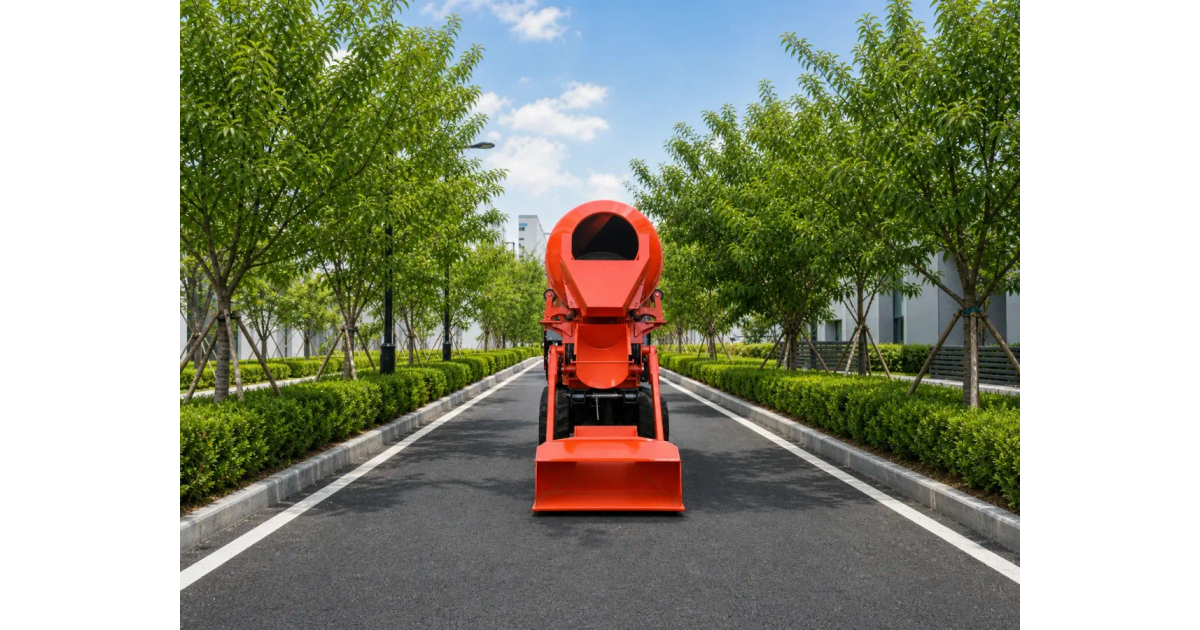
The TerraCub T500 is a tracked drum concrete mixer. Its product data lists a 0.145 m³ drum capacity, a 200 kg maximum load, a drum that tilts to 90°, a 600 mm mixing drum diameter with a 423 mm feed inlet, an 800 mm overall width, a 20° climbing rating and petrol engine options rated between 4.2 and 4.8 kW. The applications it lists are concrete work: small residential pours, paths, compact foundations and farm and utility jobs.
What the product data does not do is state that the T500 is suitable for mortar, grout or plaster. We therefore treat it as a concrete mixer and nothing more. If your job is mostly masonry mortar, this guide points you to a paddle mortar mixer. If it is mostly concrete with coarse aggregate in places a wheeled mixer cannot reach, the tracked drum format is relevant, and you can compare it within our portable concrete mixer range. If you want to run any non-concrete material through a T500, ask TerraCub first and get the answer in writing; do not assume it from this page.
Mixer quote checklist
Send the same information to every supplier so the answers are comparable:
- Material and product: mortar, grout, plaster or concrete, with the product name or mix specification you will use.
- Aggregate: maximum aggregate size and whether the mix contains gravel or crushed stone.
- Consistency: stiff, sticky or fluid, as the product instructions describe it.
- Batch and cycle: the quantity your crew can place within the working window, and how often you need a new batch.
- Substitution question: if you want one mixer for more than one material, ask the manufacturer to confirm each material in writing.
- Cleaning: the manufacturer's procedure between material changes.
- Power and site: available power at the mixing point, access width and distance to the work face.
Ask about the right mixer for your material
Send us the material and product you will mix, the maximum aggregate size, the batch quantity and your site constraints. We will tell you what our concrete mixers are specified for, what we can confirm in writing and what we cannot.
Ask about a concrete mixerFAQs
Can you mix mortar in a concrete mixer?
Sources disagree. QUIKRETE tells users machine-mixing its mortar to use a mortar mixer, not a barrel type mixer, and Collomix lists free-fall drum mixers as unsuitable for mortar, while Quikspray says some cement mixers can produce mortar. Follow your mortar product's instructions and get the mixer manufacturer's confirmation in writing before relying on a drum mixer for mortar.
Can a mortar mixer mix concrete?
Not as a general rule. Coarse aggregate wears the rubber-tipped paddles and gravel can jam them, according to Rentalex and Quikspray. Contractors Direct says some mortar mixers can manage fluid concrete with aggregate up to 3/8 in, with significantly more paddle wear, so confirm with the mortar-mixer manufacturer first.
What is the difference between mortar and concrete?
Mortar is cement, fine sand, lime and water, used to bond bricks and blocks. Concrete is cement, sand and gravel or other coarse aggregate, used for structural work such as slabs and foundations. Mortar maker Amerimix says the two are not interchangeable.
Is a paddle mixer better than a drum mixer?
Neither is better overall. Paddle mixers suit stiff, sticky, sand-only mixes such as mortar, stucco, plaster and grout; drum mixers suit concrete with coarse aggregate and more fluid mixes. Choose by the material you will mix.
Can the TerraCub T500 mix mortar?
Its product data does not say so. The T500 is a tracked drum concrete mixer, and its listed applications are concrete work, so this guide treats it as a concrete mixer only. Ask TerraCub in writing before using it for any other material.
Sources and limitations
- QUIKRETE, Training Module 5: Mixing & Placing Mortar (dealer training PDF): use a mortar mixer, not a barrel type mixer, when machine-mixing QUIKRETE mortar; mortar mixers are rotating blades in a stationary tub.
- Collomix, Concrete mixer vs. forced-action mixer: free-fall drum mixing by gravity; suitability for coarse concrete versus fine or viscous materials such as mortar.
- Contractors Direct, Buying Guide: Concrete & Mortar Mixers: drum vs paddle materials, 3/8 in aggregate note and paddle wear, power options.
- Rentalex, What Is the Difference Between a Mortar Mixer and a Concrete Mixer? (2022): stationary barrel and rubber-stripped paddle; wear and blockage from coarse mixes.
- Quikspray, What's the Difference Between Mortar Mixers and Cement Mixers?: paddle vs barrel design; the view that some cement mixers can make mortar; paddle breakage risk.
- CMHA, TEK 03-08A Concrete Masonry Construction: mechanical mixing for 3 to 5 minutes, consistent quantities and order, retempering window.
- Amerimix, What is the difference between mortar mix and concrete mix?: mortar and concrete ingredients; not interchangeable.
- TerraCub T500 product data: published drum capacity, maximum load, drum dimensions, width, climbing rating, engine options and listed concrete applications.
This guide compares mixer types by material and mixing action. It gives no mix recipe, proportions or water content, and it does not state that any mixer, including the T500, is approved for a material its manufacturer has not confirmed. Product instructions, the mixer manufacturer and your project specification take precedence.
Recommended Products
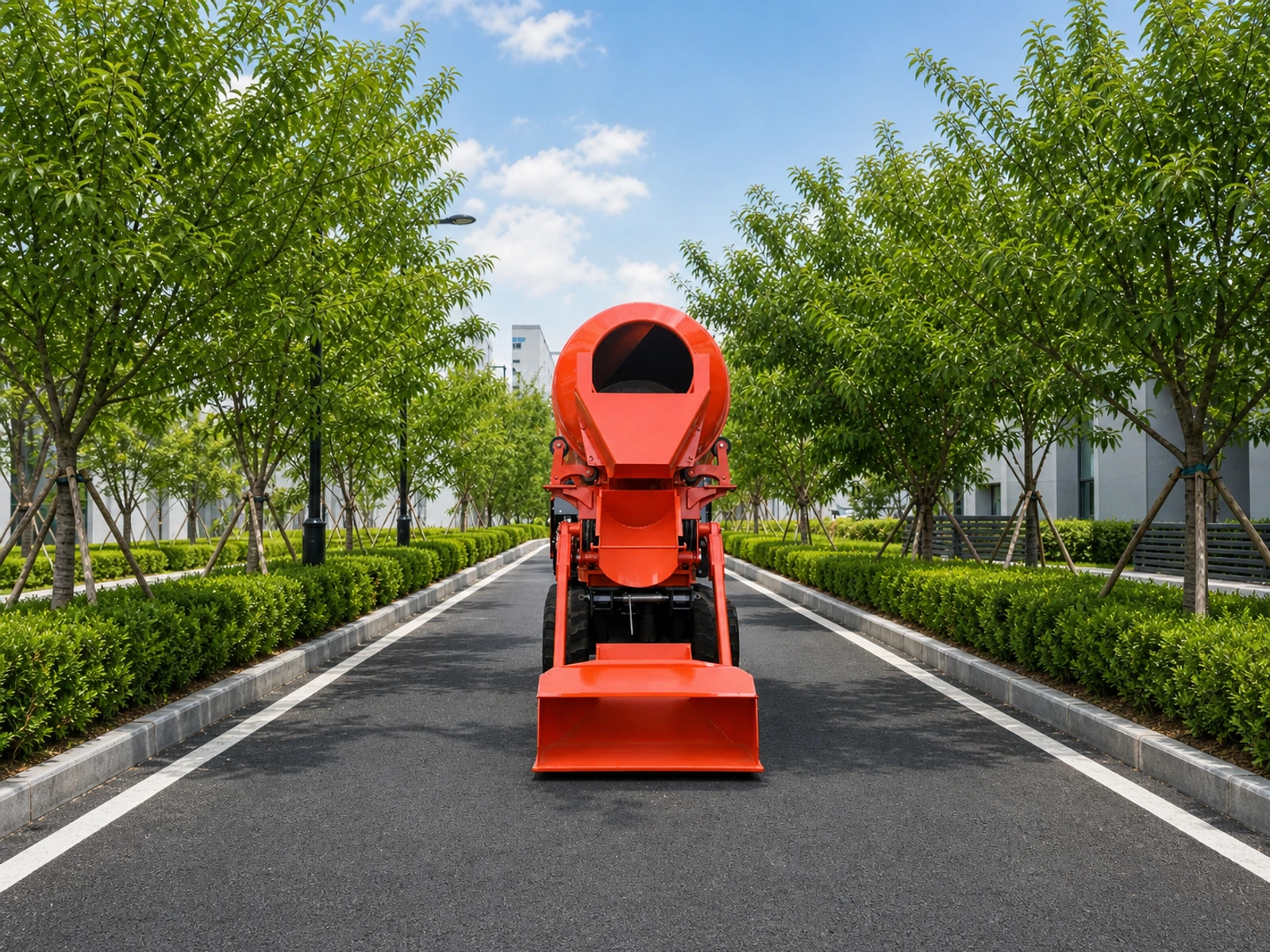 T500 Skid Steer Concrete Mixer
Tracked T500 mixer with 0.145 m3 drum capacity, 800 mm width, and practical compact-batching specs for narrow-access site work.
View Product →
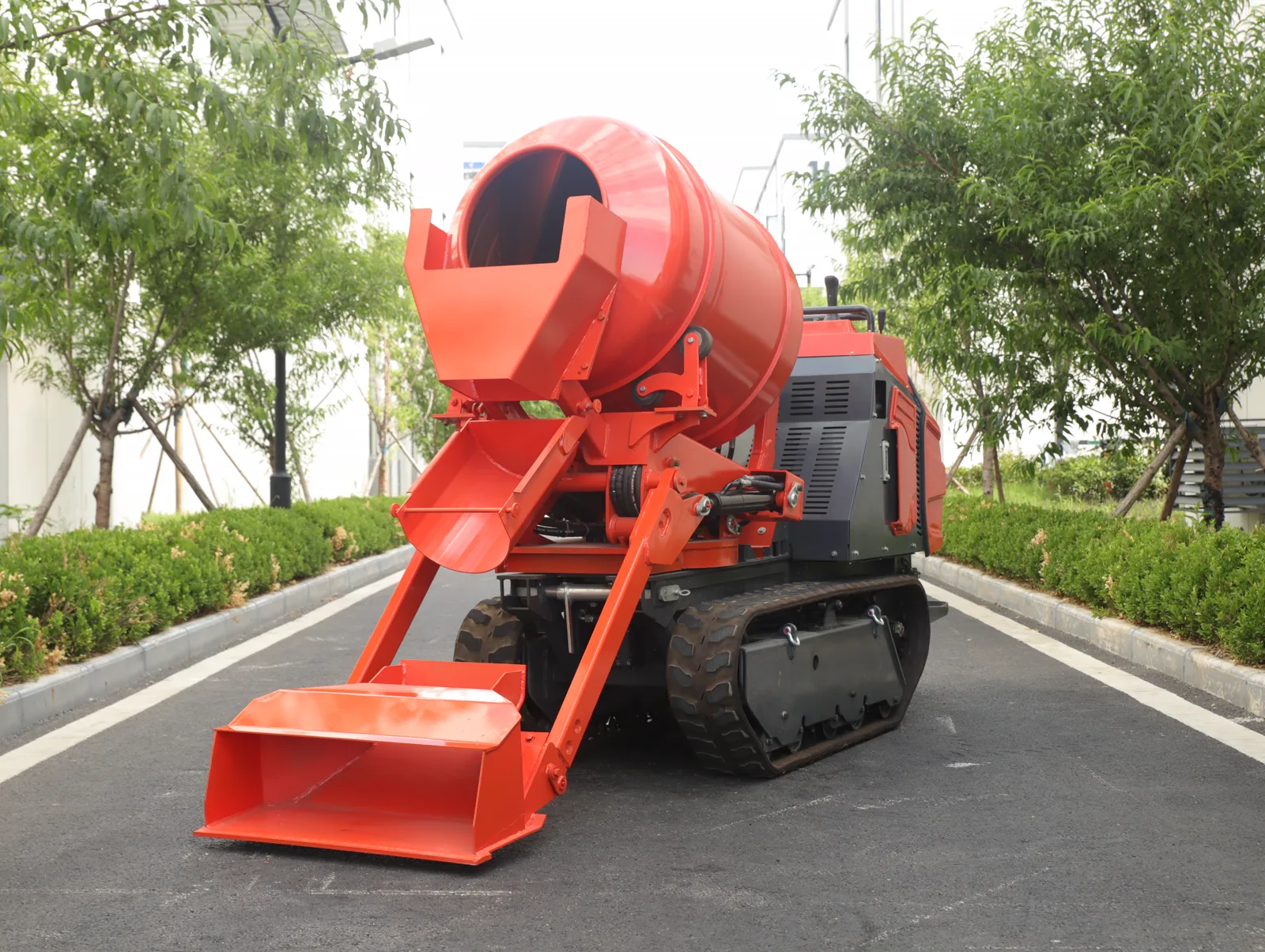 Skid Steer Loader C1200 Mixing Attachment
C1200 mixing configuration for compact batching, material prep, and narrow-access concrete workflows.
View Product →