Concrete Mixer Capacity: Drum Volume vs Usable Batch Output
Read the exact rating label, its units and the material it describes before comparing machines.


Concrete mixer drum capacity is not automatically usable concrete output per batch. Read the exact rating label, its units and the material it describes before comparing machines. A published maximum load is a separate field, not a substitute for a batch-output specification. If usable output is not documented for the model being considered, confirm it before calculating batch count or production time. A unit conversion can clarify a number; it cannot supply missing output evidence.
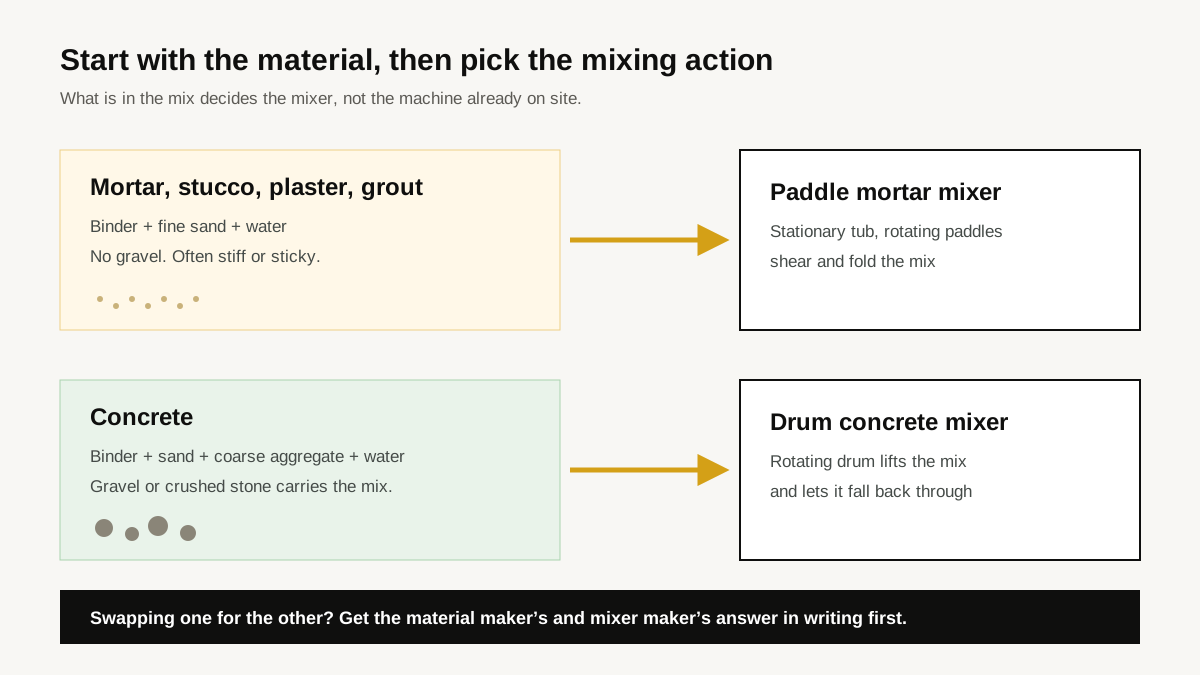
Before sizing a batch, first choose by material and mixing action: coarse-aggregate concrete and sand-only mortar use different mixer mechanisms, and substitutions need written approval.
Read what the capacity label measures
Two capacity figures can use the same volume unit and still describe different things. A useful manufacturer example is the IMER Workman 350 specification, which lists 12 cu ft drum capacity and 9.5 cu ft batch output separately. These are published figures for that named model, not a universal relationship to apply to other mixers.
Keep the wording attached when copying a specification into a comparison. “Drum capacity,” “mixing capacity” and “batch output” should not all become one spreadsheet column headed “capacity.” If the source uses a label without defining it, ask what that label covers. Does it identify the drum, an allowable charge, or an output quantity for a stated material and configuration?
Units deserve the same care. Kilograms describe mass; litres, cubic metres and cubic feet describe volume. Changing cubic metres to litres does not change what the source measured. For example, 0.145 m³ is 145 litres, but if the original field says drum capacity, the converted field still says drum capacity—not delivered concrete per batch.
Do not borrow a fill percentage from another machine to close the gap. The IMER example shows why separate labels matter; it does not supply a conversion factor for a TerraCub mixer or any other model. Retain a missing batch-output field as missing until there is model-specific evidence for it.
For the T500, keep the published figures separate from the missing output
The T500 product specification checked for this guide lists 0.145 m³ drum capacity and 200 kg maximum load. It does not state a verified usable batch-output volume. That is a limit of the published evidence, not a finding that the mixer cannot perform the intended work.
Use a known-and-unknown record like this when preparing an enquiry:
| Field | What the checked T500 page establishes | What it does not establish |
|---|---|---|
| Drum capacity | A published drum-capacity label of 0.145 m³ | 0.145 m³ of usable concrete output per batch |
| Maximum load | A published maximum-load label of 200 kg | A tested output volume or a complete material-specific batch definition |
| Usable batch output | No separate verified output volume stated on the checked page | A number suitable for an actual batch-count calculation |
| Complete cycle | No verified full-cycle time supplied by those two capacity labels | An hourly production figure |

The useful follow-up is specific: ask what usable output can be documented for the exact model, material and intended configuration. Also ask how the maximum-load field is defined in the applicable specification. Converting mass to a volume would require additional material information, and that calculation alone would still not prove an approved mixing batch.
Keep the source page or specification revision with the answer. If a quotation introduces a new output figure, request its definition and supporting record rather than silently replacing the old label. A manufacturer statement and a recorded trial can both be useful, but identify which kind of evidence you have.
Calculate batch count only after output is confirmed
Once usable output is confirmed for the relevant conditions, a basic planning calculation is straightforward:
Batch count = required volume ÷ confirmed usable output per batch, rounded up.
For an illustrative arithmetic example, a 1.0 m³ requirement divided by a confirmed 0.10 m³ per batch gives 10 batches. Neither value is T500 performance data. The example only shows the calculation after its input is known; it does not establish allowances, a mix recipe, a pour sequence or structural suitability.
If the usable-output input is unknown, the honest result is “batch count not yet established.” Entering drum volume into that field makes the spreadsheet produce a number, but it does not make the planning assumption valid. The same is true of taking a ratio from a different manufacturer's mixer and presenting the result as this machine's output.
Keep any project allowances and partial-batch assumptions separate and identify who approved them. The equipment comparison should make those inputs visible, not decide concrete-design or placement requirements on behalf of the project team. A machine shortlist can remain provisional while the missing output evidence is requested.
Count the whole cycle, not only time spent mixing
Even a documented batch volume does not, by itself, establish production per hour. You also need to know what the quoted cycle includes. NPCA's batching-and-mixing guidance distinguishes mixing time from a complete production cycle and discusses constraints around the mixer. That broader precast-plant discussion supports the timing distinction here; its dated standards and plant-specific assumptions are not T500 operating specifications.
For a compact-mixer comparison, define a repeatable start and end event in the workflow being evaluated. Record loading, mixing and discharge, together with movement, reset or waiting where those steps actually apply. Do not assume that every machine or job follows an identical sequence, and do not leave a required step outside the timer without saying so.

Ask the supplier what the reported time measures. Was it the mixing stage alone, a complete recorded cycle, or an estimate? Was material ready beside the machine? Did the record include the movement and discharge arrangement relevant to your site? Those questions define the comparison; they do not imply that a particular time or productivity factor applies.
If only mixing time is available, keep it labelled as mixing time. Leave full-cycle time open until the other required steps are accounted for. This is more useful than producing an hourly output figure whose missing time is hidden inside an unexplained efficiency allowance.
Ask for a model-specific output record before comparing quotes
Use the concrete mixer range to identify the machine being considered, then attach the capacity questions to that model. A general answer about portable mixers does not resolve a missing field in an exact-model quotation.
Request a record that names the configuration and material, defines the capacity label, and identifies the source of the stated output. If bagged material is discussed, retain the exact product identity and the meaning of the bag count rather than treating “bags per batch” as a complete volume specification. Ask for the applicable load limit and any stated conditions without inventing a loading instruction from this guide.
For cycle evidence, request the start/end definition and which workflow steps were included. If a documented trial is available, keep its observations separate from an estimate or brochure statement. If no trial record is available, state that limitation; this article does not promise that TerraCub has performed or will provide a particular test.
Before comparing two quotations, check whether their numbers describe the same quantity under a sufficiently clear scope. One may give a drum volume while the other gives an output rating. One may quote mixing time while the other records a fuller cycle. Resolving those differences is the point of the enquiry—not forcing every quotation to look complete before the evidence exists.
Ask about mixer capacity and configuration
Send the model and specification you are comparing, the material to be handled, the required delivered volume and the intended site workflow. Include access and discharge constraints, plus any batch or cycle records already available. Ask which output fields can be confirmed and which still need clarification before choosing a configuration.
Ask about mixer capacity and configurationFAQs
Is drum capacity the same as usable batch output?
No. Drum capacity describes the drum volume, while usable batch output is the material quantity a manufacturer states can be produced under a defined condition. Keep the original label attached to every figure.
Can the T500 0.145 m³ drum figure be used as concrete output per batch?
Not from the checked evidence. The published T500 information identifies 0.145 m³ as drum capacity and 200 kg as maximum load, but it does not state a separate verified usable concrete output per batch.
What information is needed before estimating batches per hour?
Obtain a verified usable batch output and a complete cycle time for the stated material, mix, loading method, discharge method and operating conditions. If either input is missing, leave the production estimate unconfirmed.
Sources used in this guide
- IMER — Workman 350: named-model drum and batch-output labels. No universal fill ratio is inferred.
- TerraCub T500 product specification, linked in the model section: the published drum and maximum-load fields checked for this guide. Usable output is left unconfirmed rather than calculated from those labels.
- NPCA — Batching and Mixing Equipment: the distinction between mixing and complete-cycle time; plant-specific production values and dated compliance references are not adopted.
This guide uses published specifications and an editorial comparison method. No T500 batch trial was performed for the article. The worksheet, arithmetic example and cycle diagram are not measured machine-output evidence.