Skid Steer Loader vs Compact Track Loader: How to Choose Wheels or Tracks
Choose a wheeled skid steer for frequent work on hard, stable surfaces and a compact track loader for recurring soft, rough, wet, or slippery ground. Then confirm the real load, attachment demand, route width, and transport plan.

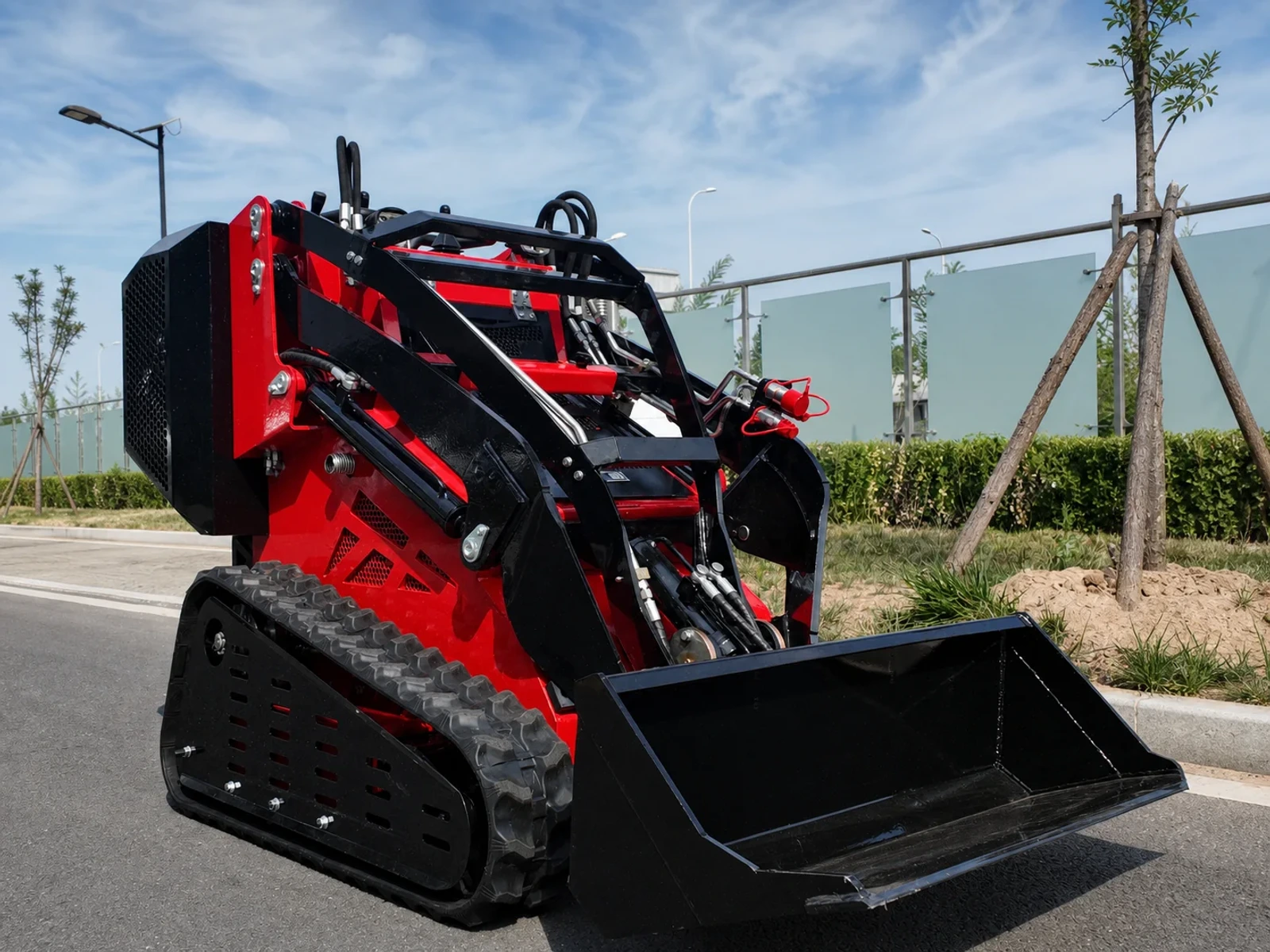
Short answer: the skid steer loader vs compact track loader choice is an undercarriage decision. Tires make sense when the work is mainly pavement, concrete, compacted gravel, and firm yards. Rubber tracks earn their place when soft soil, slopes, mud, turf, and uneven terrain are normal conditions. Both can run productive attachments. The key difference is how reliably the carrier gets that attachment to the work.
The decision becomes clear when the work is described honestly
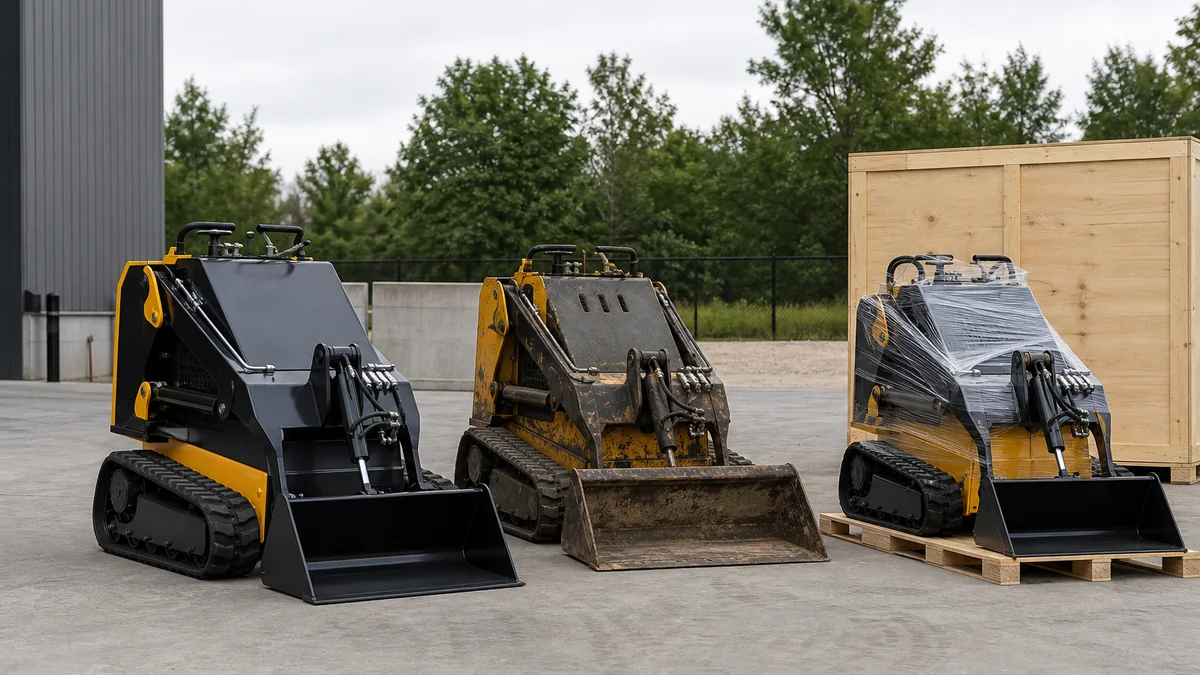
A wheeled skid steer and a compact track loader share the same broad job: lift, carry, push, grade, dig, and power tools from the front of a compact machine. They can both use buckets, forks, augers, grapples, sweepers, and other compatible quick-attach tools. The practical difference is the contact patch. A skid steer uses tires. A compact track loader uses rubber tracks and an undercarriage with rollers and idlers.
That difference changes traction, ground pressure, travel feel, surface wear, transport weight, and routine service. Bobcat's current comparison reaches the same basic conclusion: wheels suit hard, stable ground; tracks suit soft, rough, or slippery ground. The useful part is turning that rule into a purchase decision for the jobs you actually repeat.
| Question | Wheeled Skid Steer | Compact Track Loader |
|---|---|---|
| Typical best ground | Concrete, asphalt, compacted gravel, hard dry soil | Soft soil, mud, sand, snow, turf, rough or uneven sites |
| Travel and repositioning | Usually quicker on firm surfaces | Usually slower, but maintains grip as surfaces deteriorate |
| Traction and flotation | Strong on hard ground; can spin, rut, or sink in poor conditions | More contact area for traction and flotation on soft ground |
| Hard-surface wear | Tires are the natural fit for frequent pavement work | Long pavement runs can add track and undercarriage wear |
| Routine service focus | Tires, wheels, and conventional driveline checks | Tracks, rollers, idlers, tension, and undercarriage inspection |
| Transport planning | Often lighter in a comparable class | Often heavier; confirm trailer, tow vehicle, and tie-down capacity |
Choose by the ground you see most weeks, not the ground you hope for
Make the decision from normal job conditions. A machine spends more time travelling, turning, loading, and backing out than it does looking good in a product photo.
Wheels fit hard, abrasive, and transport-heavy work
A wheeled skid steer is usually the clean choice for hard construction yards, concrete, asphalt, compacted stone, barns, warehouses, and frequent short moves between tasks. Tires roll efficiently on firm ground, the machine feels nimble in tight areas, and pavement is less hostile to the undercarriage. This is a sound direction for loading, pallet handling, site cleanup, and road-to-job repositioning.
Tracks fit soft, variable, and surface-sensitive work
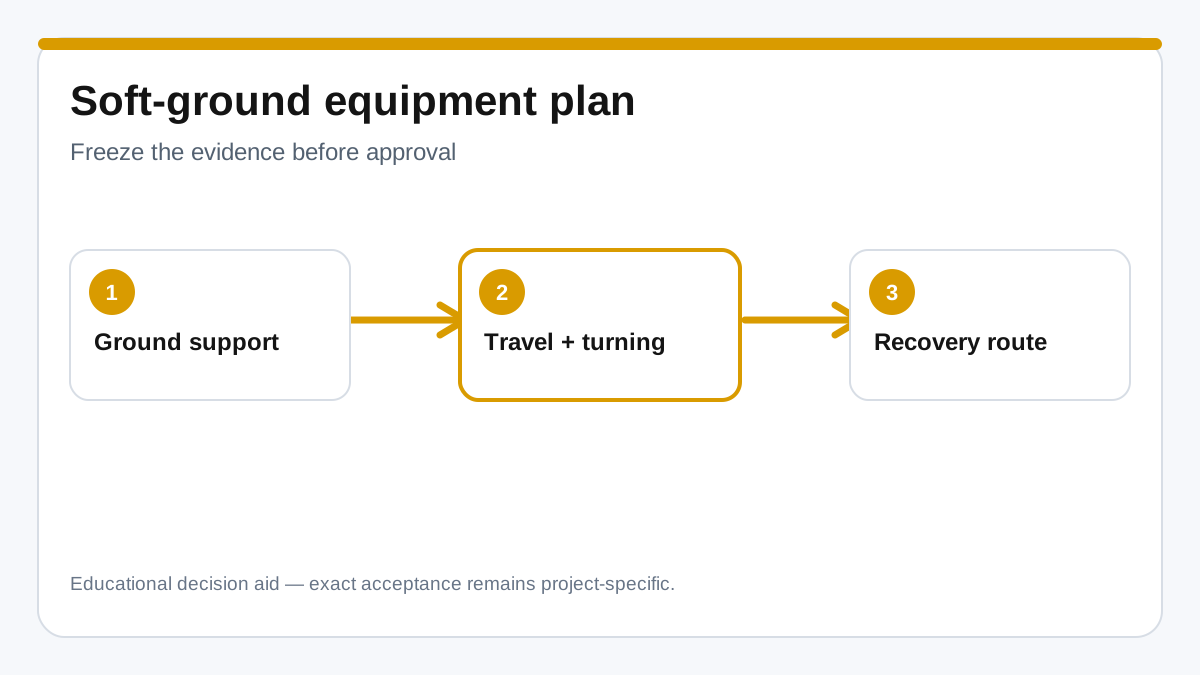
A compact track loader spreads weight over a longer, wider contact area. That helps it keep moving where tires would spin or cut ruts: wet landscaping sites, loose fill, sand, snow, slopes, rough woodland edges, and turf work. It does not make the machine weightless. It gives the operator a larger margin before poor ground stops the job.
Our view: do not pay for tracks just because a track loader looks more capable. Pay for them when poor ground regularly costs time, access, finish quality, or recovery risk. If hard ground is the rule, tires remain the more rational tool.
Traction is useful only when it improves the whole job
Tracks provide more continuous contact with the ground, which generally improves usable traction on loose and wet surfaces. That helps with pushing, grading, climbing, and carrying material across a site that does not behave like a parking lot. Wheels usually move faster on stable ground and can turn tightly with less rolling resistance. The faster machine is the one that stays productive on your normal surface.
Do not compare raw engine output by itself. Compare how much of the job the machine can complete without wheel spin, bogging, excess rutting, or a detour around a bad section. On a soft site, the compact track loader may finish a load cycle more consistently. On an asphalt yard, the wheeled loader may complete more short cycles before lunch.
For slopes, both formats need proper operating technique, a stable route, and the manufacturer's limits. Tracks can improve traction and stability on uneven terrain, but they do not remove rollover risk. Keep loads low while travelling and assess the specific slope and surface.
The lower purchase price is not automatically the lower operating cost
Wheeled skid steers are often simpler to buy and maintain. Tires are familiar service items, and a hard-surface contractor may get excellent value from a machine that spends most of its life on firm ground. Compact track loaders add an undercarriage system that needs inspection of track condition, tension, rollers, idlers, and debris.
But the proper comparison is total operating cost. Include lost production, site repairs, towing a stuck machine, damaged turf, extra travel time, and attachment downtime. Caterpillar's tracks-versus-wheels guidance makes the same distinction: tracks bring traction and lower ground disturbance, while wheels are compelling for hard ground, speed, transport, and lower operating cost.
- For wheels: inspect tires for cuts, pressure, wear, and jobsite debris.
- For tracks: inspect condition and tension, clean packed material, and monitor rollers and idlers before wear becomes a larger repair.
- For both: compare daily service access, local parts support, operator training, and the exact warranty terms.
Transport is part of ownership. Confirm machine operating weight with the attachment fitted, then compare it against the trailer rating, tow vehicle rating, ramps, tie-down plan, and local rules. A loader that is easy to move between jobs can be the better business decision even when its brochure capacity is not the largest.
The attachment should influence the carrier choice, not follow it
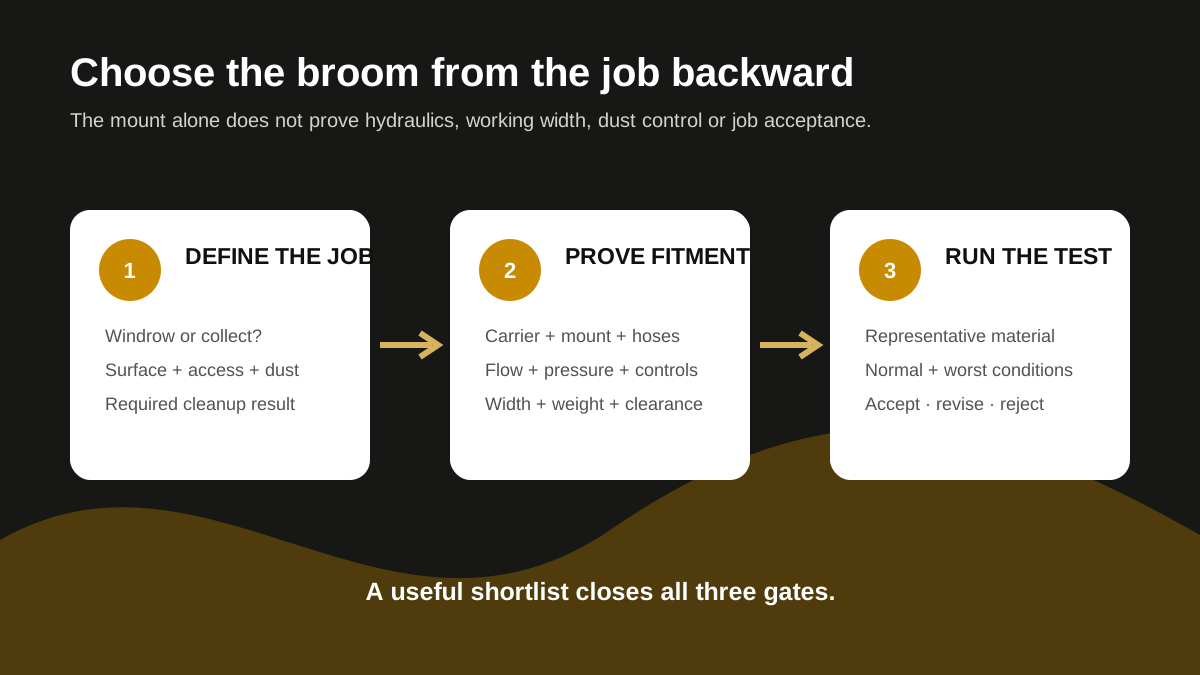
Both formats are versatile because the front coupler lets one carrier work with multiple tools. But quick attach does not mean every attachment is suitable for every loader. Before choosing the carrier, list the tools that will earn money: bucket, pallet forks, auger, grapple, sweeper, trencher, or a hydraulic tool.
Then confirm coupler compatibility, rated operating capacity, hydraulic flow and pressure, and any required electrical or case-drain connection. A heavier attachment may be physically mountable but still be a poor match for the machine's capacity or hydraulic system. On soft ground, the track platform may also let the carrier use a tool more consistently because it has the traction to stay in the work zone.
For land clearing, choose the whole work sequence
A useful field lesson from an OWNR OPS land-clearing interview is that finishing the initial cut is not always the end of the job. A grapple can be needed to move and pile fallen timber after mulching or clearing, so the carrier, attachment plan, and quote should be considered together. This is a practitioner example, not a universal revenue promise, but it is a practical buying test: list every regular task before choosing the loader.
For recurring woodland edges, loose soil, or wet access routes, ask whether the carrier can keep a mulching, grapple, or bucket workflow moving without repeatedly losing traction. If the normal route is hard and firm, wheels may still be the efficient choice; if access deteriorates through the job, tracks can protect productive attachment time. In either case, verify the exact tool's hydraulic requirements and include attachment changes, hauling, and clean-up work in the job plan.
Start with the TerraCub attachment range, then match the requirements to the machine family. For a broader shortlist, use the skid steer loader category. The Best Mini Skid guide helps when width, rated load, and operator format are the next decision after wheels versus tracks.
Use five questions to make the final call
- What surface do we work on most often? Hard and paved points to wheels. Soft, wet, loose, or mixed points to tracks.
- What happens when the weather turns? Include rain, thaw, snow, irrigation, and seasonality. If downtime is costly, traction has a measurable value.
- Which attachment drives the purchase? Specify the heaviest and most hydraulically demanding regular tool, then verify compatibility.
- How often will the machine travel and be transported? Frequent hard-surface site moves favor tire speed and rolling efficiency. Confirm the transport combination before choosing a heavier tracked unit.
- What is the cost of choosing wrong? Count repair, lost hours, recovery, turf repair, and missed work. Buy for the recurring job, not the rarest one.
Need a wheel-versus-track shortlist? Tell us your ground conditions, route width, material, attachment plan, and transport limits. We can match the loader format to the work instead of starting with a model name.
Request a Loader Recommendation →FAQs
Is a skid steer or compact track loader better for mud?
Are wheeled skid steers cheaper to own?
Can the same attachments fit both formats?
Which loader is better on pavement?
Do tracks always protect turf?
What should I compare before choosing wheels or tracks?
Further reading
Recommended Products
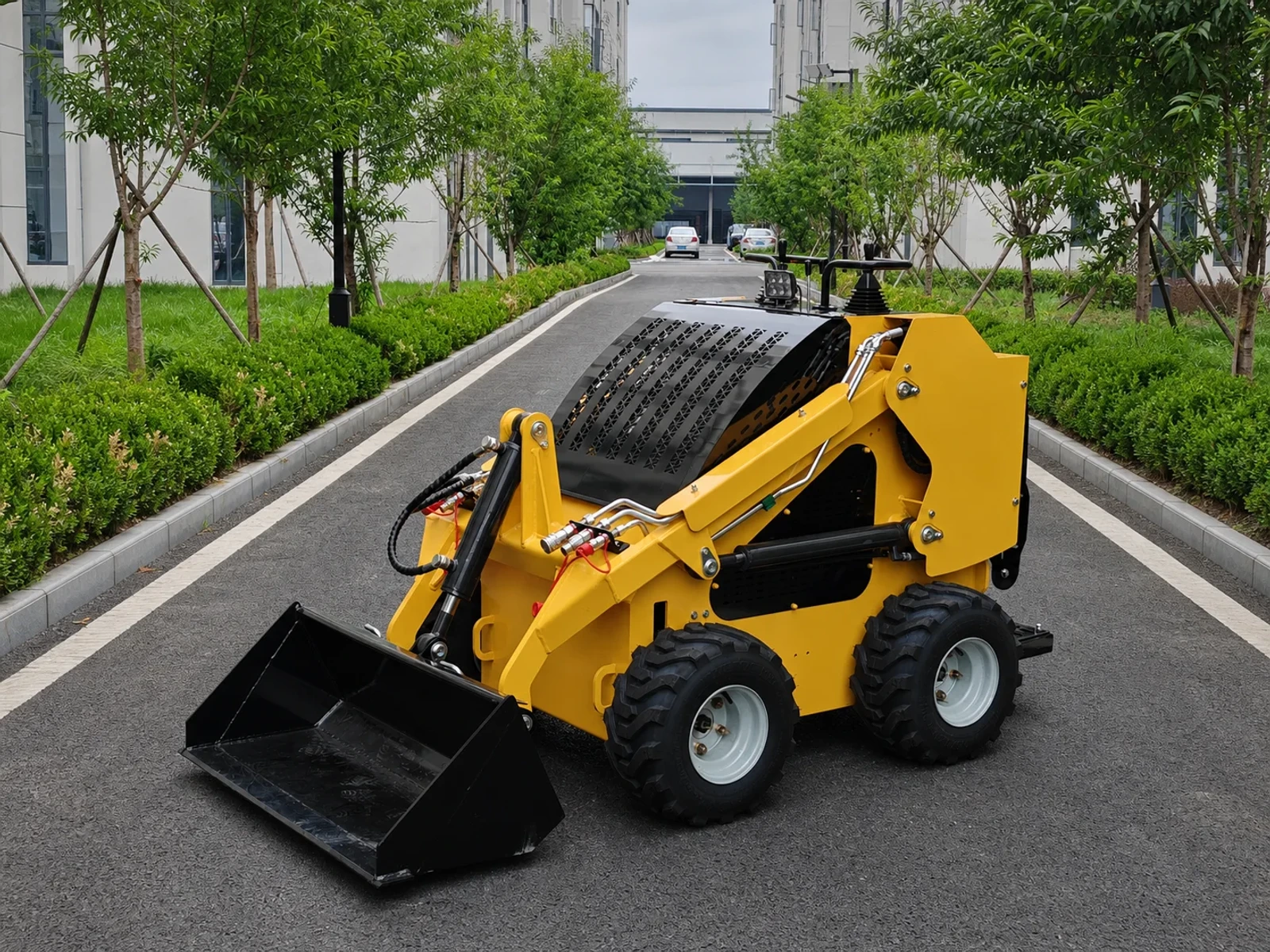 Wheeled Skid Steer Loader S480
Wheeled loader with 350 kg rated load, 0.1 m3 bucket, and high-tip angles for small-site loading work.
View Product →
Stand-On Track Skid Steer Loader T470
Tracked stand-on loader with 240 kg rated load, 0.12 m3 bucket, and stronger reach than entry compact models.
View Product →
Wheeled Skid Steer Loader S480
Wheeled loader with 350 kg rated load, 0.1 m3 bucket, and high-tip angles for small-site loading work.
View Product →
Stand-On Track Skid Steer Loader T470
Tracked stand-on loader with 240 kg rated load, 0.12 m3 bucket, and stronger reach than entry compact models.
View Product →
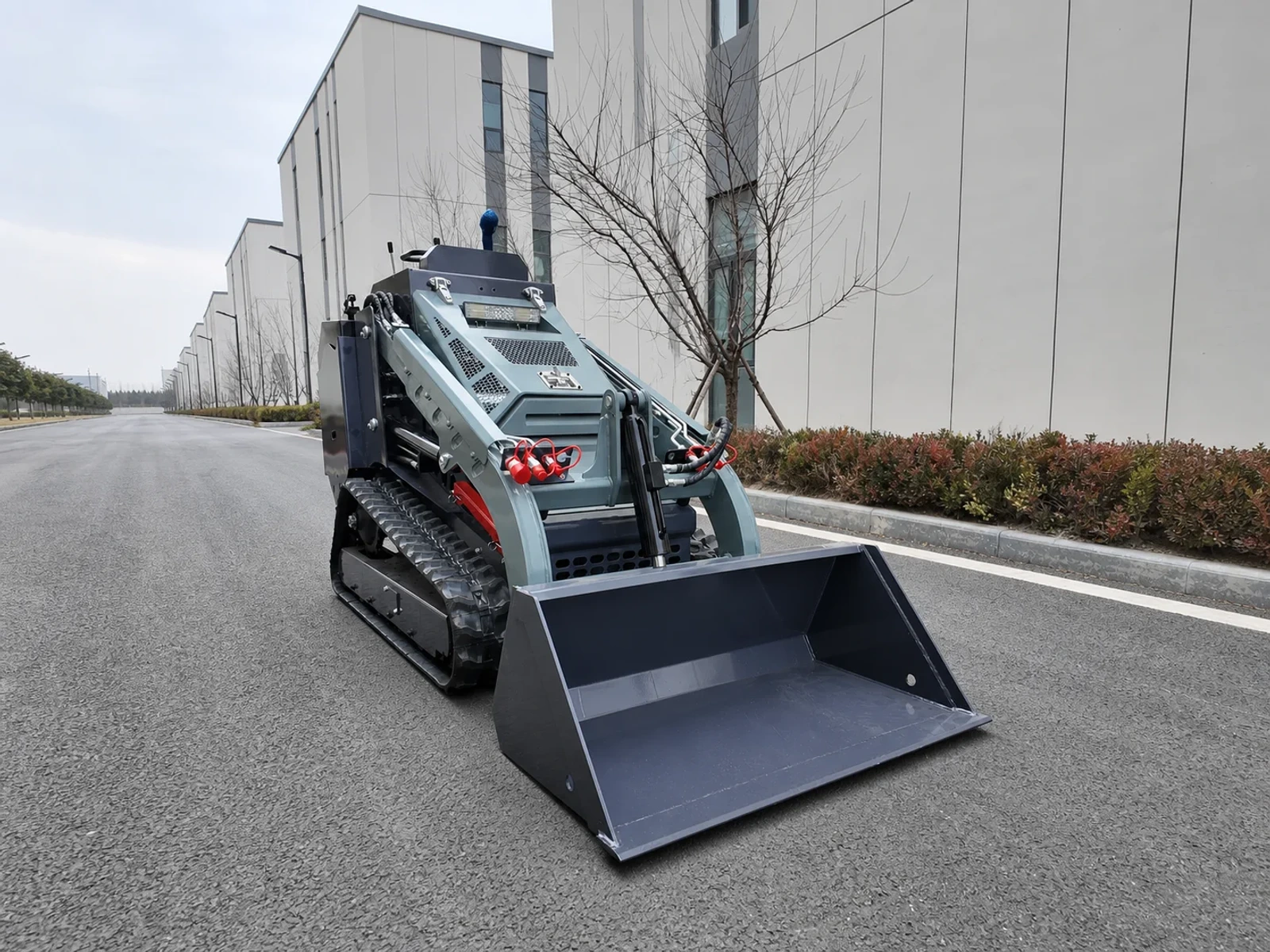 Compact Track Skid Steer Loader V800
Track loader with 420 kg rated load, 0.15 m3 bucket, and heavier contractor-ready compact platform.
View Product →
Compact Track Skid Steer Loader V800
Track loader with 420 kg rated load, 0.15 m3 bucket, and heavier contractor-ready compact platform.
View Product →