Best Mini Skid: How Buyers Should Compare Wheels, Tracks, Capacity, and Job Fit
Best mini skid comparison guide for buyers choosing between wheel and track loaders, size classes, lift capacity, and jobsite fit.

TerraCub Engineering Team
Compact equipment buyer guides for dealers and contractors
Quick answer: the best mini skid is the one that clears the real access width, handles the real rated load, and runs the attachments your jobs actually need. Use the main skid steer loader category for the whole mini / compact family, then use this page to narrow the shortlist by wheel vs track, capacity, and jobsite fit.
People who search best mini skid are rarely asking for one universal winner. They are usually trying to avoid buying the wrong machine format for their gate width, surface conditions, rated load, and attachment plan. That is a shortlist problem, not a slogan problem.
The family explanation for mini skid steer loader, compact skid steer loader, mini skidsteer, mini skidloader, and small skid steer loader belongs on the main category owner page. This article is intentionally narrower: which mini skid setup deserves a place on your shortlist.
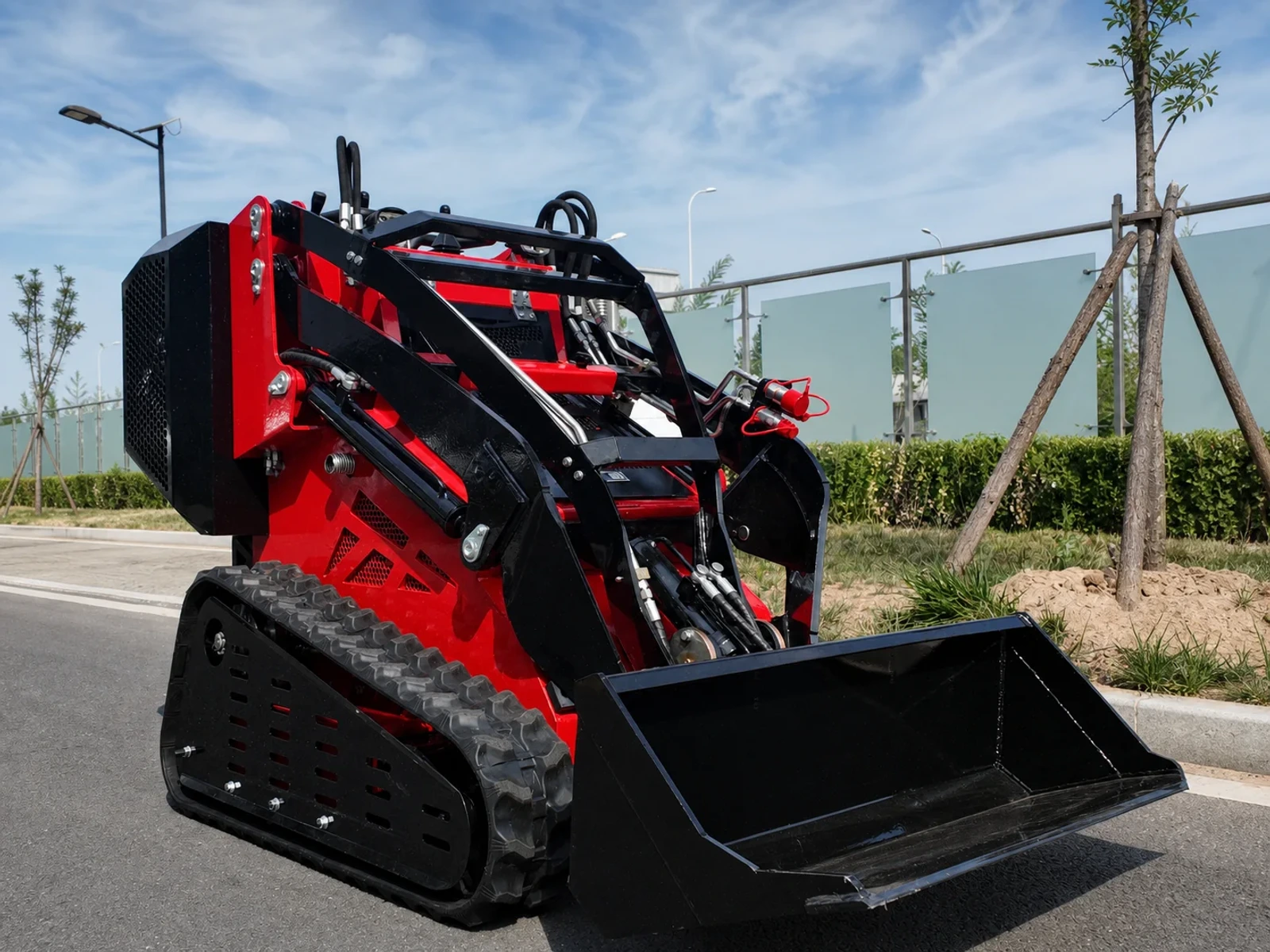
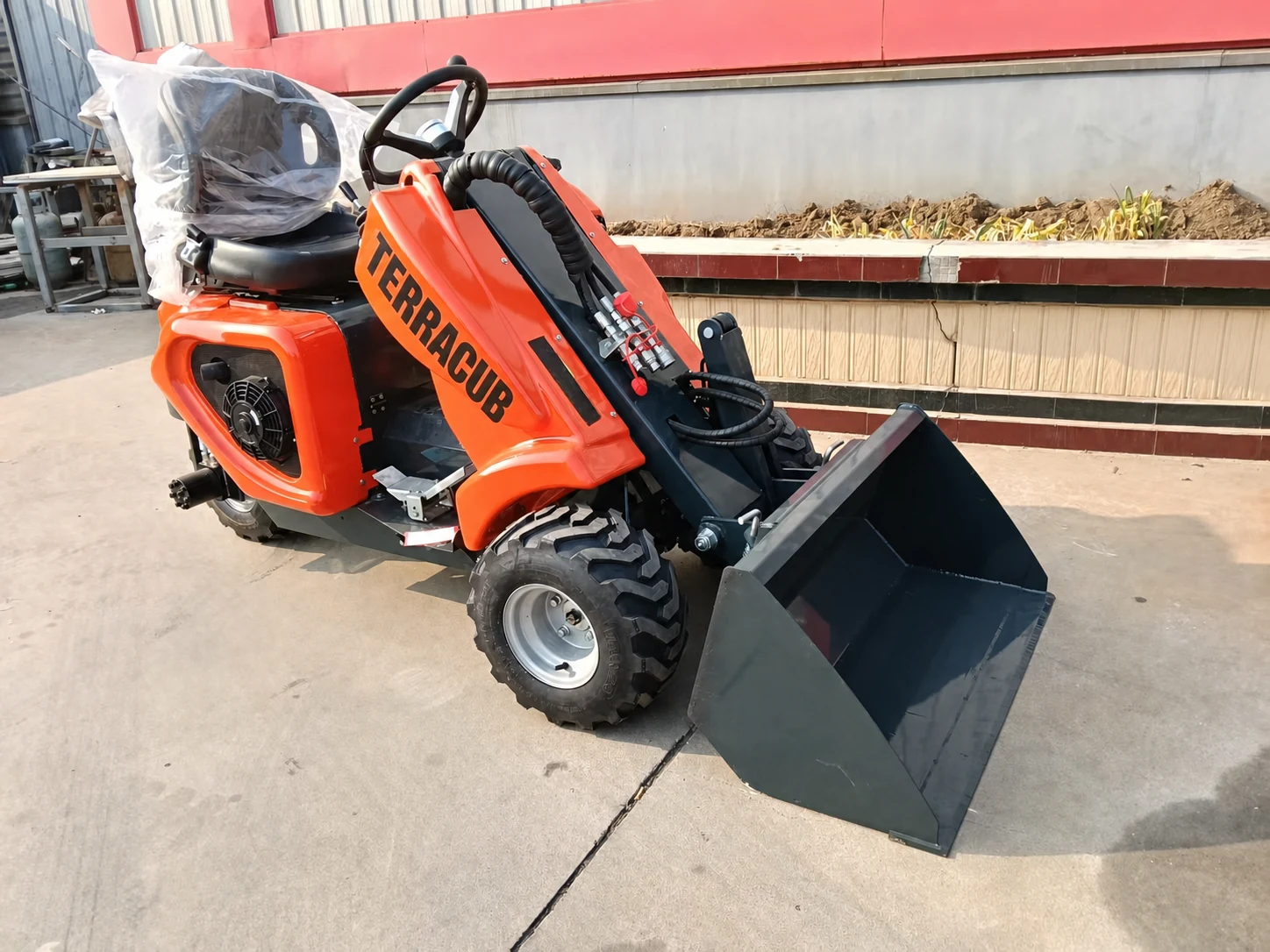
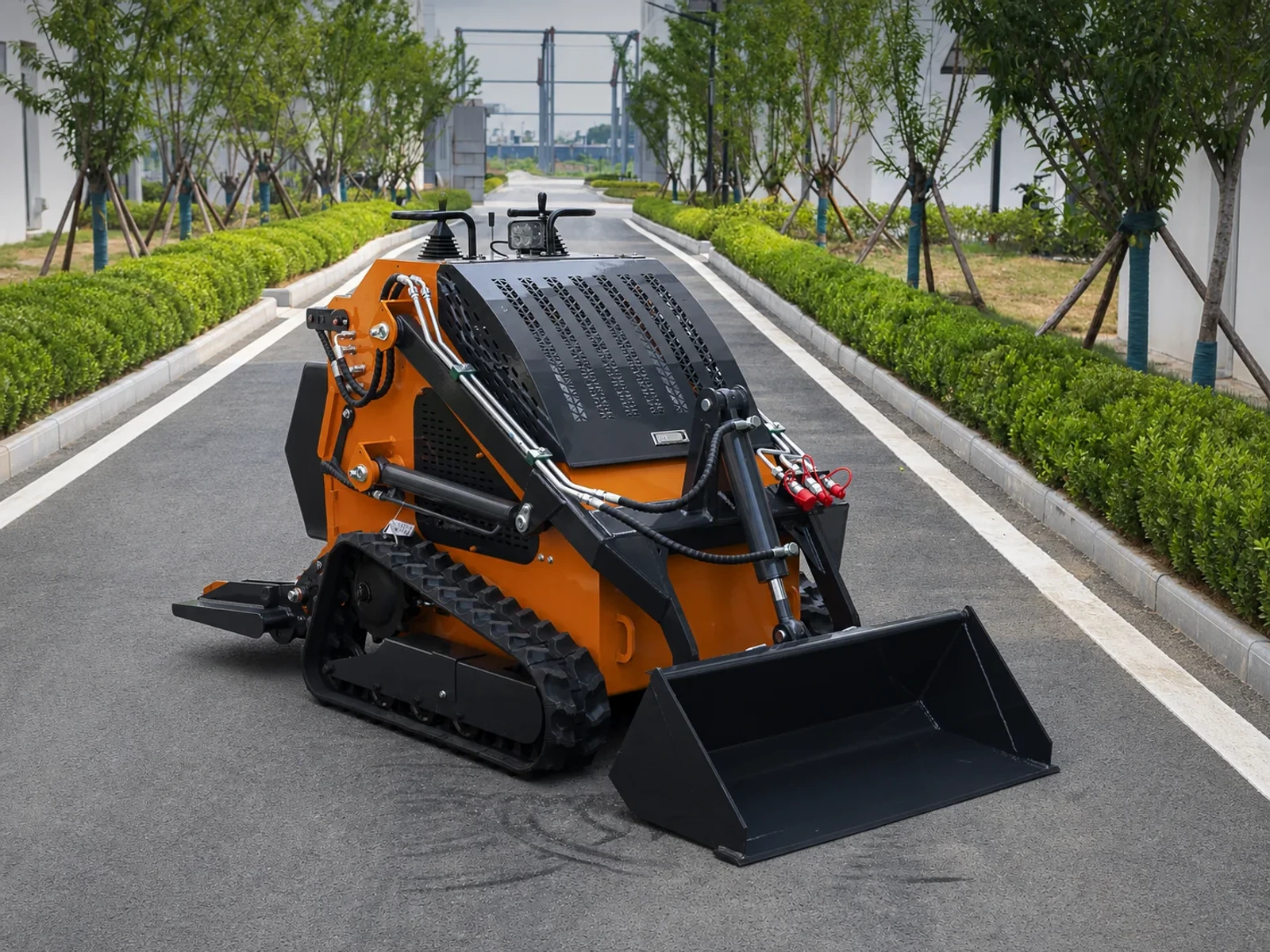
If you want the current TerraCub range first, start with the skid steer loader category. If you already know you are comparing a wheeled compact unit against a tracked narrow-access machine, jump straight to the S480 wheeled loader and the T470 stand-on track loader. That is the low-drama way to begin.
The best mini skid is the one that solves width, traction, and attachment fit first
Bobcat frames skid steers and compact track loaders as versatile machines chosen by matching applications, sizes, specifications, and attachment needs to the job. Toro makes the same point from the mini-loader side, describing wheels, tracks, power source, and lift path as the main decision variables. That agreement matters because it cuts through a lot of noisy search results.
In plain English, a mini skid steer loader is not just a small bucket machine. It is a compact power unit with lift arms, hydraulic flow, and quick-attach compatibility. The machine earns its money when one operator needs to move soil, stone, concrete, pallets, forks, augers, trenchers, or a bucket through spaces that punish full-size equipment. Useful, though not especially glamorous.
Practical shortlist rule: if the job needs loader capability but the path, surface, or crew size rules out a larger machine, the best mini skid is the one that fits the route, carries the real load, and powers the attachment you actually plan to use.
A common scenario looks like this: a two-person crew has to move soil through a side gate, backfill against a wall, and then swap to forks for block or sod. A compact machine with the right width and attachment flow saves both labor and repositioning. The spec sheet is not the jobsite. It rarely gets muddy.
Compact, mini, and small usually belong to the same buying family
For this keyword cluster, compact skid steer loader and mini skid steer loader are usually not separate article topics and not separate product families. They are different surface forms for the same buying conversation. The real splits happen later:
- Wheel vs track because surface and traction requirements change.
- Stand-on vs ride-on vs enclosed because operator format changes visibility, comfort, and machine size.
- Entry compact vs heavier contractor class because a 180 kg rated load and an 800 kg rated load are not cousins. They are distant relatives who do not share tools.
- Guide vs pricing vs comparison because search intent changes even when the product family does not.
This matters for content planning too. The shared family language should live on the category page. Separate support articles should handle price, track-vs-wheel comparison, and shortlist questions like best mini skid. Same family. Different page angle.
The useful type split is wheel, track, operator format, and duty class
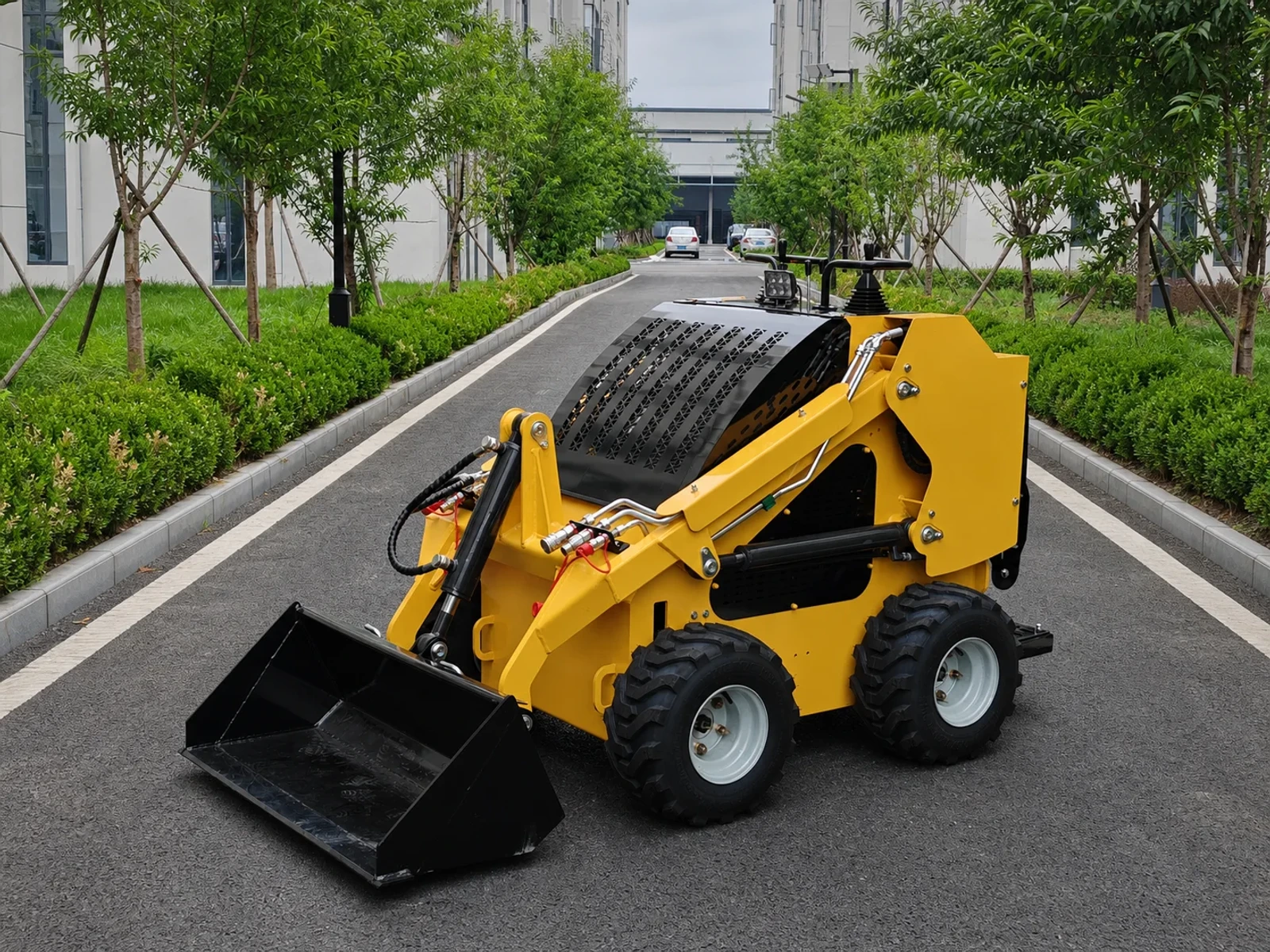
Competitor pages tend to explain mini loaders by brand, then drown the reader in model lists. That is not how buyers make sane decisions. The cleaner structure is below.
| Type | What it does well | Best fit | What to watch | TerraCub example |
|---|---|---|---|---|
| Wheeled mini loader | Higher speed on firm surfaces, simpler transport, less rolling resistance | Paved yards, property work, hard-ground landscaping, farm lanes | Less happy in mud, softer turf, and constantly mixed surfaces | S480 |
| Mini track loader | Better traction, flotation, and surface friendliness on softer ground | Landscaping, soil handling, mixed terrain, tighter contractor sites | Usually slower and heavier to transport than small wheel units | T360 |
| Stand-on track loader | Quick on-off operation, strong visibility around short-cycle jobs | Landscape crews, grading, trenching, repetitive attachment work | Operator comfort is usually lower on long travel or rough all-day shifts | T470 |
| Ride-on track loader | Compact track format with a different operator feel and control style | Small contractor fleets and rental channels that want seated operation | Still compact, but not always as quick in short-cycle access work as stand-on formats | T490 |
| Heavier compact track loader | More rated load, more loading presence, broader contractor fit | Material handling, larger landscaping crews, contractor-grade loading | Higher cost, bigger footprint, and more machine than some tight sites need | V1000 / V2000 |
Toro's mini loader guidance is useful here because it reduces the choice to four real levers: width, wheel versus track, power source, and radial versus vertical lift. Vermeer pushes the same direction from a different angle, emphasizing lift capacity, hydraulics, operator comfort, and attachment productivity. Those are not glamorous distinctions. They are still the ones that cost money when buyers ignore them.
The numbers that matter are rated load, width, lift height, and attachment demand
Buyers often get trapped by engine talk. That is understandable. Engine numbers are easy to print large. For most readers, rated operating capacity matters more than engine language. The common advice is incomplete because it ignores how the machine will actually be loaded, routed, and switched between attachments.
For most buyers, rated load matters more than headline horsepower. TerraCub's mini loader range runs from 180 kg on the S370 to 800 kg on the V2000. That is not a cosmetic difference. It changes the jobs the machine can take seriously.
| Model | Format | Rated load | Bucket | Width | Best use |
|---|---|---|---|---|---|
| S370 | Wheeled compact | 180 kg | 0.07 m3 | 1050 mm | Light cleanup, property work, small hard-ground jobs |
| S480 | Wheeled compact | 350 kg | 0.1 m3 | 1050 mm | Stronger small-site loading on firm surfaces |
| T470 | Stand-on track | 240 kg | 0.12 m3 | 1050 mm | Narrow-access contractor work with track traction |
| V1000 | Compact track loader | 500 kg | 0.1 m3 | 1244 mm | Heavier contractor loading and broader material handling |
| V2000 | Heavy compact track loader | 800 kg | 0.34 m3 | 1400 mm | Largest payload class in the current TerraCub mini loader range |
All figures above are from TerraCub's current local product data and should be treated as manufacturer specifications for the listed models.
Those five columns decide most shortlist conversations. Width tells you whether the machine gets to the work. Rated load tells you whether it moves useful material per cycle. Bucket volume hints at cycle efficiency. Lift height matters when loading trucks or hoppers. Attachment demand decides whether the hydraulics and quick-attach system are truly enough. This is where many buying guides suddenly become poetry. Resist the poetry.
Mini loader, full-size skid steer, and compact track loader are not interchangeable ideas
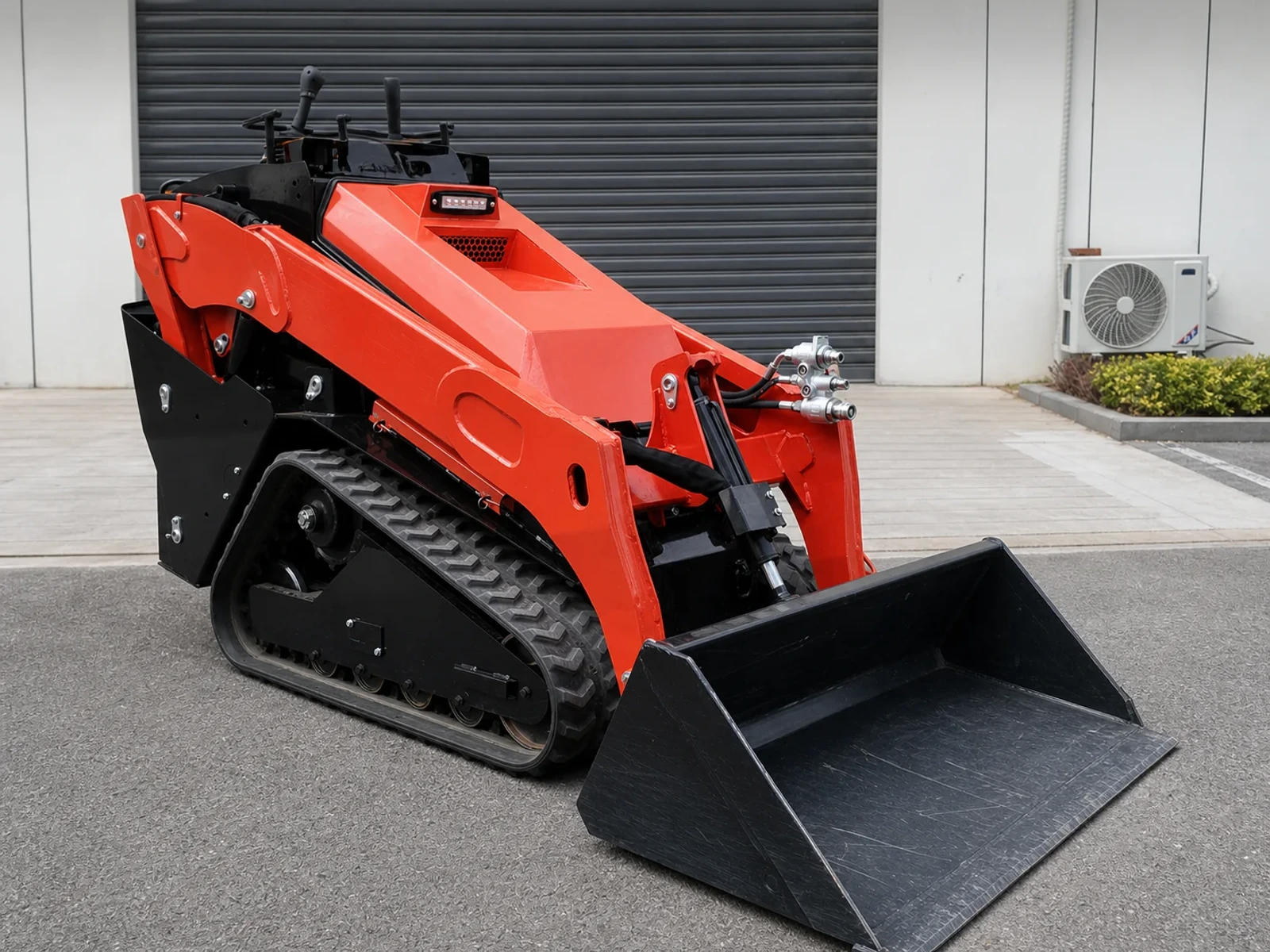
This is where search intent becomes messy. Some pages blur mini skid steers, skid steer loaders, and compact track loaders into one giant category page. That is fine for a manufacturer resource hub. It is less fine when a buyer needs one clear answer.
| Machine class | Strength | Tradeoff | Typical buyer question |
|---|---|---|---|
| Mini skid steer loader | Tight access, lower transport burden, flexible attachment work | Lower payload and shorter physical presence than larger loaders | Will it fit and still do enough work to replace hand labor? |
| Full-size skid steer | Higher capacity, stronger loading, broader commercial attachments | Bigger footprint, more surface impact, harder access on small sites | Do I need more lift and bucket volume than a mini platform can deliver? |
| Compact track loader | Traction, flotation, and heavier contractor-grade work on mixed surfaces | Higher cost and more machine to transport and service | Does the job punish wheels often enough to justify tracks? |
Construction Equipment Guide makes the simplest useful point: size matters, including chassis width and height, not just engine size. Thompson Tractor adds the equally important rule that skid steers generally prefer smooth, solid surfaces, while traction requirements and terrain can push buyers toward tracks. That means the decision is usually not abstract. It is written into the site conditions.
Mini skid steer loaders earn their keep when access, surface, and labor all push in the same direction
Cat positions skid steers and compact track loaders across construction, landscaping, agriculture, snow removal, recycling, and general material handling. That is a broad list, but the better question is where mini format creates an edge over larger equipment.
Landscaping and hardscape support
This is the obvious one. Mini loaders work well for soil, mulch, pavers, sod, trench prep, and cleanup where a crew would otherwise use wheelbarrows, shovels, and too much patience. A stand-on tracked unit like the T460 or T470 makes sense when routes are narrow and surfaces change every ten meters.
Masonry, site prep, and compact contractor jobs
Bucket work, forks, trenchers, and augers matter here. This is where hydraulic demand and lift path begin to matter more than the headline width. A common failure pattern is buying a very small machine, then discovering the attachment list is far more ambitious than the hydraulic flow. The attachment catalogue was cheerful. The jobsite was less so.
Farm, yard, and property maintenance
Wheeled formats are often practical on hard lanes and yard surfaces because they move faster and feel simpler in day-to-day cleanup or feed, pallet, and material support work. The S490 and S480 sit in that conversation more naturally than a soft-ground landscaping loader does.
Heavier contractor loading in a compact envelope
Once the work shifts toward denser material, higher daily cycle count, and stronger payload expectations, the compact track loaders become the real conversation. The V1000 and V2000 are not just bigger versions of a tiny walk-behind loader. They are different buying decisions.
Choose the right machine by answering seven boring questions honestly
Toro's buyer guidance is refreshingly practical here: compare width, wheel versus track, power source, and lift path. Thompson Tractor adds surface conditions, operating capacity, size, maneuverability, and attachment compatibility. Put together, the shortlist becomes much easier.
- What is the narrowest gate, aisle, or path? Start here. Equipment World's stand-on mini skid steer guide notes narrow units around 31.5 inches and wider variants around 37.2 inches for different ground-pressure needs. Width is not a side note.
- Is the surface mostly hard and flat, or mixed and soft? Wheels favor speed on firm surfaces. Tracks favor traction and lower disturbance on rougher or softer ground.
- What is the true payload per cycle? Compare the rated operating capacity you actually need, not the one that looks heroic on paper.
- Do you need to load into height? If you do, lift path and dump height matter more than a pretty front-quarter photo.
- Which attachments are mandatory, not just interesting? Buckets are easy. Augers, trenchers, grapples, forks, and mixers quickly change the hydraulic conversation.
- How often will the operator get on and off? Stand-on formats help in short-cycle, high-visibility work. Ride-on or enclosed formats help when comfort and weather exposure matter more.
- Do you need entry compact or contractor-grade compact? This is where the price gap often begins to make sense.
A common scenario is a landscape crew with a 1050 mm access limit and repeated soil, stone, and pallet movement. On dry, firm sites, a wheeled compact loader can be the cleaner answer. On soft ground, the same crew often wishes they had bought tracks before the second wet week. The cheaper option often costs more once you factor in surface damage, recovery time, and slower cycle pace.
Safe operation is less negotiable than any feature list
NIOSH's skid-steer safety alert is the right corrective here because it focuses on the basics that still cause real injuries: enter and exit only when the bucket is flat on the ground or the lift-arm support is in place, keep the load low while traveling, work on stable surfaces, avoid traveling across slopes, and never bypass safety devices. Safety is not where the dry jokes live.
- Do the pre-shift check. Attachment lock, hoses, tires or tracks, and control condition first.
- Enter and exit correctly. NIOSH warns against using controls as steps or handholds and stresses three-point contact.
- Carry the load low. Travel and turn with the bucket in the lowest practical position.
- Respect slope direction. NIOSH advises traveling straight up or down slopes with the heavy end uphill rather than crossing the slope.
- Keep bystanders clear. Compact machines still create compact accidents.
If the machine will work near buildings, walls, or people on foot, this section matters more than the attachment list. Read that sentence twice and bill me for only one.
Most buying mistakes happen before the loader turns a wheel
- Comparing keyword phrases as if they were separate product families instead of one buying cluster.
- Buying by engine or brand language before checking width, rated load, and attachment demand.
- Choosing wheels for soft or mixed surfaces because the paved-yard demo looked easy.
- Choosing tracks for every case even when the job is mostly hard-surface travel and transport simplicity matters more.
- Ignoring operator format on jobs with constant on-off movement.
- Confusing a very small mini loader with a heavier contractor-grade compact track loader.
- Skipping the attachment conversation until after the base machine is chosen.
The market is noisy because the category is broad. That is normal. The durable shortcut is to treat this as a fit problem, not a vocabulary problem. Once you do that, the shortlist becomes calmer very quickly.
FAQs
What is a mini skid steer loader used for most often?
Is a compact skid steer loader different from a mini skid steer loader?
Are tracks always better than wheels?
What should I compare before I look at price?
How much lift capacity is enough?
When should I move up from a mini loader to a heavier compact track loader?
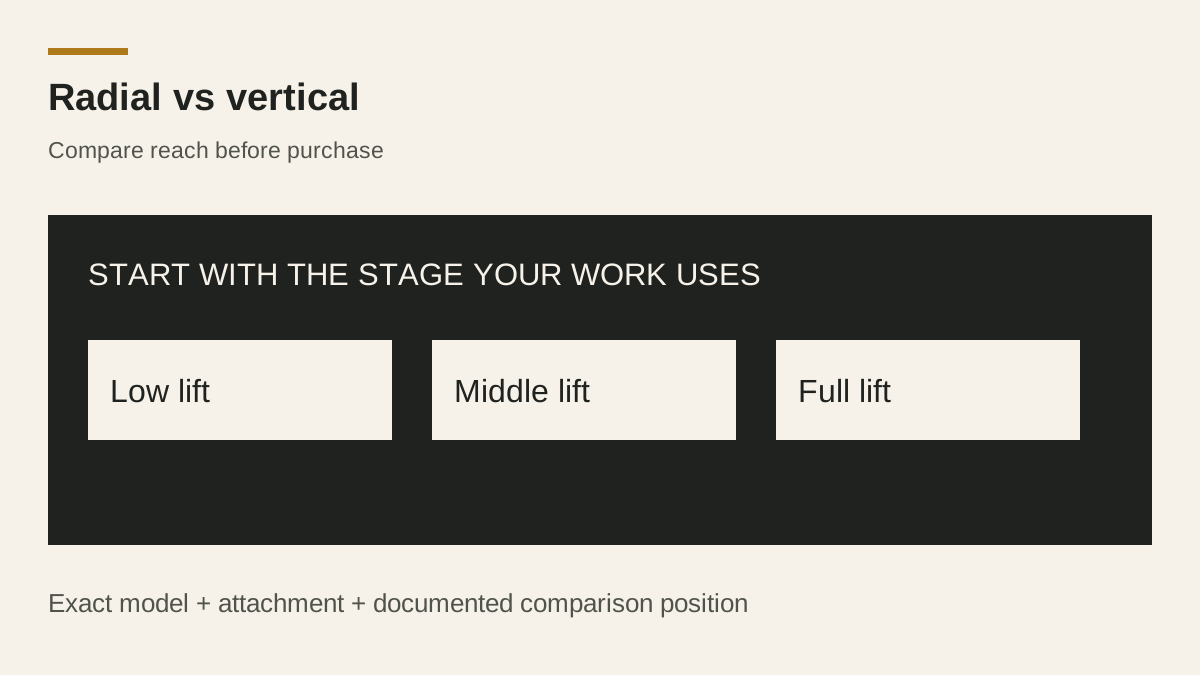
For the loading stage your work uses, compare radial lift vs vertical lift reach with evidence for the exact loader and attachment.
Further reading
Recommended Products
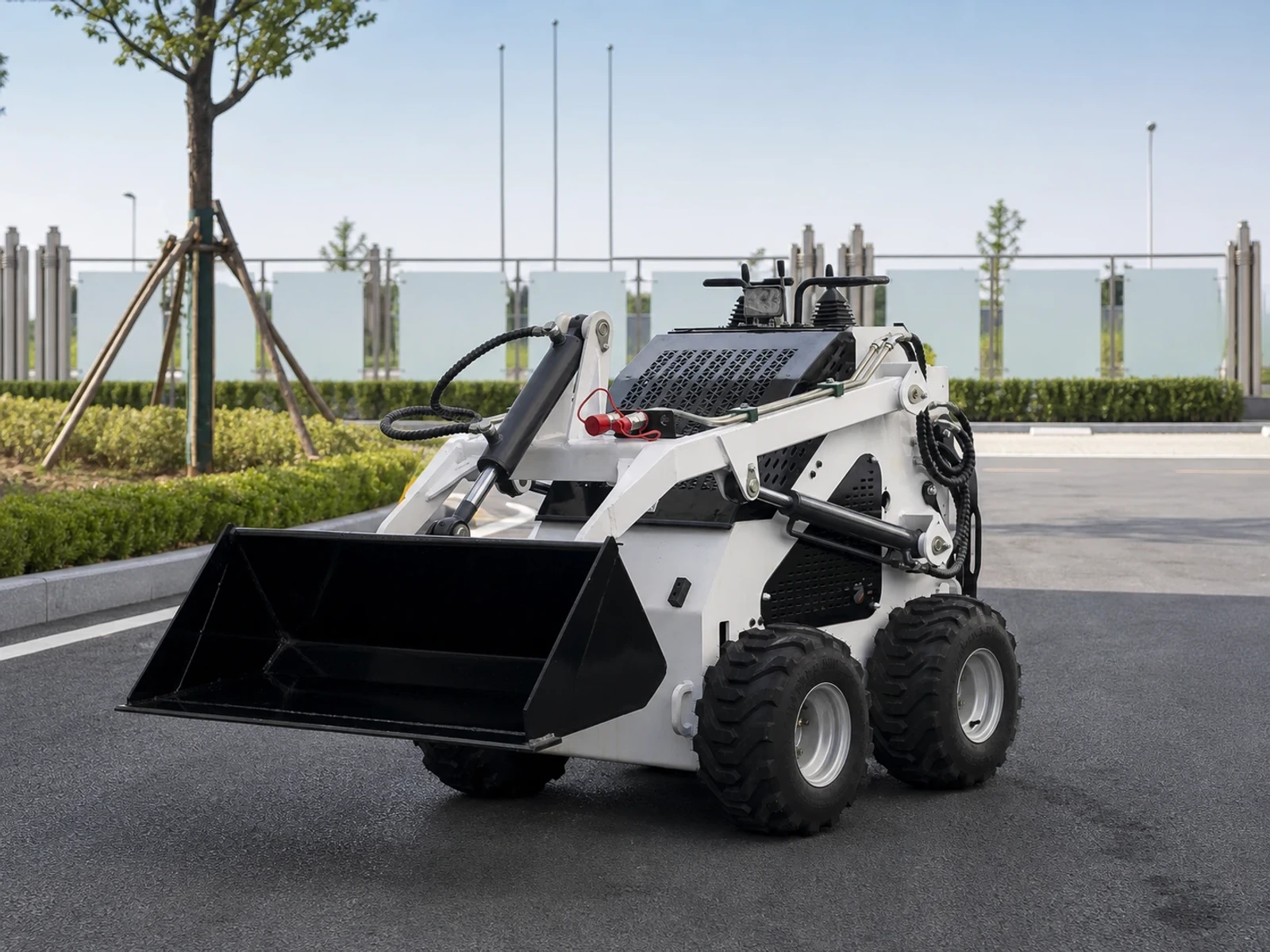 Mini Skid Steer S360
Compact wheeled mini skid steer with reinforced tires, light rated load, and simple small-site support positioning.
View Product →
Mini Skid Steer S360
Compact wheeled mini skid steer with reinforced tires, light rated load, and simple small-site support positioning.
View Product →
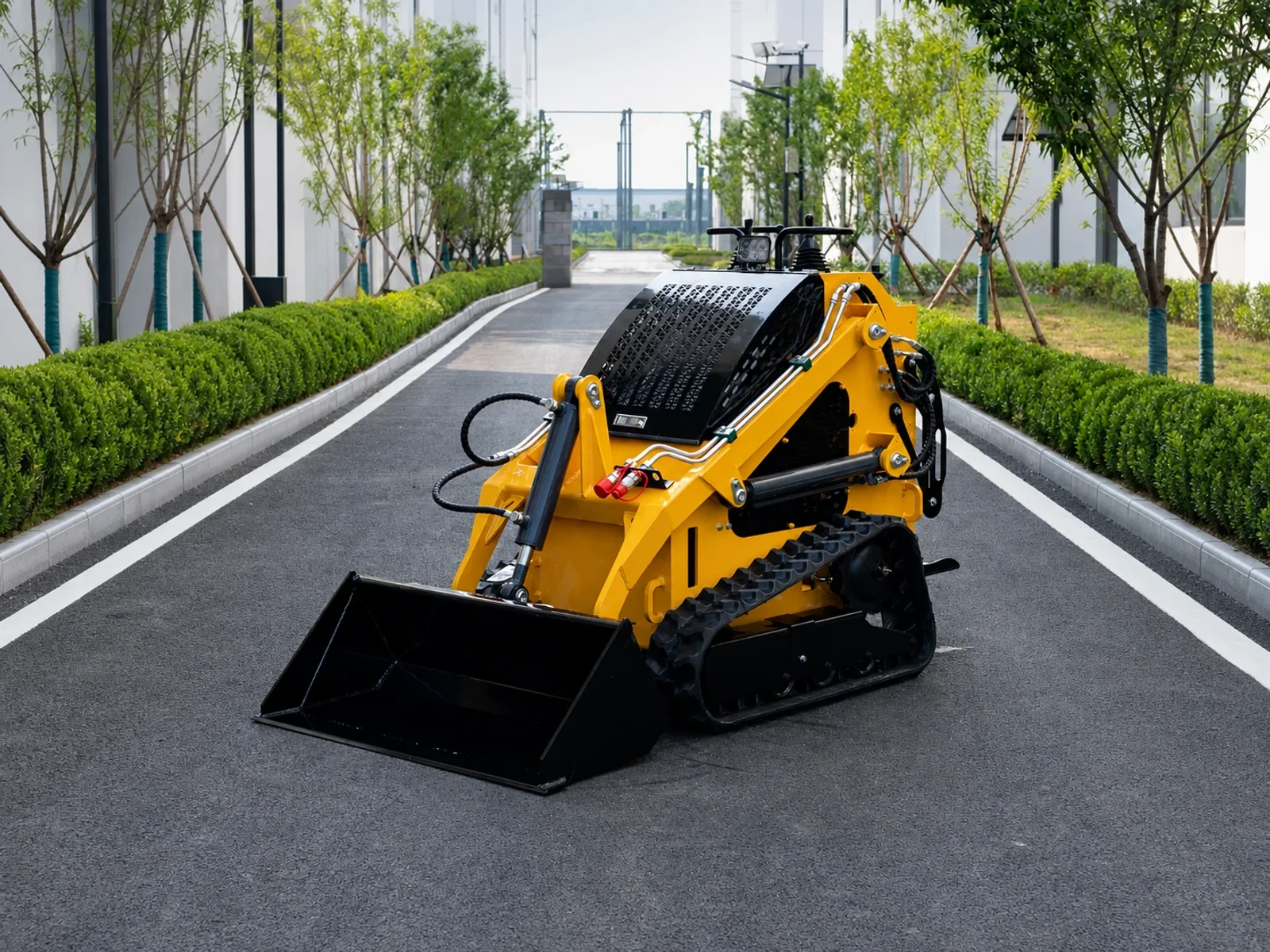 Mini Track Skid Steer Loader T360
Track loader with 200 kg rated load, 0.1 m3 bucket, and compact narrow-access positioning.
View Product →
Stand-On Track Skid Steer Loader T460
Stand-on track loader with 300 kg rated load, 0.1 m3 bucket, and compact contractor-ready stance.
View Product →
Mini Track Skid Steer Loader T360
Track loader with 200 kg rated load, 0.1 m3 bucket, and compact narrow-access positioning.
View Product →
Stand-On Track Skid Steer Loader T460
Stand-on track loader with 300 kg rated load, 0.1 m3 bucket, and compact contractor-ready stance.
View Product →