Mini Dump Truck on Tracks: The Complete 500 kg Guide
Mini dump truck on tracks — rubber tracks, 500 kg payload class, soft-ground performance, slope ratings, and a buyer

TerraCub Engineering Team
Mini Track Dumper Specialists · Since 2015
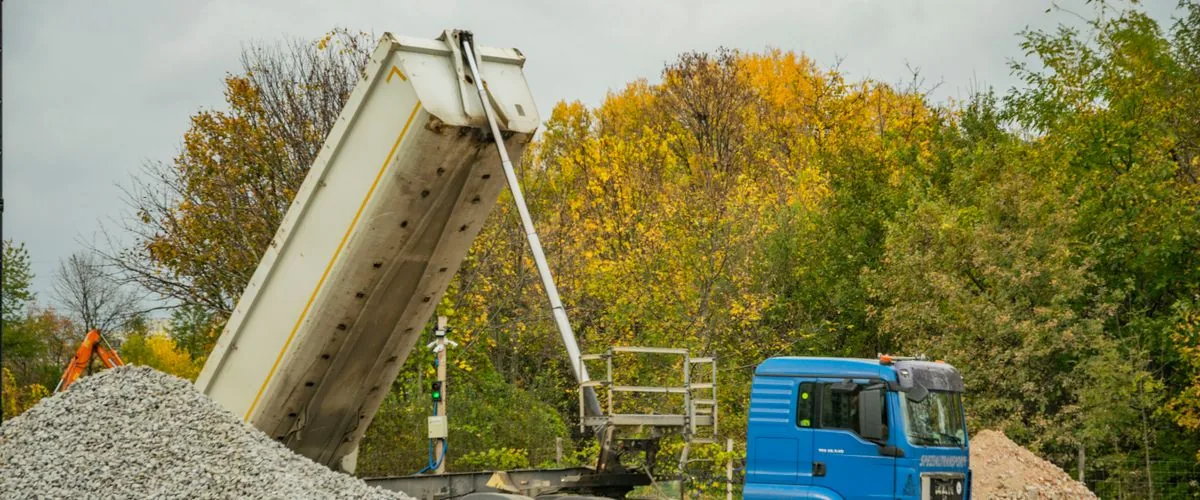
A mini dump truck on tracks is a compact, rubber-tracked machine with a hydraulically tipped dump bucket. It moves soil, gravel, spoil, and construction waste across terrain that would sink or defeat a wheeled alternative. The 500 kg payload class covers the majority of residential landscaping and light construction applications. Ground pressure stays at 0.30–0.35 kg/cm² — the physical reason tracked machines work on soft ground when wheeled ones don't.
Tracks, a dump bucket, and 500 kg. Everything else follows from that.
A mini dump truck on tracks combines two separate engineering decisions. First: a rubber-track undercarriage that handles terrain. Second: a hydraulically tipped dump bucket that handles material placement. The name is technically accurate. Nobody finds this as funny as we do.
A compact tracked dumper differs from a general tracked carrier in one critical way — the dump mechanism. A tracked carrier moves material to a location. A tracked dumper also deposits it precisely: forward, elevated, or to the side, using a hydraulic tipping system. For most site applications, the difference between "arrived at the location" and "material in the skip, trench, or pile where it belongs" is the entire value of the machine.
The 500 kg payload class is the entry point for serious work. Below 350 kg, you move material slowly in quantities that extend the job. Above 800 kg, you pay for capacity that most residential and light commercial sites neither need nor can accommodate through their access gates. The 500 kg sweet spot covers lawns, clay, moderate slopes, and standard residential gate widths.
(most common class)
width (walk-behind)
pressure (tracked)
capability
500 kg is not the biggest. It's the right size.
The calculation is straightforward. A typical residential landscaping job involves moving 4–8 tonnes of material: topsoil in, clay out, drainage gravel, bark mulch. At 500 kg per load, that is 8–16 cycles. At 25 kg per wheelbarrow load, that is 160–320 trips. One number does considerably more work than the other.
The labour comparison reinforces it. A landscaping contractor needed to move 5 tonnes of clay from a back garden. Gate: 650 mm wide. Front lawn freshly seeded. Driveway in the delivery path. Initial plan: three workers with wheelbarrows over two days — approximately $2,400 in labour cost. What actually happened: a 500 kg walk-behind tracked mini dump truck, one operator, one day, $190 in rental. The machine passed through the gate, operated across wet clay without rutting the lawn, and finished by 3 pm. The labour difference was $2,210. (The workers spent Wednesday on a different job.)
"A 500 kg tracked dumper at $4,500 purchase price runs 1,500–2,000 hours before major track overhaul. At typical contractor utilisation of 4 hours per day across a 200-day season, that is two full seasons before significant maintenance cost. At $200 in daily labour savings versus manual wheelbarrow work, a contractor using the machine three days per week recovers the purchase price in under eight working weeks. The machine does not take the following Tuesday off."
For many equipment teams, the 500 kg class has the broadest demand profile: residential landscapers, small contractors, and hire fleets. It is not a niche product. It is the machine that covers the majority of sites and the majority of buyers in this category.
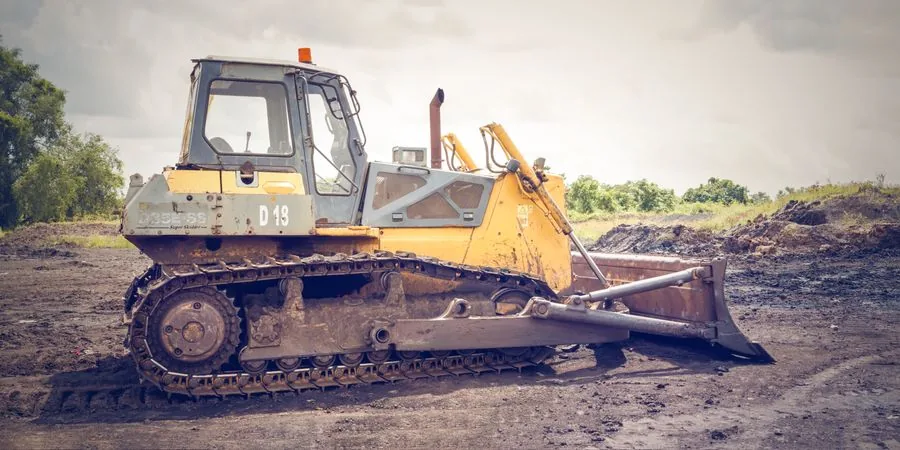
Three things rubber tracks change. All three matter on site.
The mechanism is the same principle as a snowshoe: more contact area, less pressure per unit of ground. A 500 kg tracked dumper loaded to capacity applies 0.30–0.35 kg/cm² of ground pressure. A single-wheel wheelbarrow at 80 kg: approximately 1.5 kg/cm². A wheeled mini dump truck of equivalent payload: similar. The tracked machine applies less force per square centimetre than the tool it replaced. (The tracked machine, however, moves 500 kg at a time. The maths is not subtle.)
1. Terrain access
Soft clay, wet grass, sand, and waterlogged farmyard ground — conditions that strand wheeled machines — are routine operating terrain for a rubber-tracked dumper. The hydrostatic drive system, standard on modern units, provides stepless speed control and zero-radius turning from standstill. No gears. No clutch. Push the lever; the machine moves. The operator manages direction; the tracks handle the ground.
2. Surface protection
Driveways, established lawns, and finished paving stay intact. Rubber tracks do not mark concrete or rut turf the way pneumatic tyres do. On residential renovation jobs where the driveway appears in the client's photographs and the lawn was re-seeded last month, surface protection is not a secondary consideration. It is the condition under which the job is commissioned and the invoice is settled without discussion.
3. Slope performance
On gradients to 25°, rubber tracks maintain traction that no wheeled mini dump truck matches. Low centre of gravity — engine and dump bed positioned close to the ground — keeps the machine stable on inclines where a wheeled alternative would spin or slide sideways. A wheeled dump truck descending a wet grass slope with a full bucket is also tracking something; just not the intended route, and not under operator control. (The technical term for that outcome is not covered by most hire insurance.)
Track width determines soft-ground performance. Standard 230 mm rubber tracks work reliably on most mixed-terrain applications. On consistently waterlogged or very soft ground — coastal sand, heavy peat, saturated clay — a 300 mm track reduces sinkage significantly. Specifying the wider track at purchase costs less than recovering stuck machines after the fact.
Tracked or wheeled: the site decides, not the budget.
Both machine types move material. The specification decision is determined by what the material must travel across — not by which machine costs less to acquire.
| Feature | Mini Dump Truck on Tracks | Wheeled Mini Dump Truck |
|---|---|---|
| Ground pressure | 0.30–0.35 kg/cm² | 1.5–2.5 kg/cm² |
| Soft ground | Works — tracks float the machine | Sinks or spins on clay / wet grass |
| Slope above 15° | Rated to 25°; practical to 20° loaded | Significant slip risk when loaded |
| Surface protection | Low mark risk on turf and paving | Ruts turf; marks finished surfaces |
| Gate access (500 kg class) | From 580 mm | From 650 mm |
| Hard flat surface | Adequate — 3–5 km/h | Faster — 4–7 km/h |
| Purchase price (500 kg) | $3,500–$5,500 | $2,500–$4,000 |
When wheeled wins: Hard, level, paved surfaces where ground pressure is irrelevant and cycle speed is the only constraint. Wheeled machines are 15–25% faster on open hard ground and 20–30% less expensive at equivalent payload. On concrete yards and warehouse sites, wheeled is the correct — and less expensive — specification.
When tracked wins: Everything else. Any soft ground, any slope above 15°, any surface that cannot be damaged. The 0.35 kg/cm² vs 1.5 kg/cm² gap is not an incremental improvement. It is the physical difference between a machine that finishes the job and one that waits for dry weather.
The practical rule: If the site has any soft ground, any slope above 15°, or any surface that matters, tracked is the correct specification. A wheeled machine that sinks on day one costs more than a tracked machine that finishes the job — even if the wheeled machine was $1,000 cheaper to purchase.
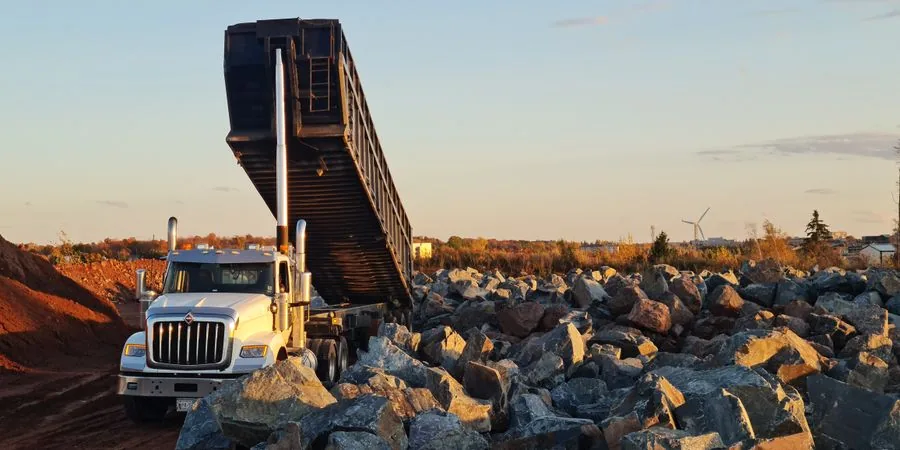
Construction. Landscaping. Agriculture. The machine adapts; the physics don't change.
Each sector uses the machine differently. The correct specification for one application is often the wrong one for another — even at identical payload and machine width.
Landscaping and garden renovation
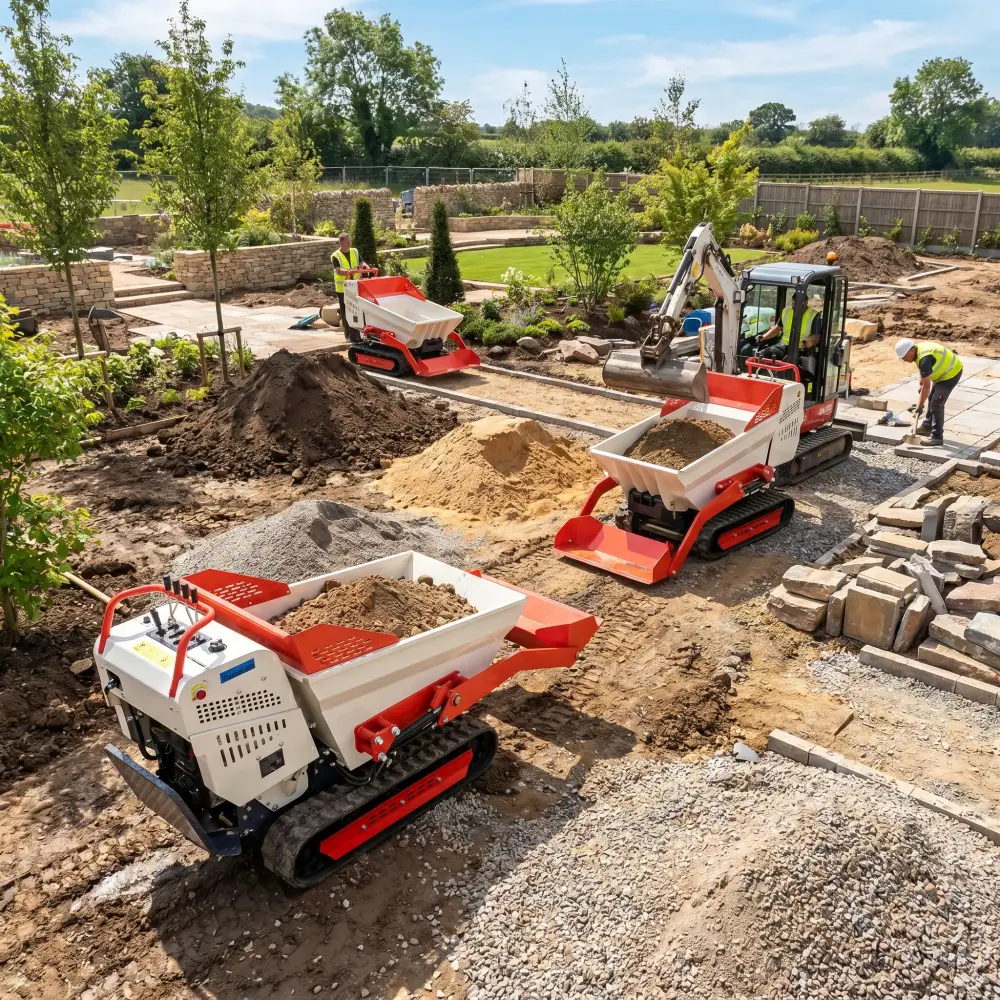
The dominant application for 500 kg tracked dumpers. Residential garden renovation — new beds, drainage installation, retaining walls, turf replacement, paving — almost always involves narrow access gates, existing lawns, and soft clay subsoil. A walk-behind tracked machine handles all of it without surface damage. The 580 mm minimum width of the TerraCub Compact 500 passes through standard residential side-access gates. Ground pressure below 0.35 kg/cm² leaves re-seeded areas intact after the machine passes. This is not a small thing to the client paying for the lawn.
Construction and civil engineering
Tracked mini dump trucks work alongside mini excavators on confined urban sites: basement construction, narrow-plot residential development, extensions, trench backfill. The excavator digs; the tracked dumper removes spoil. One operator each, two-machine site cycle, more efficient than either machine alone. Swivel-dump models address the specific problem of side-tipping into trenches or excavations where forward dump would deposit material back in the hole. On confined sites, this mechanism is not an optional upgrade — it is what makes the cycle work.
Agricultural and farm use
Soft farmyard ground, waterlogged fields in winter, animal bedding movement, field drainage maintenance. Tracked machines handle ground conditions that defeat wheeled alternatives. Self-loading variants — which add a front blade or loader bucket — suit solo farm tasks where no second person is available to help fill the bucket. A 500 kg machine loaded with straw bedding operates across ground conditions that would leave a wheeled alternative waiting for dry weather. In the UK, statistically, that is a significant wait.
Municipal and utilities
Footpath repair, park and cemetery maintenance, public space renovation. Access is tight. Ground surfaces matter. Operators typically work alone. Walk-behind tracked 500 kg machines cover all three constraints. Low noise on petrol models suits residential environments where site hours are restricted by council conditions.
Five questions. Answer them before opening any catalogue.
There is no universal best 500 kg tracked dumper. There is the correct one for a specific combination of access width, dump mechanism, terrain type, power source, and track width. These five questions determine that combination.
- What is the narrowest access point? This is the first filter — it eliminates options before any other specification matters. Walk-behind 500 kg models start at 580 mm; some are 700 mm or wider. Measure the gate, or the corridor, or the side passage, before looking at any product sheet. A machine that cannot enter the site is not a machine for this site. This sounds obvious. It is wrong on a meaningful share of all first equipment enquiries.
- What dump mechanism is required? Forward standard tip is correct for soil and gravel piles. Scissor-lift is required for tipping into a skip or over a wall — without it, a skip at ground level is an obstacle. Rotary or swivel dump addresses trench backfill. This decision comes before payload selection. A 500 kg machine with the wrong dump mechanism discovers the problem on the first job, not in the catalogue.
- What is the terrain type? Soft clay, wet grass, slopes above 15°, or surfaces that cannot be damaged: tracked is the specification. Hard, level concrete or tarmac: wheeled is adequate and less expensive. Any uncertainty: tracked. Ground conditions do not negotiate.
- What is the power source requirement? Petrol (Honda GX series engines dominate this class) for standard outdoor work — reliable, serviceable, refuellable anywhere. Battery-electric for indoor applications, basement work, or noise-restricted sites. Current 500 kg electric models manage 4–6 hours per charge. Plan the working day before specifying the machine.
- What track width does the primary terrain require? Standard 230 mm rubber tracks work on most mixed applications. 300 mm or wider for consistently soft or waterlogged ground. This is a manufacturing decision on most models, not a field adjustment. Specify correctly at purchase.
If you need model comparison across the 500–1,200 kg range — standard dump, scissor-lift, and rotary — the TerraCub product range covers that spectrum with direct model comparison across the category.
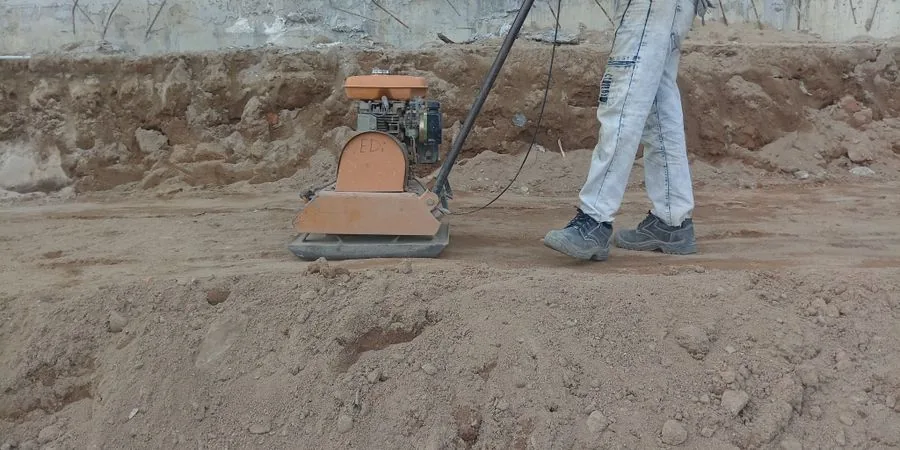
Six steps. None complicated. Most skipped at some point.
A well-made 500 kg tracked dumper tolerates poor operating practice longer than it should. It stops tolerating it eventually. These six steps are how you avoid that conversation with the hire company or the warranty department.
Respect the rated payload — it is structural, not advisory
The payload rating is an engineering limit, not a negotiating position. Overloading stresses the tipping ram, strains track components, and raises the centre of gravity on slopes. The rating plate is on the machine. The rated number is the ceiling. Steel does not negotiate.
Inspect tracks before every operating session
Check for debris caught in the sprocket or undercarriage, cuts in the rubber track body, and correct tension. A correctly tensioned track sags approximately 10–15 mm in the middle of the upper run. Over-tight tracks accelerate sprocket wear; a loose track derails. Track tension inspection takes two minutes. A derailed track mid-job takes considerably longer. The ratio is not in favour of skipping the check.
Load centrally in the bucket
Off-centre loading shifts the centre of gravity laterally. On flat ground this is inconvenient. On a slope with a full 500 kg load, it is a tip-over sequence in progress. Load material evenly across the bucket width before moving. This takes ten seconds and is not optional on any gradient.
Drive directly up or down slopes — never across
Align the machine directly with the slope direction when loaded. Traversing across an incline with a full bucket shifts lateral weight to the downhill track. That is how machines tip. The 25° slope rating assumes direct travel, correct tension, and centred loading — not any two of the three.
Reduce speed on all inclines
Full speed is appropriate on level hard ground. On any gradient — particularly with a full load — reduce speed before the slope, not while on it. Hydrostatic drives allow smooth stepless deceleration. Use it.
Engage the tipping mechanism fully before releasing material
Hold the tip lever until the bucket reaches full elevation before material falls. A half-engaged ram places load on the pivot point rather than through the cylinder — which is where tipping rams fail. This is a 30-second discipline that prevents a 3-day repair. The trade is favourable.
Most failures are predictable. That means most are also preventable.
Mini dump trucks on tracks are not fragile machines. They are honest about consequences. Understanding how they fail is considerably more useful than being surprised by it mid-job.
- Track derailment. Caused by debris caught in the sprocket, an over-loose track, or impact with a fixed obstacle at speed. Routine debris clearing and correct tension prevent the majority of these. Once a track derails mid-job, the cost is measured in time — which becomes money quickly enough.
- Hydraulic cylinder failure. The dump mechanism is rated for the machine's payload in a correctly loaded, fully elevated bucket — not for using the bucket as a scoop blade against compacted material. Forcing the ram against resistance destroys it. The ram is not a loader attachment.
- Engine failure. Oil level, incorrect fuel grade, missed service intervals. These are administrative failures, not mechanical ones. Engine service on most petrol 500 kg models: every 100 operating hours. Air filter: every 50. The schedule is in the machine manual. The manual has a lower word count than this article. *(Neither fact appears to be sufficient motivation.)*
- Accelerated track wear on abrasive surfaces. Rubber tracks rated for 1,500–2,000 hours on mixed terrain can degrade in 400–600 hours on constant bare concrete. Steel track protection pads exist specifically for this application and cost a fraction of track replacement.
- Tip-over. Off-centre load, slope, full payload. The sequence is always the same. So is the outcome. Centre the load. Check the slope angle. Both steps take less time than the incident report.
FAQs
The questions we hear most often, answered directly.
What is a mini dump truck on tracks?
What is the difference between a 500 kg dumper and a larger model?
How does a mini dump truck on tracks handle soft ground?
How steep a slope can a 500 kg tracked dumper handle?
Can a 500 kg tracked dumper pass through a standard garden gate?
What is the difference between a mini dump truck on tracks and a wheeled mini dump truck?
What should I check before buying a 500 kg tracked dumper?
Know which model fits? We'll quote it. Not sure? We'll tell you which one we'd specify.
TerraCub supplies standard dump, scissor-lift, and rotary-dump mini track dumpers from 500 kg to 1,200 kg for teams that need the right working format.
If you've been moving 500 kg of clay one wheelbarrow trip at a time, the maths eventually catches up. We make the machine that catches up faster.
Further Reading
Related Articles
Guide
Mini Track Dumper: Types, Specs & How to Choose
Types, payload ratings, and the key track width specs compared side by side.
Buyer Guide
Compact Dump Truck: 500 kg Tracked Dumper Buyer Guide
Access width, ground pressure, and the buying checklist for compact tracked dumpers on confined sites.
Buyer Guide
Small Dumper Truck for Sale: Prices & How to Buy
Price ranges, machine types, and key checks before buying a small tracked dumper.
Recommended Products
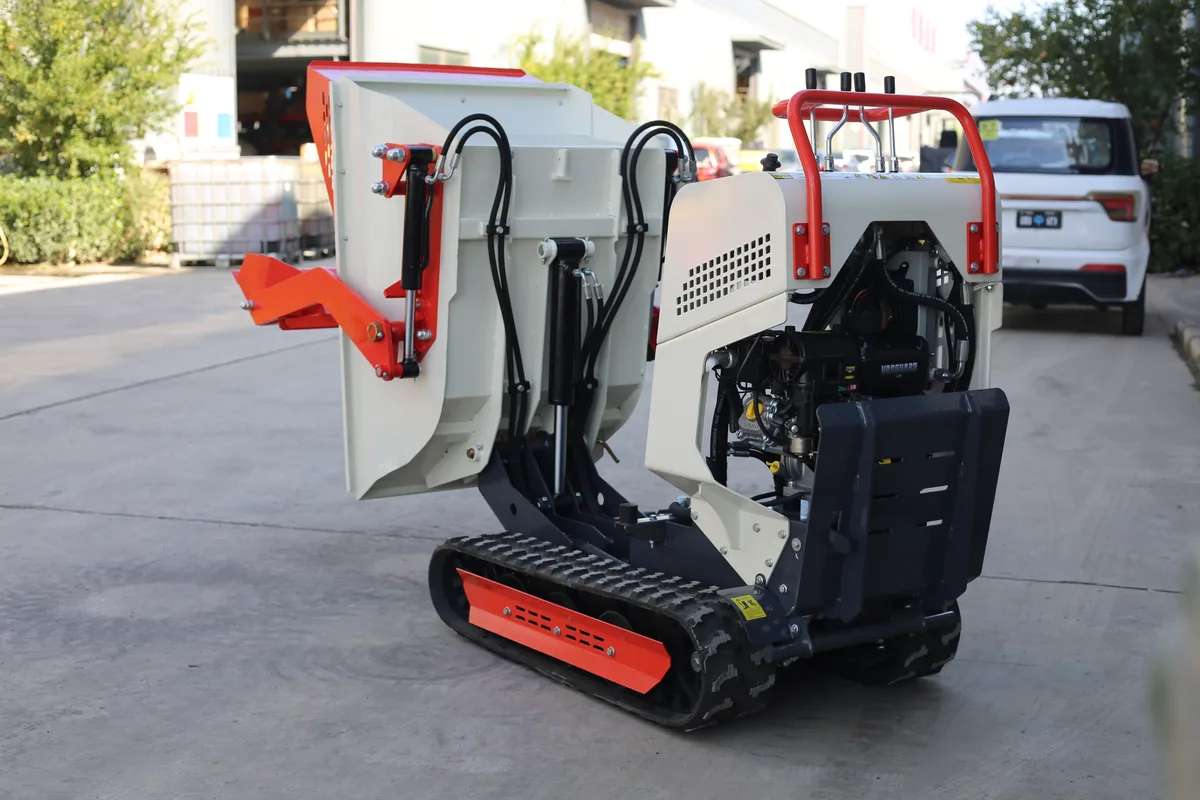 Small Dumper Truck 500kg
Entry-level tracked dumper. Passes through standard residential gates. Ideal for garden work, landscaping, and light construction.
View Product →
Small Dumper Truck 500kg
Entry-level tracked dumper. Passes through standard residential gates. Ideal for garden work, landscaping, and light construction.
View Product →
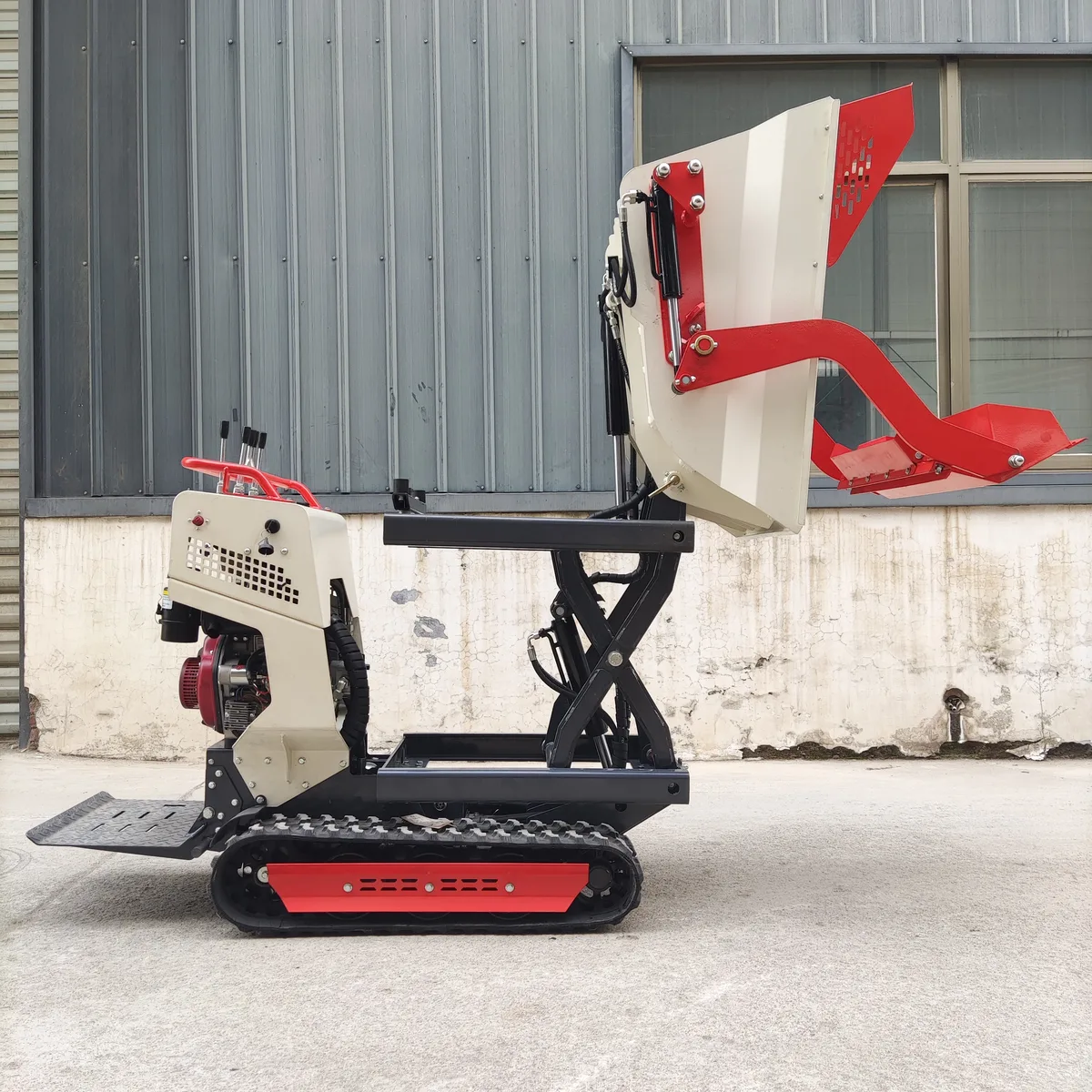 High Tip Mini Dumper
Same narrow 700 mm body. Lifts the bucket to 1,200 mm, enough to dump over scaffolding, into mixers, or above formwork.
View Product →
High Tip Mini Dumper
Same narrow 700 mm body. Lifts the bucket to 1,200 mm, enough to dump over scaffolding, into mixers, or above formwork.
View Product →
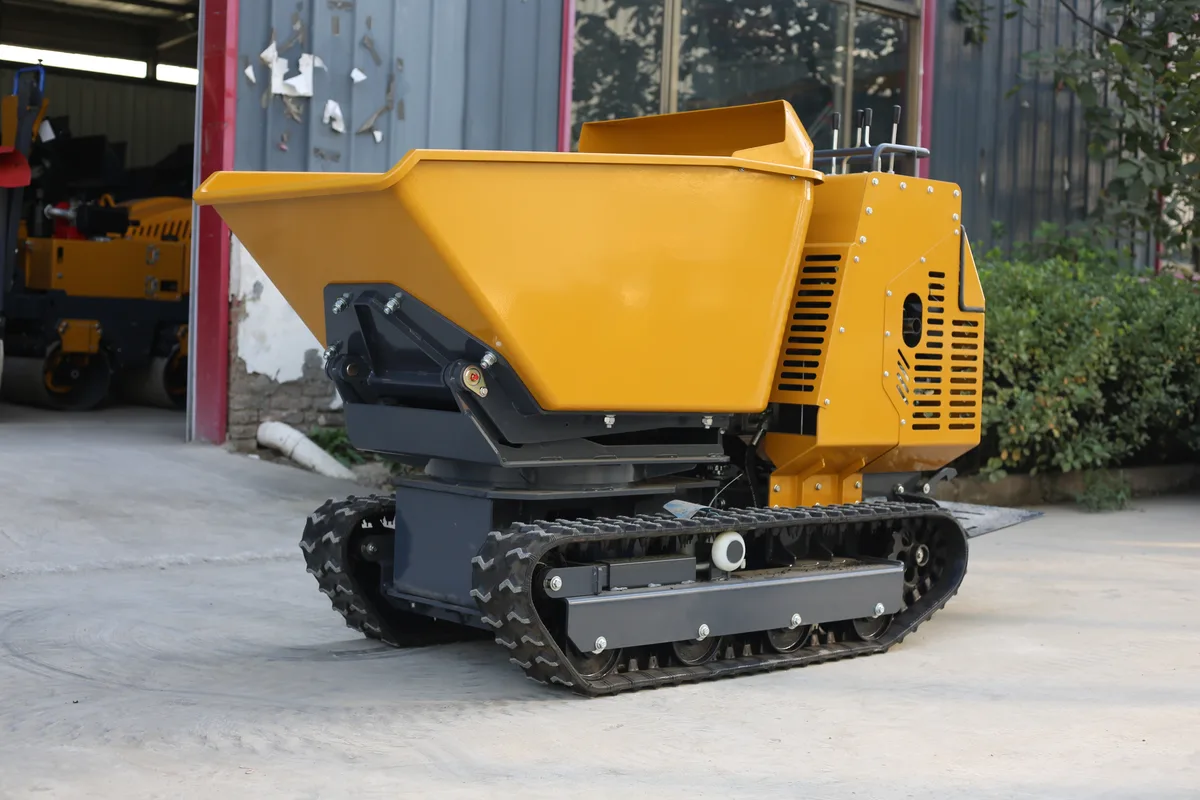 Rotary Dump Mini Dumper
2.4x the payload. Rotary base dumps in any direction without repositioning. Built for commercial sites and heavy excavation.
View Product →
Rotary Dump Mini Dumper
2.4x the payload. Rotary base dumps in any direction without repositioning. Built for commercial sites and heavy excavation.
View Product →