Small Dumper Truck for Sale: Price Guide & What to Check
Small dumper truck for sale: price ranges from $2,500–$10,000, new vs used comparison, key specs to verify, and buying paths for contractors and dealers.

TerraCub Engineering Team
Mini Track Dumper Specialists · Since 2015
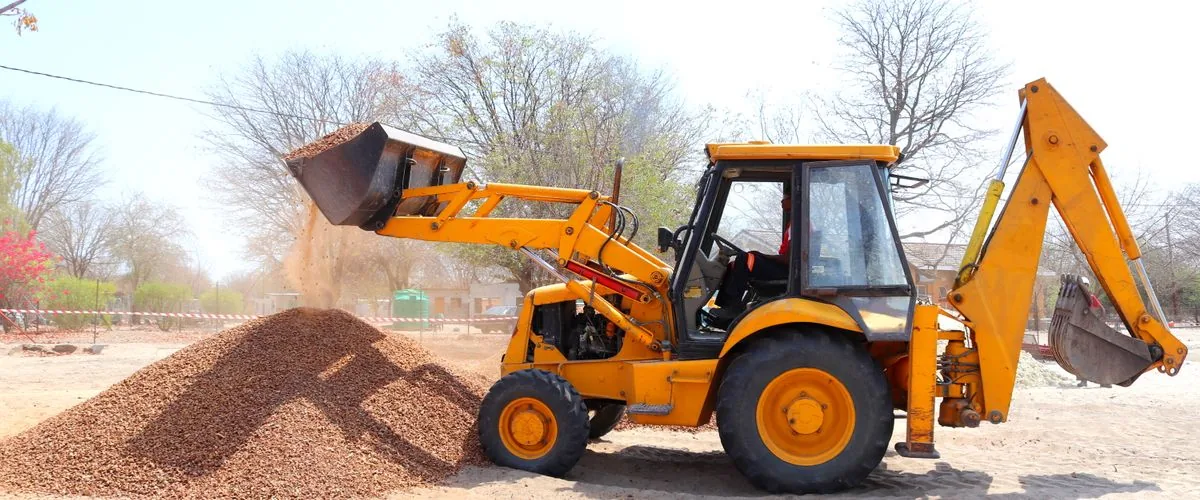
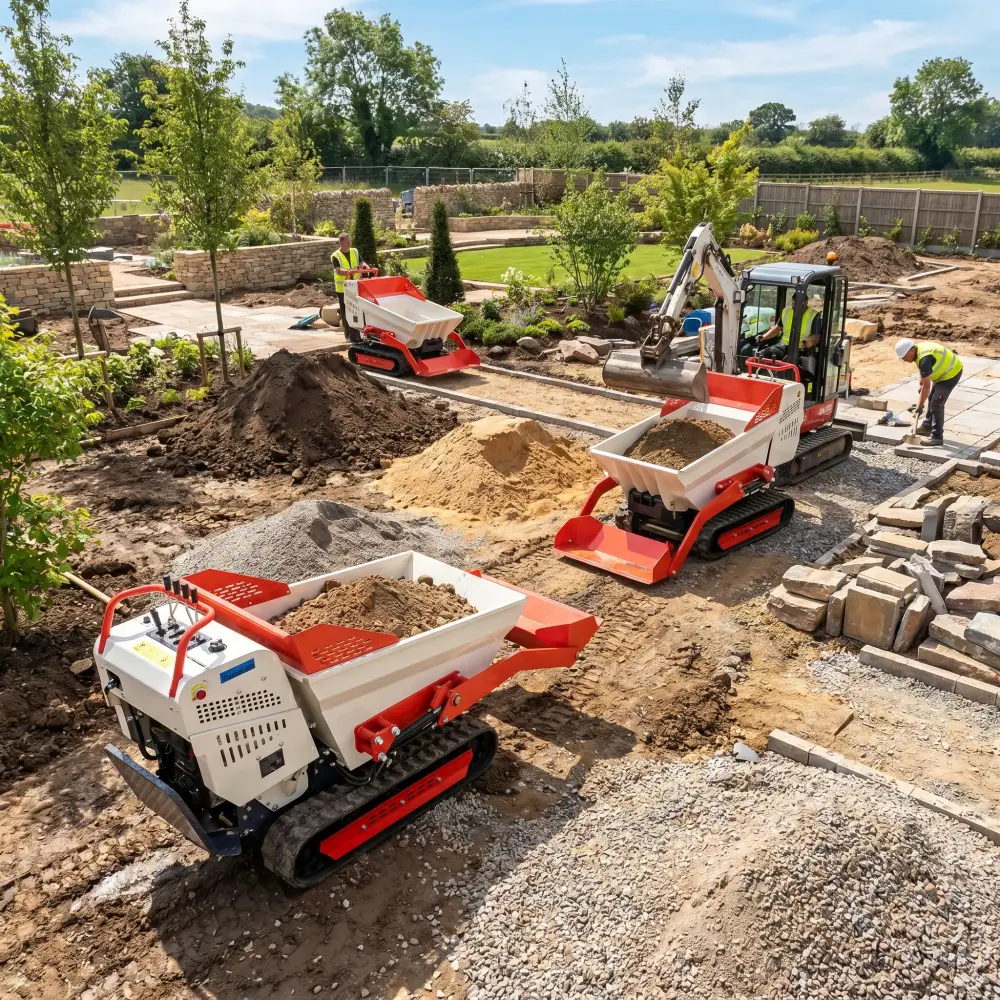
Small dumper trucks for sale range from approximately $2,500 for a new 300 kg walk-behind tracked model to $10,000+ for a 1,200 kg heavy-duty machine. Used models in good condition sell at 40–60% of new price. In practice, final cost moves most with payload class, dump format, engine choice, and the delivery route you choose.
What small dumper trucks actually cost in 2026
The price spread for small dumper trucks is wide — wider than most buyers expect. The difference between a $2,500 model and a $7,000 model at nominally the same payload class reflects track width, dump mechanism, power source, and manufacturing quality. Not marketing.
| Machine type | Payload | Drive | New price (USD) | Used (good cond.) |
|---|---|---|---|---|
| Walk-behind, standard dump | 300–400 kg | Petrol | $2,500–$3,500 | $1,200–$2,000 |
| Walk-behind, tracked, standard dump | 500 kg | Petrol | $3,500–$5,500 | $1,800–$3,200 |
| Walk-behind, tracked, high-tip | 500 kg | Petrol | $4,200–$6,000 | $2,000–$3,500 |
| Walk-behind, tracked, swivel dump | 800–1,000 kg | Petrol/diesel | $5,500–$8,000 | $3,000–$5,000 |
| Ride-on, tracked, heavy | 1,000–1,200 kg | Diesel | $7,000–$10,000+ | $4,000–$6,500 |
| Electric, walk-behind | 350–800 kg | Battery | $4,500–$12,000 | $2,500–$7,000 |
"The cheapest machine in a payload class is rarely the cheapest outcome. A $3,200 tracked machine that finishes a four-tonne job in one day costs less than a $2,800 wheeled machine that waits three days for dry ground. The price difference is $400. The time difference is two billable days. Most buyers who run this calculation once do not repeat the mistake."
New vs used: what the savings actually include
New machines
Full manufacturer warranty — typically 12 months on powertrain and structural components. Known zero-hour service history. Current safety standards and compliance certifications. Manufacturer parts availability. Availability varies depending on stock status and production schedule. Higher upfront cost. For high-utilisation applications (25+ days per year), new is usually the correct calculation — the warranty and reliability premium pays for itself in the first service event it prevents.
Used machines
Lower upfront cost — 40–60% of new retail in good condition. Immediate availability from hire fleet sales and private sellers. Known or unknown service history depending on the machine. Remaining useful life is the critical unknown — a well-serviced machine with 300 hours has more remaining life than a poorly maintained one with 150. Always inspect before committing. The used machine market for small dumper trucks includes everything from immaculate ex-hire fleet to machines that have been run until something stopped working.
Where to compare and buy a small dumper truck
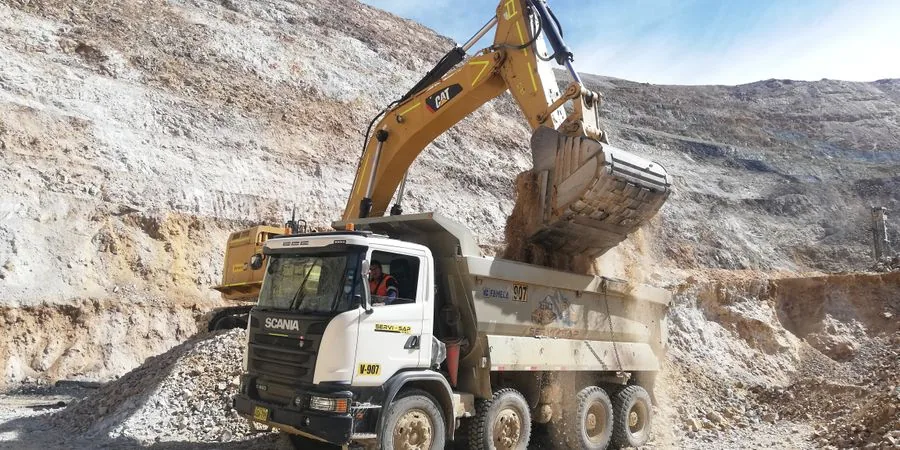
Local equipment channels
Higher price. Immediate availability from stock. Local service support. Return and warranty handling in-country. Best for: buyers who need a machine quickly, or who need local service infrastructure for a high-utilisation machine.
Equipment hire companies — ex-hire fleet
Used machines with known service history. Hire fleet machines are typically serviced to a schedule (it is the hire company's liability if they are not). Available immediately. Prices vary. Worth the visit if a reputable hire company is selling fleet rotation.
Online marketplaces (MachineryTrader, eBay, Craigslist)
Private sellers and dealers. Unknown service history in most cases. Prices vary widely — from reasonable to aspirational. Never buy a used tracked machine without a physical inspection. The track condition, hydraulic cylinder state, and cold-start engine behaviour cannot be assessed from photos.
Specs to verify before paying — in priority order
- Machine width — must fit the narrowest access point on your job site. Measure the effective clear width, not the gate opening. Walk-behind models: from 580 mm.
- Rated payload — the structural limit, not the maximum attempted. Verify this on the rating plate, not the listing copy.
- Dump mechanism — forward, high-tip, or swivel. This should be confirmed in the specification sheet, not inferred from photos.
- Track width — wider tracks mean lower ground pressure. 230 mm is standard entry-level; 300 mm is better on soft ground; 400 mm on machines above 800 kg on coastal sand or clay.
- Engine type and displacement — petrol Honda GX series is the benchmark for reliability in this class. Generic or uncertified engines reduce parts availability and service predictability.
- Operating hours — logged on the hour meter. Correlate against wear patterns during inspection.
Before approval: what to check
Any purchase works better when the buyer confirms the exact machine format, inspection evidence, and timeline before payment approval.
- Request a quotation with full specifications. Width, payload, dump mechanism, power source, track width, and any site limits should all be confirmed in writing.
- Verify machine evidence. Ask for current photos or video of the target format, not a generic category image.
- Confirm documentation requirements. Make sure the seller can support the certificates, invoices, and machine records your market or buyer process actually requires.
- Clarify the timeline. Confirm the expected preparation window, transit timing, and which side is responsible for each stage after dispatch.
- Confirm spare parts availability. Track, sprocket, and hydraulic seals should be realistically obtainable within a sensible service window.
Used machine inspection checklist
- Track inspection. Lugs: check for missing or heavily worn lugs. Cracking across track width indicates replacement is overdue. Correct tension sag: 10–15 mm in the upper run. Cost of track replacement: $400–$800 per machine depending on model.
- Hydraulic cylinder. Look for oil weeping around the rod seal end. A small dark stain is the start of a seal failure. Full replacement: $200–$600.
- Engine cold start. Start from cold, listen for unusual ticking or smoke. Check oil colour and level. Black, gritty oil = deferred service. Grey, milky oil = water contamination.
- Tipping cycle under load. Load the bucket to rated capacity. Complete a full tip cycle. Any hesitation, shudder, or incomplete travel indicates hydraulic pump wear.
- Structural inspection. Check the bucket, bucket pivot points, and frame for cracks or welded repairs. Prior weld repairs are not disqualifying but should be disclosed and assessed.
- Hour meter correlation. Hours on the meter should correspond to wear levels on tracks, engine, and pivot points. Significant mismatch (low hours, heavy wear) indicates either under-reported hours or very hard use in a short period.
When does a small dumper truck pay for itself?
A 500 kg tracked walk-behind model at $4,500 new replaces approximately 2–3 workers on a material-moving task. On a typical residential landscaping job (four tonnes of spoil, narrow access), the machine completes the job in one day. A three-person wheelbarrow crew takes three days at equivalent daily labour cost. At $300/day labour cost per worker, the three-day crew costs $2,700. The machine costs $4,500 — but finishes the job $2,700 sooner in labour, plus the machine is reusable. Most contractors calculate payback on a dedicated landscaping machine at 8–15 job uses depending on job scale.
For hire companies, utilisation is the variable. At 60% utilisation on a $60/day hire rate, a machine grosses approximately $13,000/year before maintenance and depreciation. At standard service intervals, a well-maintained 500 kg tracked machine lasts 2,000+ hours before major overhaul. The numbers work — which is why hire companies consistently stock this category.
FAQs
Questions before every purchase, answered directly.
How much does a small dumper truck cost?
Where can I buy a small dumper truck?
New or used small dumper truck — which is better value?
What specs should I verify before buying?
How quickly can a new small dumper truck be available?
What is a reasonable price for a used small dumper truck?
How do I verify a seller before buying?
Ready to price a unit? Send us the spec and we'll quote it.
TerraCub supplies tracked mini dumpers from 500 kg to 1,200 kg payload for teams that need clear model matching.
Width, payload, dump mechanism, quantity, and destination in the message. The clearer the job description, the faster the model match.
Further Reading
Related Articles
Guide
Mini Track Dumper: Types, Specs & How to Choose
Types, payload ratings, and the key track width specs compared side by side.
Guide
Mini Dump Truck on Tracks: 500 kg Guide
How tracked mini dump trucks handle soft ground, slopes, and narrow site access.
Buyer Guide
Compact Dump Truck: 500 kg Tracked Dumper Buyer Guide
Access width, ground pressure, and the buying checklist for compact tracked dumpers on confined sites.
Recommended Products
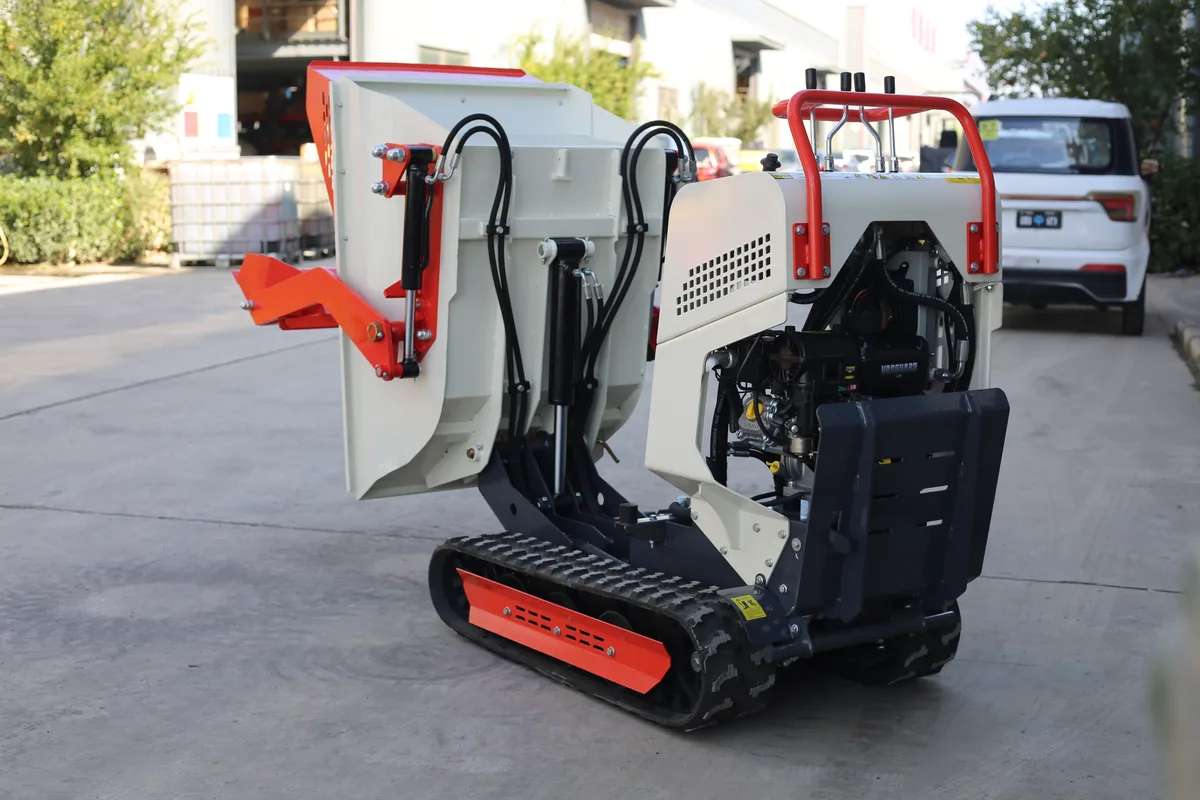 Small Dumper Truck 500kg
Entry-level tracked dumper. Passes through standard residential gates. Ideal for garden work, landscaping, and light construction.
View Product →
Small Dumper Truck 500kg
Entry-level tracked dumper. Passes through standard residential gates. Ideal for garden work, landscaping, and light construction.
View Product →
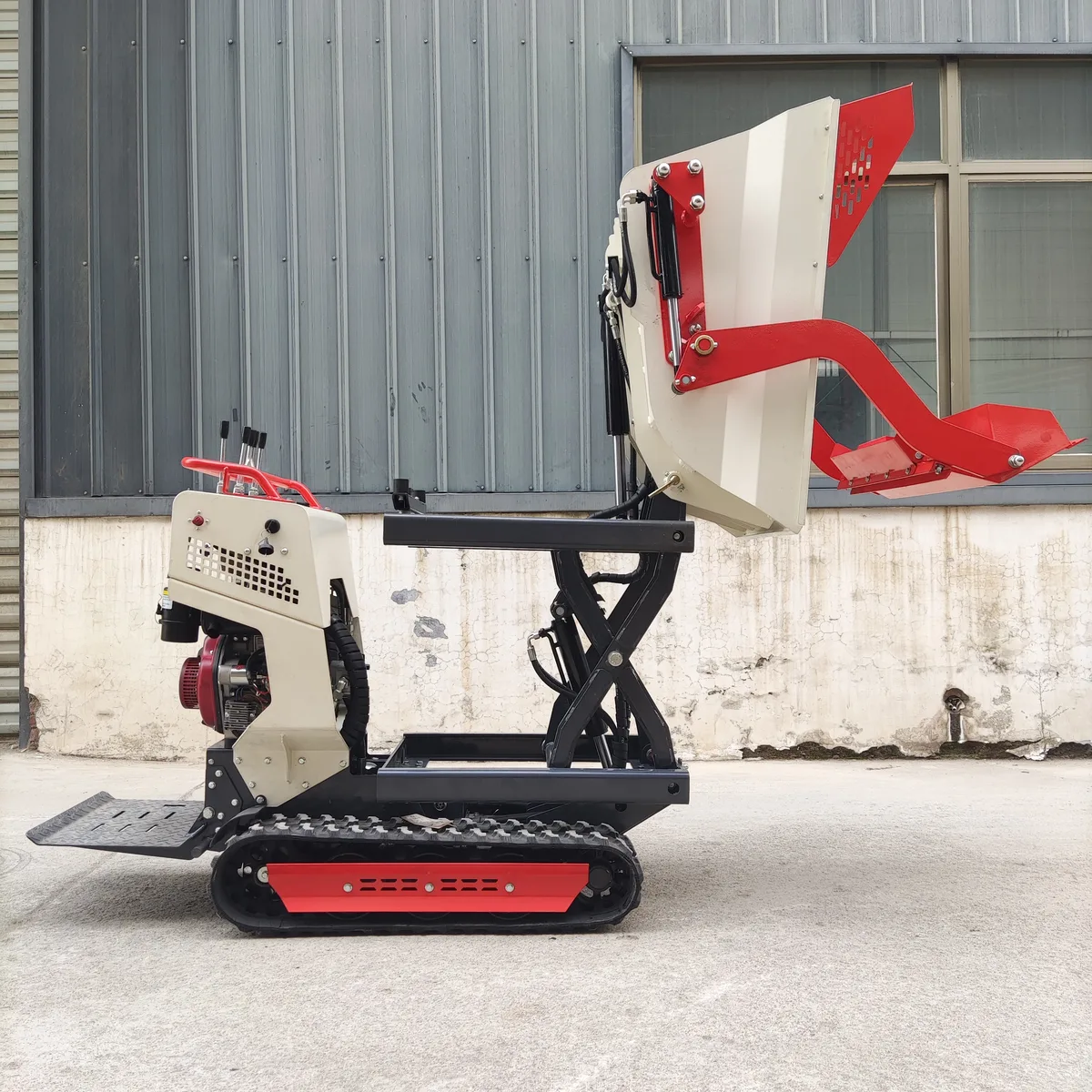 High Tip Mini Dumper
Same narrow 700 mm body. Lifts the bucket to 1,200 mm, enough to dump over scaffolding, into mixers, or above formwork.
View Product →
High Tip Mini Dumper
Same narrow 700 mm body. Lifts the bucket to 1,200 mm, enough to dump over scaffolding, into mixers, or above formwork.
View Product →
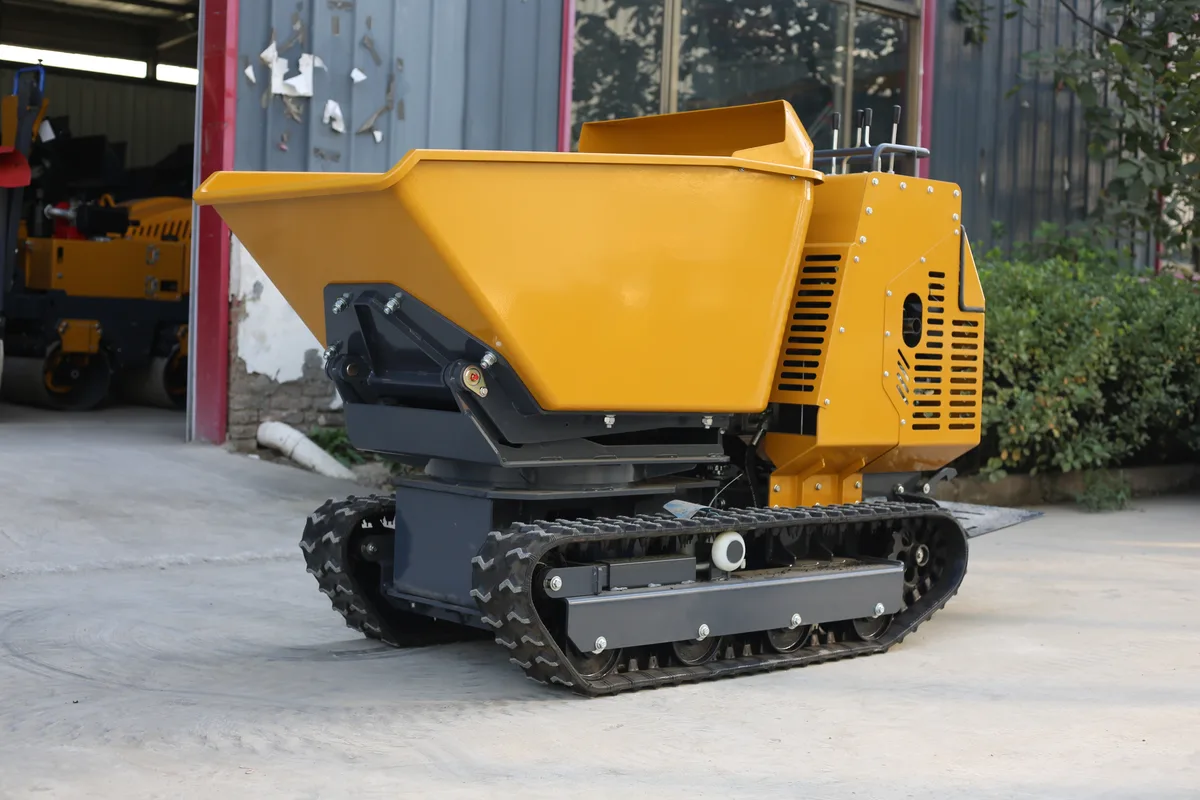 Rotary Dump Mini Dumper
2.4x the payload. Rotary base dumps in any direction without repositioning. Built for commercial sites and heavy excavation.
View Product →
Rotary Dump Mini Dumper
2.4x the payload. Rotary base dumps in any direction without repositioning. Built for commercial sites and heavy excavation.
View Product →