Self Loading Mini Dumper: One Machine. One Operator. No Waiting for a Loader.
A self loading mini dumper loads and tips without a second operator. One machine, one person. Full guide to types, specs, and when it

TerraCub Engineering Team
Mini Track Dumper Specialists · Since 2015
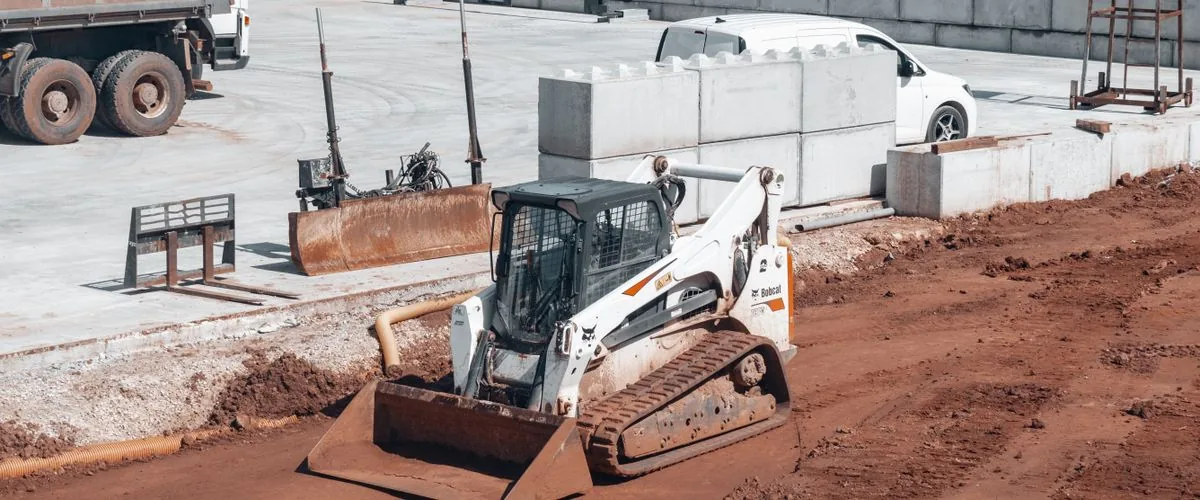
A self loading mini dumper is a compact tracked machine with a hydraulic front shovel that loads itself, carries the material across a site, and tips at the destination — without a second operator or a separate loading machine. Payloads range from 300 to 800 kg. One person runs the full load-carry-tip cycle, which is the point of it.
The machine that loads itself. Nobody saw that coming.
The self loading mini dumper solves a specific problem: you need to move material across a site, and there is no second machine to load it and no second person to shovel it. The machine handles all three phases — scooping, carrying, and tipping — through one hydraulic front shovel and one set of rubber tracks.
Cycle: drive to the material pile, lower the blade, scoop and lift the load into the dump bed, drive to the disposal point, tip, return. On a 500 kg walk-behind model, that cycle takes roughly 45–60 seconds on flat ground. Not the fastest machine on a 50-tonne job — a loader feeding a standard dumper cycles at 15–20 seconds per load. But on a 5-tonne spoil removal from a gated garden where the excavator is on a different job, 45 seconds per cycle is not a compromise. It is the only option available.
The compact dumper market is growing steadily — driven by urban residential projects, infill developments, and the growing realisation that sending two machines and two operators through a 700 mm side gate is not a logistics plan. Self-loading tracked models address the confined, solo-operation problem that no other compact class handles efficiently.
We have supplied self-loading tracked dumpers to contractors, dealers, and farm operators since 2015. The most common specification error is not choosing the wrong payload. It is ordering a standard model for a job that was always going to need self-loading. The two machines may look similar in a product gallery. They are not the same job on site.
range
full cycle
tip cycle time
pressure (typical)
Three components. Each one does exactly what its name suggests.
The self-loading mechanism is not complicated. It is three systems working in sequence, each controlled by the operator from the handlebars.
The front shovel
Fixed or articulated blade, hydraulically raised and lowered. Two main variants: a straight scraper blade, and a scoop bucket. The blade scrapes and pushes material from a flat pile — efficient on loose topsoil and gravel spread across a surface. The scoop bucket engages a heaped pile and picks material upward into the dump bed. Check which variant suits your material type before ordering. (A scraper blade on a 600 mm heaped pile of wet clay does not scrape — it laments.)
The dump bed
Hydraulic tipping, same as a standard tracked dumper. Standard forward-tip is most common. High-tip variants raise the bed 1.0–1.5 m before discharge, which handles skips and elevated reception points. The self-loading front shovel is independent of the dump mechanism — you can specify self-loading combined with high-tip as a single machine. If your job involves both loading without a helper and tipping into a skip, that combined specification is the one you need.
The drive system
Hydrostatic drive on modern units — zero-radius turning, stepless speed from standstill. Walk-behind is standard on most self-loading models, because the front shovel extends the machine's overall length and ride-on variants in this category tend to exceed the width constraints of residential access. Rubber tracks give 0.35 kg/cm² ground pressure. The self-loading mechanism does not change the tracked undercarriage's terrain performance — it still crosses soft ground, slopes, and established lawns without rutting.
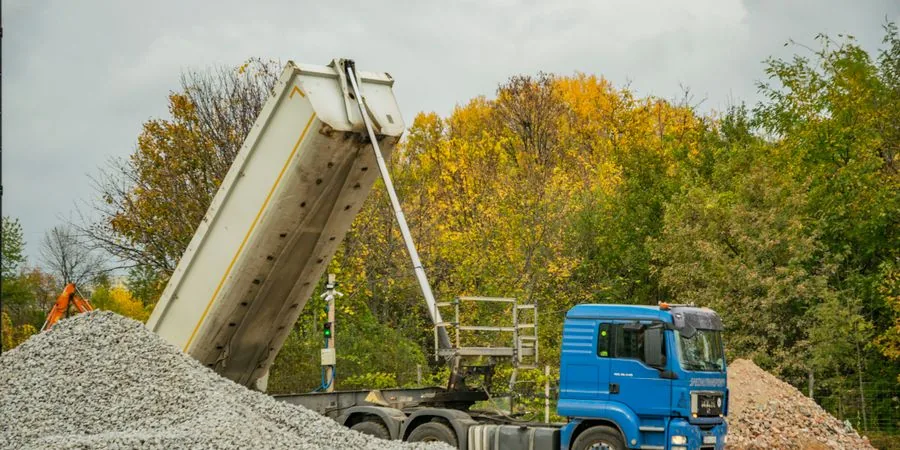
"I need a self-loading dumper" is a starting point, not a specification
Four choices determine the correct model: dump mechanism, power source, operating mode, and payload class. Each is independent. Each matters.
By dump mechanism
- Standard forward dump + self-load — the most common combination. Correct for soil, spoil, and gravel moving onto flat ground or piles. The default choice when no elevated discharge is required.
- High-tip + self-load — raises the bed 1.0–1.5 m before dumping. Correct when tipping into a skip, over a wall, or into a mixer drum. Without this, a skip at ground level becomes an obstacle the machine cannot resolve. The only combination that handles solo loading and elevated tipping in one machine.
- Swivel dump + self-load — bucket rotates 180°, allowing side tipping. Useful in trench applications where forward tipping deposits material back into the trench. Less common in the self-loading category but available on larger models.
By power source
- Petrol — Honda GX-series or equivalent. Reliable, serviceable anywhere, suited to outdoor sites with straightforward refuelling. The standard choice for most landscaping and construction applications.
- Diesel — better fuel efficiency on larger models (500 kg+), preferred for extended daily use where seasonal running costs matter. Standard choice for farm and agricultural applications where fuel supply is already infrastructure.
- Electric — zero emissions, low noise, correct for indoor demolition work, basement clearance, and noise-restricted residential sites. Battery typically lasts 4–6 hours before a charge is needed. Plan the workday around it.
By operating mode
- Walk-behind — operator walks behind and steers via handlebars. Minimum widths from 680 mm. Standard for residential access constraints.
- Ride-on — operator stands or sits on a rear platform. Faster on long runs. Typically 900 mm or wider. Measure the narrowest gate before specifying a ride-on in any access-constrained application.
Models at a glance
| Type | Payload | Width | Best Application | Price (USD) |
|---|---|---|---|---|
| Walk-behind petrol, standard tip | 300–500 kg | 680–850 mm | Landscaping, solo site work | $3,500–$5,500 |
| Walk-behind diesel, standard tip | 400–800 kg | 700–900 mm | Construction support, daily farm use | $4,000–$7,000 |
| Walk-behind, high-tip + self-load | 300–500 kg | 700–900 mm | Skip loading, solo masonry, no helper | $4,500–$7,500 |
| Electric, walk-behind | 300–600 kg | 680–900 mm | Indoor demolition, zero-emission zones | $5,500–$10,000 |
| Ride-on self-loading | 500–800 kg | 900–1,100 mm | High-volume runs, wider site access | $5,000–$9,000 |
Self-loading vs. standard dumper + helper: the maths most buyers skip
A standard mini track dumper fed by a mini excavator loads in 15–20 seconds per cycle. An excavator bucket drops directly into the bed. The dumper drives away. Fast. That combination wins on throughput for high-volume jobs — 30+ tonnes per day, open site, two operators, two machines working in coordination.
A self-loading model loads in 45–60 seconds per cycle. One operator runs everything. No second machine. No second operator. Slower per cycle. The only viable option when neither of the above is available.
Here is the comparison that matters more than cycle time: a labourer manually loading a standard mini dumper at £30/hour for an 8-hour day costs £240. A self-loading model on hire at £120/day eliminates that cost entirely. The self-loading machine breaks even on day one of hire. On purchase, the payback period is short for any contractor doing confined solo work more than twice a week. (A labourer can also be late, call in sick, and spend twenty minutes explaining why neither of those things was their fault. The machine cannot. That is a real operational consideration.)
"A self-loading mini dumper is rarely the fastest machine on a large site. It is consistently the only machine that works on a small confined site with one operator. If your job has both of those constraints, the self-loading model is not an upgrade — it is the specification. Cycle time at 45 seconds is faster than waiting for a loader that is not coming."
Rule of thumb: Under 15 tonnes/day solo with access under 900 mm — self-loading is the correct specification. Above 30 tonnes/day with two operators and open access — standard dumper + loader wins on throughput. Between those two: assess based on which constraint actually applies to your site.
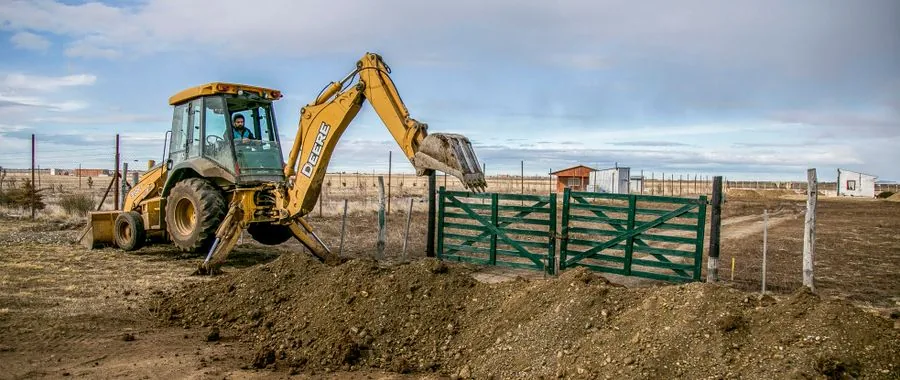
Landscaping. Construction. Agriculture. If one person needs to move it solo, it applies.
Each application uses the machine differently. The access width, daily volume, and crew size determine which specification is correct.
Landscaping and garden renovation
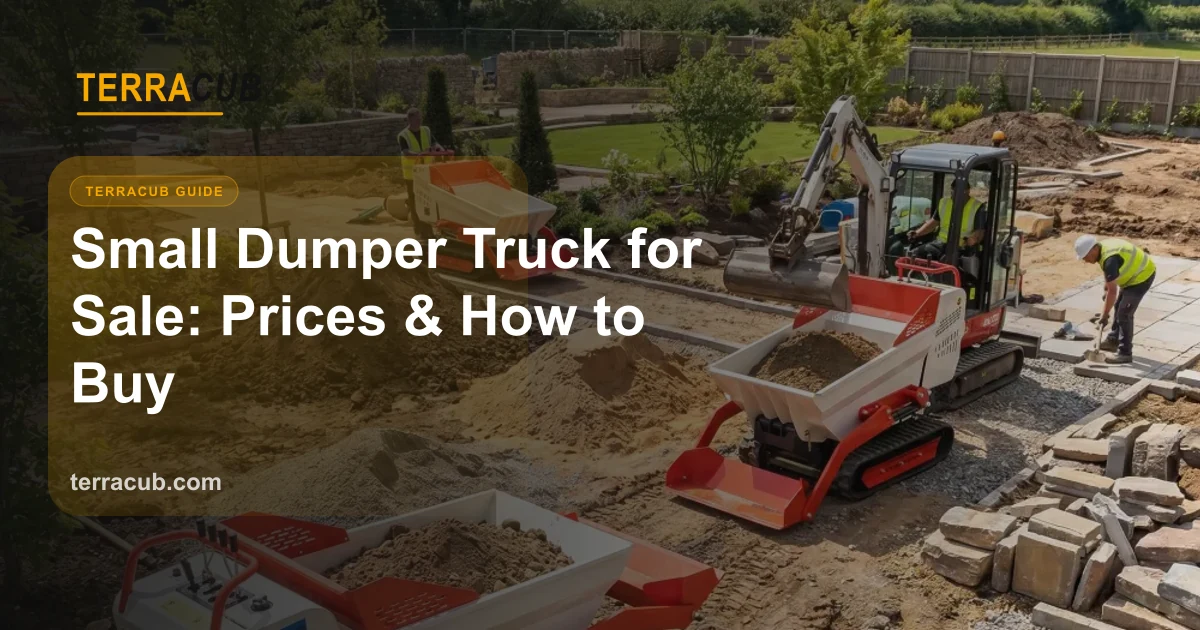
The largest single use case for self-loading mini dumpers. Garden renovation — new drainage, retaining walls, spoil removal, paving substrate — typically involves a narrow side gate, an established lawn, soft clay soil, and one contractor on site. The front shovel handles loose topsoil, gravel, and bark chip without a helper loading the bed. Ground pressure below 0.35 kg/cm² does not rut a recently laid lawn. Walk-behind models from 680 mm wide pass through standard residential gates. This combination — tracked chassis, self-load, narrow width — makes solo landscaping commercially viable on jobs that would otherwise require a second person or a second machine.
Nine out of ten contractors who switch to a self-loading model in residential landscaping don't go back to the standard-dumper-plus-helper combination. Not because the self-loader is faster in ideal conditions, but because ideal conditions include a helper who actually shows up.
Construction and confined site work
Basement construction, narrow-plot residential developments, extensions, trench backfill on tight urban sites. A self-loading tracked dumper works independently when the mini excavator is occupied, or when the site doesn't have room for two machines working simultaneously. High-tip self-loading models allow skip-loading without a second operator — the operator loads, drives to the skip, and tips in a single continuous cycle. On sites where time between excavation and spoil clearance directly affects progress, that independence matters.
Agricultural and farm use
Animal bedding movement, feed distribution, yard maintenance, field clearance. Soft farmyard ground suits rubber tracks. Self-loading is specifically valuable in agriculture because farm tasks are often genuinely solo — one person, no helper, move material from A to B and come back. Diesel-powered models are the standard choice: fuel supply on a farm is not a constraint, and serviceability is straightforward with common diesel engine platforms.
Utilities and municipal maintenance
Cemetery maintenance, footpath repair, park renovation, waterway clearance. These jobs share three constraints: restricted access, surfaces that cannot be damaged, and a single operator. Walk-behind self-loading models navigate grass, gravel paths, and flagging without leaving marks. The self-loading mechanism removes the manual shovelling step — relevant when the operator is also responsible for site safety, access control, and cleanup. One person covering all of that cannot also be running a shovel for every load.
Five questions. Answer them in this order before opening any product page.
There is no universal best self-loading mini dumper. There is the correct one for a specific combination of access width, payload, dump height, terrain, and crew availability. Work through these five questions before specifying anything.
- Is a loader or second operator available on this job? If yes: a standard mini tracked dumper fed by a loader is faster and likely more cost-effective. If no: self-loading is the specification. This question eliminates half the decision before anything else.
- What is the narrowest access point? This is the first filter on model selection. Walk-behind self-loaders start at 680 mm. Ride-on variants are typically 900 mm or wider. Measure the gate — or the alley, or the corridor — before opening a catalogue. A machine that cannot enter the site is not a machine for this site; it is something that sits on the street and earns a parking ticket.
- Where does the material go when it tips? Into a skip: high-tip is required. Into a trench or to the side: swivel dump. Onto a flat pile or spread: standard forward tip. The tipping mechanism determines which machine is correct before payload matters. Buying the wrong dump mechanism is the most common expensive mistake in this category.
- What is the daily volume? Under 15 tonnes solo: self-loading is efficient. 15–30 tonnes: self-loading works but the cycle count is high — confirm the operator can sustain the pace over a full shift. Above 30 tonnes: assess whether the access constraint forces the self-loading choice regardless, or whether a two-machine setup would outperform it.
- What is the per-job cost — not the purchase price? A self-loading model that replaces a labourer at £30/hour pays for its hire rate before lunch. Factor the hire cost against the wage it eliminates, or the purchase price against the number of solo jobs per month. The machine that costs £800 more and replaces a helper on every job has a short payback.
If you want to compare models across the 300–800 kg self-loading range — standard tip through high-lift — the TerraCub product line covers that range with direct model comparison across the category.
Five steps. The machine tolerates being skipped once. Rarely twice.
Self-loading mini dumpers handle poor practice longer than they should. They do eventually stop. These are the operating steps that keep the machine working correctly through a full season.
Inspect the shovel blade before each session
The front blade contacts the material pile on every single cycle. A worn or damaged blade edge reduces scoop efficiency and forces the operator to make multiple passes per load — which is slow and puts lateral stress on the hydraulic lift cylinder. Check the blade edge before starting. Replace when the edge radius has opened beyond manufacturer tolerance. This is a 90-second check that prevents a multi-hour fix.
Do not use the shovel as a dozer blade on compacted material
The front shovel is rated for loose material — soil, gravel, sand, loose spoil. Pushing it into compacted fill or ramming against concrete rubble puts lateral load on the hydraulic cylinder well outside its structural rating. The cylinder is not a dozer ram. The machine is not a compact bulldozer. The hydraulic cylinder data sheet has a rated force. Compacted material does not read data sheets.
Load centrally — fill to rated capacity, not past it
Off-centre loading shifts the centre of gravity laterally. On flat ground this produces uneven track wear and erratic steering. On a slope with a full bucket, it is a tip-over waiting for the next rut. Fill the bed evenly across the width. The payload rating on the machine is structural — it is not a conservative estimate designed to make you feel good about loading 15% more.
Reduce speed on slopes. Drive directly up or down — never across.
The self-loading shovel adds front-end weight to the machine compared to a standard model. This changes the balance dynamics on inclines. On any gradient — especially loaded — reduce travel speed and align the machine directly with the slope direction. Traversing across a slope with a full bed and a front-mounted shovel is how machines tip. The tip-over sequence is slow enough to look preventable in retrospect, because it is.
Service the hydraulic shovel circuit — it is separate from the dump circuit
Self-loading models have two hydraulic circuits: the dump bed and the front shovel. Standard dumper service intervals cover the dump circuit. The shovel circuit adds a separate fluid reservoir, additional seals, and additional wear points at the pivot. Check hydraulic fluid level every 20 hours. Inspect shovel pivot seals monthly. Torque-check the shovel mounting hardware every 50 hours. A hydraulic leak on the shovel circuit is a containment problem, a downtime problem, and a very preventable one.
Most failures are predictable. The ones that aren't are still caused by the same four things.
Self-loading mini dumpers are honest about consequences. Understanding the failure modes makes them straightforward to avoid.
- Shovel blade wear past effective life. No inspection schedule means the blade continues operating past the point of efficient material engagement. The operator starts making extra passes. Extra passes put extra lateral load on the hydraulic cylinder. The hydraulic cylinder responds eventually. The repair cost argues retroactively for the 90-second daily check.
- Hydraulic cylinder failure on the shovel lift. Caused by overloading against compacted material, impact damage from driving the blade into fixed obstacles, or seal deterioration from deferred maintenance. The cylinder is rated for its specified load range. Impact from compacted material in the wrong direction is not in that range.
- Track wear from hard surface operation. Self-loading models spend more time in slow-cycle manoeuvring near material piles than standard dumpers. On concrete or tarmac surfaces, this slow-speed contact accelerates track wear significantly versus mixed terrain. Rubber track grades vary by application — specify accordingly, and check the track rubber hardness for your predominant working surface.
- Loose shovel pivot hardware. Repeated loading cycles vibrate the shovel mounting hardware loose over time. Loose pivot hardware introduces play into the shovel trajectory, reduces accuracy, and progresses to a structural failure if not caught. Fifty-hour torque checks on the mounting bolts take four minutes. The failure they prevent takes considerably longer to repair.
- End-of-shift specification abuse. The last two loads of a long day are where rated payloads become approximations and slope caution becomes optimism. The machine's rating does not change at 5pm. The structural consequences of exceeding it also do not change. Both facts remain constant regardless of how close to the deadline the job is.
FAQs
Questions we hear most often, answered directly.
What is a self loading mini dumper?
How much does a self loading mini dumper cost?
What is the difference between a self-loading and a standard mini dumper?
Can a self loading mini dumper work on slopes?
What payload can a self loading mini dumper carry?
Do I need a license to operate a self loading mini dumper?
How often does a self loading mini dumper need servicing?
Know which model you need? We'll quote it. Not sure? We'll tell you which one we'd specify.
TerraCub supplies self-loading, high-tip, and standard mini track dumpers from 300 kg to 1,200 kg for teams that need the right solo-workflow machine.
If you've been sending a helper in to load the standard dumper, you've been running two people on a one-machine job. We make the other kind.
Further Reading
Related Articles
Guide
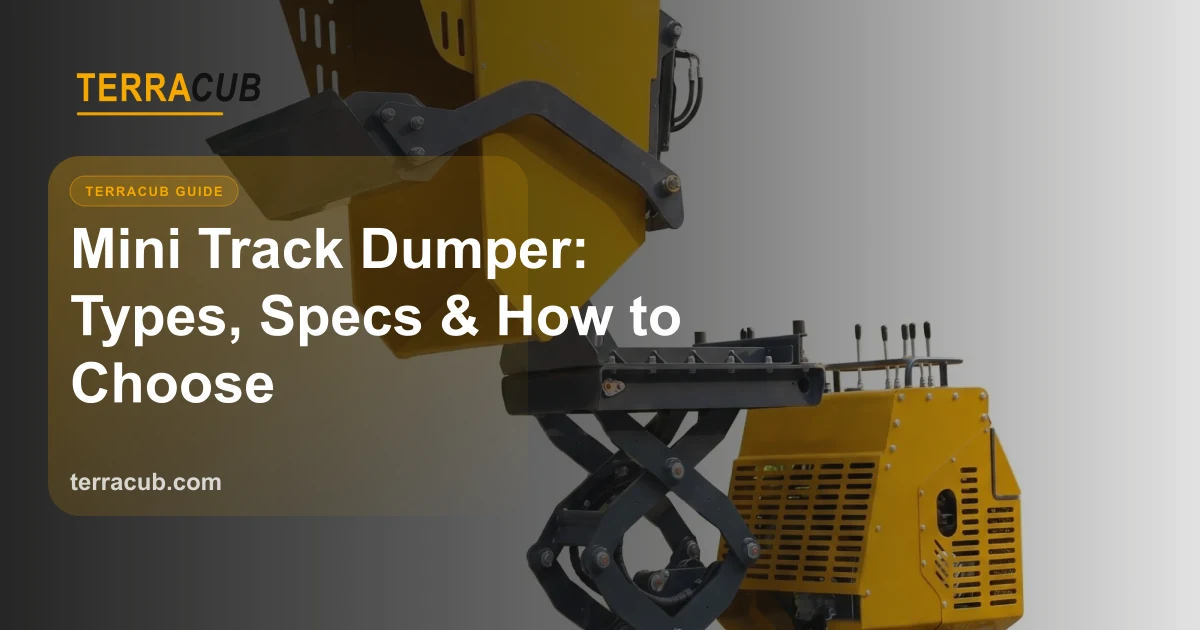
Mini Track Dumper: Types, Specs & How to Choose
Types, payload ratings, and the key track width specs compared side by side.
Buyer Guide
Compact Dump Truck: 500 kg Tracked Dumper Buyer Guide
Access width, ground pressure, and the buying checklist for compact tracked dumpers on confined sites.
Guide
Power Wheelbarrow: Types, Specs & How to Choose
Recommended Products
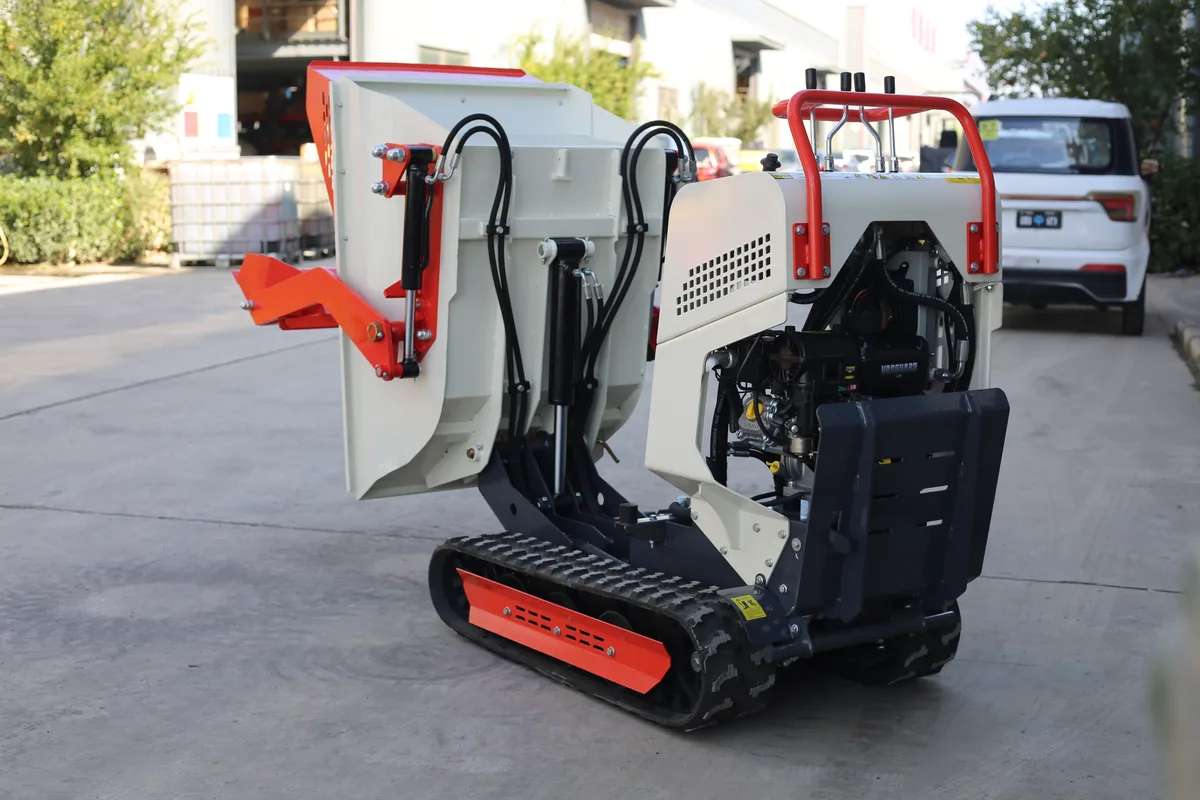 Small Dumper Truck 500kg
Entry-level tracked dumper. Passes through standard residential gates. Ideal for garden work, landscaping, and light construction.
View Product →
Small Dumper Truck 500kg
Entry-level tracked dumper. Passes through standard residential gates. Ideal for garden work, landscaping, and light construction.
View Product →
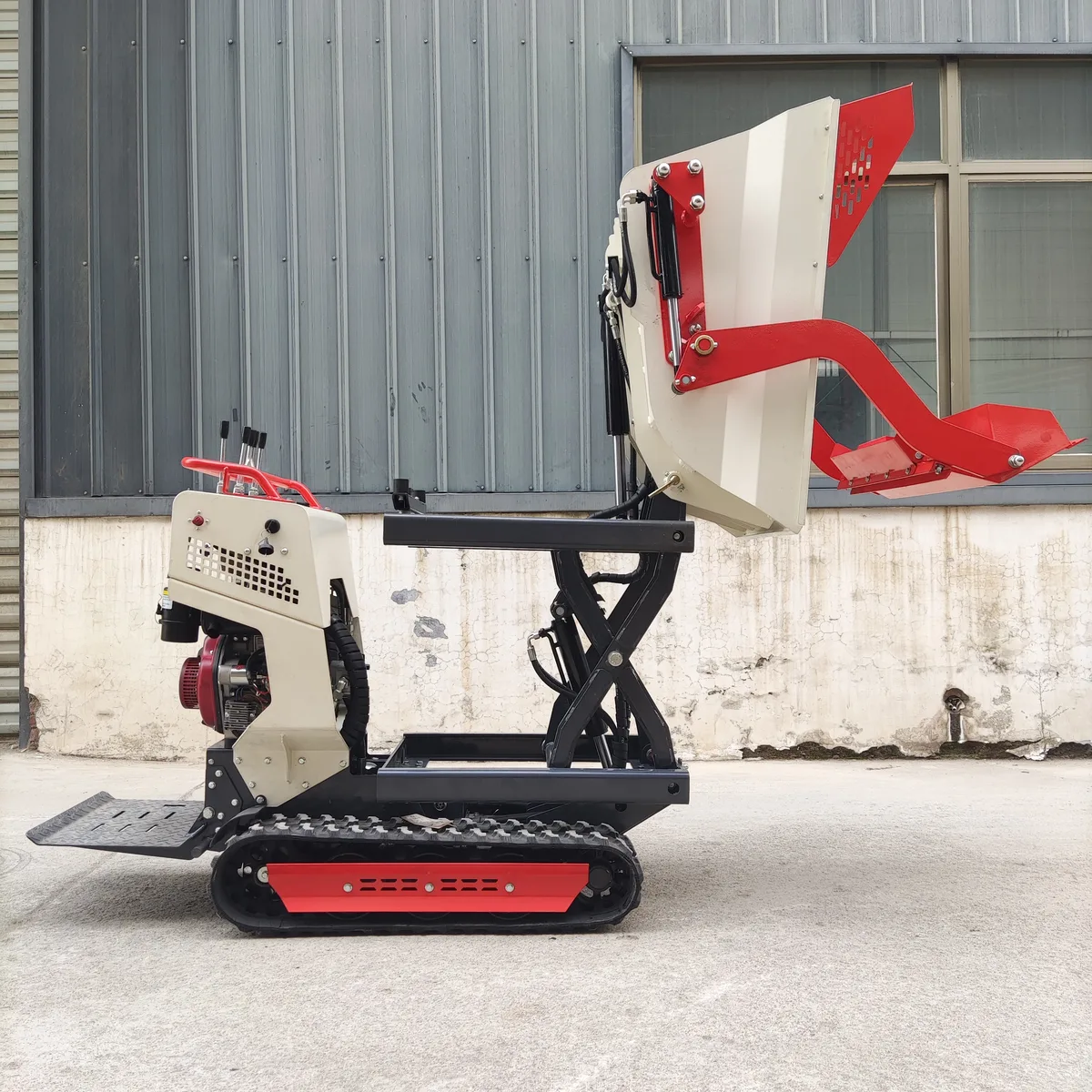 High Tip Mini Dumper
Same narrow 700 mm body. Lifts the bucket to 1,200 mm, enough to dump over scaffolding, into mixers, or above formwork.
View Product →
High Tip Mini Dumper
Same narrow 700 mm body. Lifts the bucket to 1,200 mm, enough to dump over scaffolding, into mixers, or above formwork.
View Product →
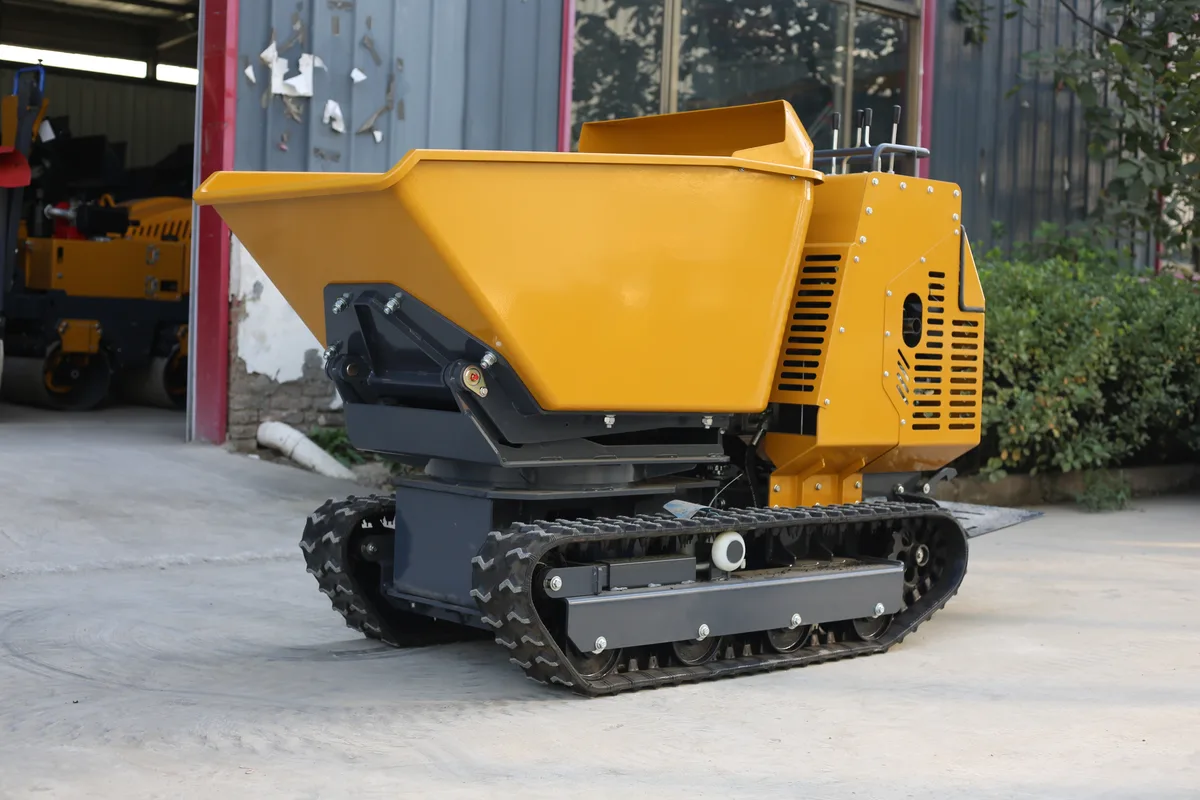 Rotary Dump Mini Dumper
2.4x the payload. Rotary base dumps in any direction without repositioning. Built for commercial sites and heavy excavation.
View Product →
Rotary Dump Mini Dumper
2.4x the payload. Rotary base dumps in any direction without repositioning. Built for commercial sites and heavy excavation.
View Product →