Mini Track Dumper: Types, Specs & How to Choose the Right One
What is a mini track dumper? Rubber track types, 500–1200 kg payload specs, dump mechanisms, applications, and how to pick the right model for any site.

TerraCub Engineering Team
Mini Track Dumper Specialists · Since 2015
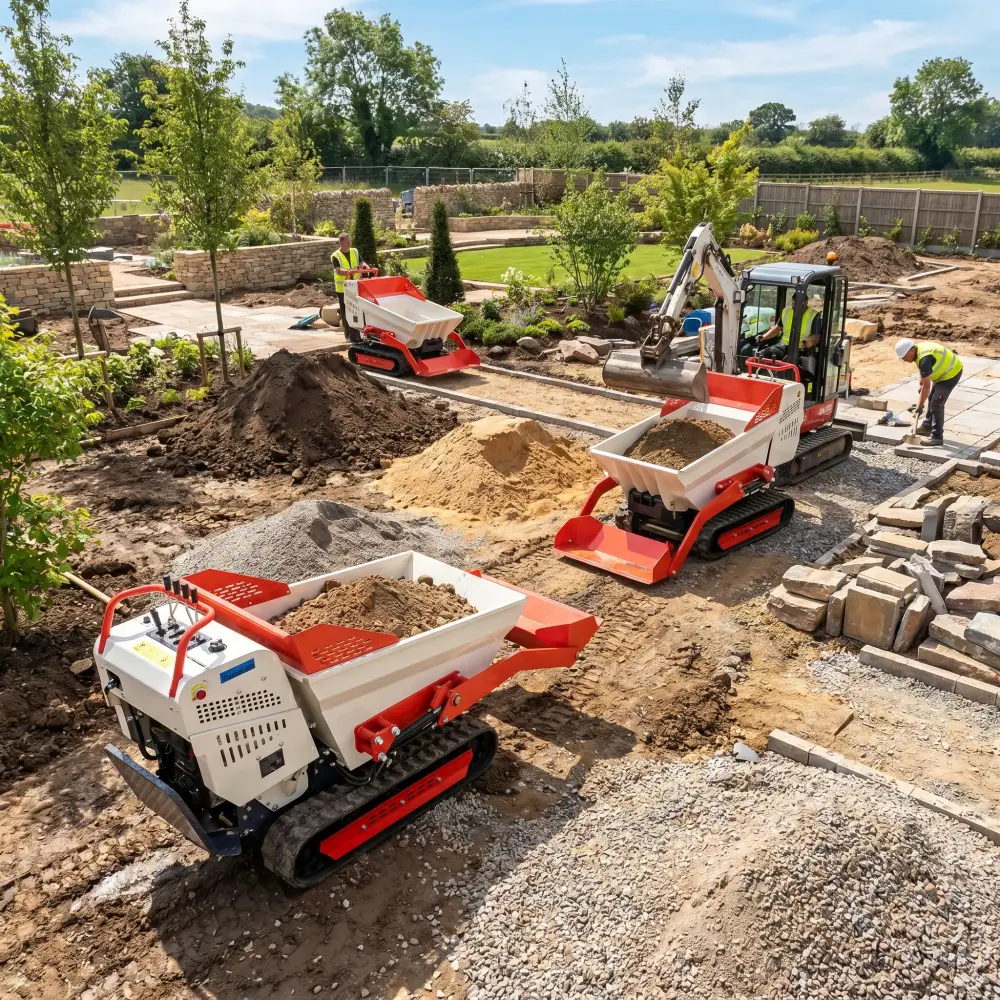
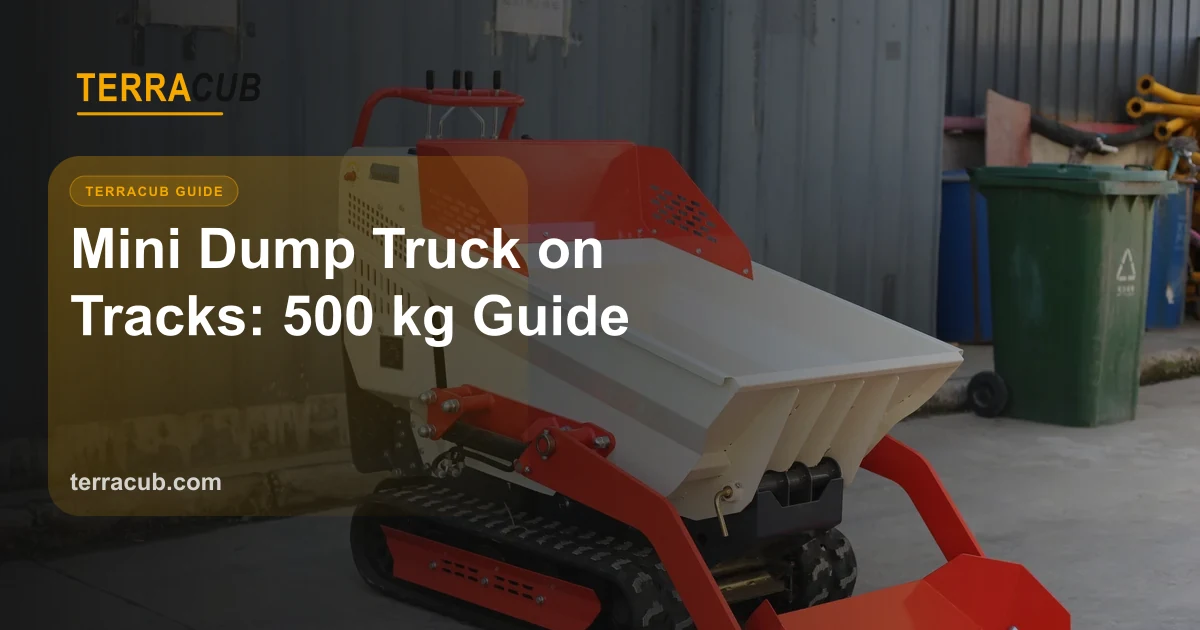
A mini track dumper is a compact, rubber-tracked machine built to move soil, gravel, concrete, and spoil across terrain that would slow a wheelbarrow or sink a wheeled vehicle. Payloads range from 350 kg to 1,200 kg. Ground pressure stays below 0.35 kg/cm² — which is why they work on soft ground, slopes, and tight sites where nothing else does.
The machine that replaced the wheelbarrow (and the physio bills)
A mini track dumper moves materials across a site and tips them where you want. That is the whole job description. The rubber tracks are what make it useful in places a wheeled dumper cannot go.
Low ground pressure — typically 0.3–0.35 kg/cm² — means a fully loaded machine can cross a lawn, soft clay, or a freshly laid path without rutting, sinking, or deciding to go sideways on a slope. A wheelbarrow, loaded, exerts about 1.5 kg/cm² through its single wheel. A wheeled mini dumper: similar. A compact tracked machine: roughly the same as a walking adult. (That adult, however, can carry about 80 kg of spoil. The machine does not get a sore back.)
The compact dumper segment is one of the fastest-growing categories in construction equipment — driven by urban infill projects, residential landscaping demand, and the gradual realisation that paying three workers to wheelbarrow for three days is a budget, not a plan. Mini tracked models specifically are expanding as contractors work on narrower sites with tighter access constraints and surfaces they cannot afford to damage.
pressure (typical)
wheelbarrow
(heavy class)
capability
Rubber tracks change three things. All three matter.
The mechanism is simpler than it sounds. Rubber tracks spread load across a large contact area — the same way snowshoes spread your weight over snow. More contact area means less pressure per cm². Three practical consequences follow from that:
1. Terrain access
A tracked machine operates on muddy ground, soft clay, grass, and steep slopes that defeat wheeled alternatives. The tracks grip rather than spin. The hydrostatic drive — standard on most modern units — provides zero-radius turning and stepless speed from standstill. No gears. No clutch. Push the lever, the machine turns. The operator controls the direction; the tracks take care of the terrain.
2. Surface protection
Driveways, established lawns, and finished paths stay intact. Rubber tracks do not mark pavers and do not rut turf the way wheels do. On residential landscaping and garden renovation jobs — where the driveway is in the client photo and the lawn was just re-seeded — this is not a minor consideration. It is the condition under which the job is awarded and the invoice is paid without conversation.
3. Slope performance
On gradients up to 25°, rubber tracks give the machine stability that no wheeled dumper matches. The low centre of gravity — a consequence of carrying the engine and dump bed close to the ground — keeps the machine planted on inclines where a wheeled alternative would slide. A wheeled dumper on a steep muddy slope is, technically, also a tracked machine. It's tracking the path of least resistance, downhill, without you. (The technical term for this is not covered by most hire insurance.)
Track width is the specification most buyers skip. A 230 mm track is the standard entry-level width. A 300 mm track gives lower ground pressure and better performance on very soft ground. A 400 mm track on machines above 800 kg is what commercial contractors use on coastal sand or waterlogged clay — where the narrower track would dig in rather than float.
"I need a mini track dumper" is about as specific as "I need a vehicle"
Four classifications matter: dump mechanism, power source, operating mode, and payload class. Confuse them and you will order the wrong machine — the most expensive mistake in this category, and the most common.
By dump mechanism
This is the first decision. The dump mechanism determines what the machine is actually useful for.
- Standard (forward) dump — bucket tips forward. Simple, reliable, correct for most landscaping and soil-moving work. The default choice when you have no specific reason to choose otherwise.
- Swivel / rotary dump — bucket rotates 180° or 360°, allowing side tipping. Correct for excavation and trench backfill work where forward tipping would deposit material back into the trench. TerraCub's PIVOT 1200 uses this mechanism.
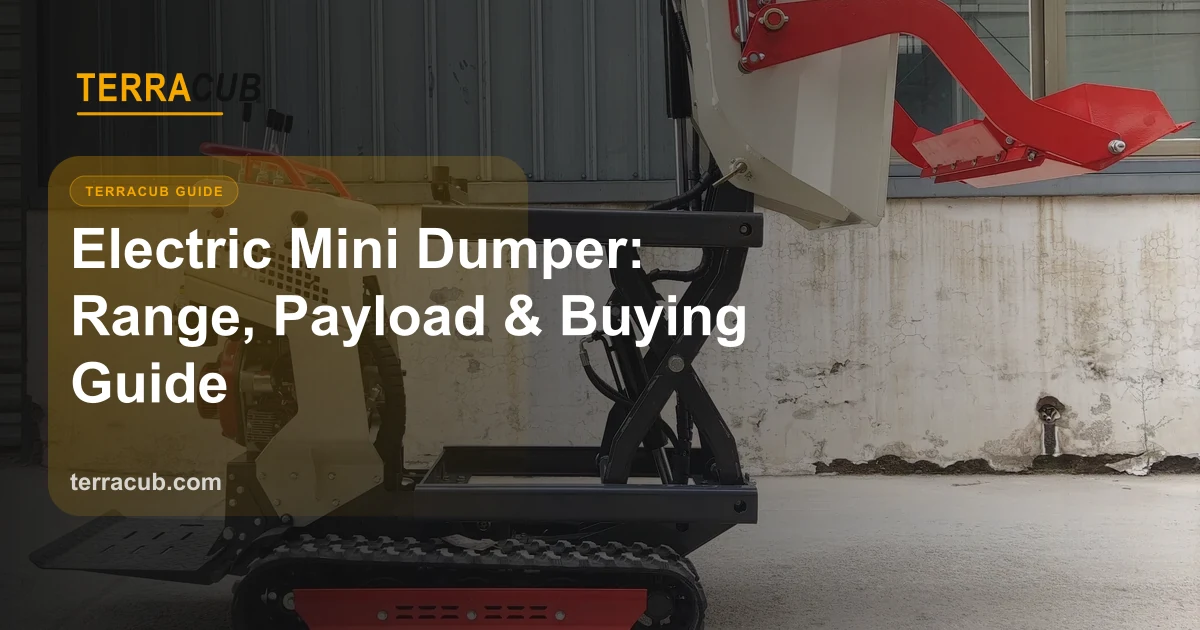
- Scissor lift / high-tip — bucket raises 1.0–1.5 m before tipping. Correct for tipping into a skip, a mixer drum, or over a wall. The most useful mechanism for masonry and concrete work. Without it, a skip sitting at ground level becomes an obstacle, not a solution.
- Self-loading — adds a front blade or loader bucket. One person loads and dumps without a helper. Slower in cycle time, but the labour cost calculation changes significantly on solo operations.
Nine out of ten returned machines in this category trace back to the same specification error: the buyer chose standard dump and the job required high-tip. The skip was there. The machine could not reach it. A £4,000 machine, useless for the task.
By power source
- Petrol (gasoline) — serviceable in many markets and suited to outdoor work where refuelling is straightforward. Before choosing it over battery power, compare the petrol mini dumper prices, payloads, widths, and jobsite limits in the same machine class.
- Diesel — more efficient on larger machines (800 kg+). Better for extended daily use where fuel cost matters over a full season.
- Electric (battery) — zero emissions, low noise, suited to indoor demolition, basement work, and noise-restricted residential sites. Battery capacity limits continuous run time; most units manage 4–6 hours before a charge is required. Plan the workday accordingly.
By operating mode
- Walk-behind — operator walks alongside and steers via handlebars. Narrower overall width; fits through gates as tight as 580 mm. Correct for most residential access constraints.
- Ride-on — operator stands or sits on a rear platform. Faster on longer runs. Typically 900 mm or wider. Measure the narrowest gate before specifying.
Types at a glance
| Type | Payload Range | Typical Width | Best Application | Price Range (USD) |
|---|---|---|---|---|
| Standard (forward) dump | 350–600 kg | 580–850 mm | Landscaping, soil movement | $2,500–$5,000 |
| Swivel / rotary dump | 600–1,200 kg | 750–1,000 mm | Excavation, trench backfill | $4,000–$7,000 |
| Scissor lift / high-tip | 350–500 kg | 600–850 mm | Masonry, elevated discharge | $3,500–$6,000 |
| Self-loading | 350–500 kg | 700–900 mm | Solo operation, tight access | $3,500–$6,500 |
| Electric | 350–800 kg | 650–900 mm | Indoor, zero-emission zones | $5,000–$10,000 |
Tracked vs. wheeled — the decision is terrain, not budget
Both machine types move material. The correct choice is determined by the site, not by the purchase price.
Tracked machines win on: soft ground (lawn, clay, sand, waterlogged soil); slopes above 15°; surfaces that cannot be damaged (driveways, finished paths, decking); and narrow gates and confined access where machine width matters.
Wheeled machines win on: hard, flat, level surfaces where ground pressure is irrelevant; long straight runs where tracked-machine speed becomes limiting; lower upfront cost (20–40% less for equivalent payload); and simpler maintenance with fewer wear components.
The practical answer: If the site has any soft ground, any slope, or any surface that matters, tracked is the correct specification. A wheeled machine that sinks on day one costs more than a tracked machine that finishes the job — even if the wheeled machine cost less to hire.
"The cheapest mini track dumper is rarely the cheapest outcome. A $3,500 tracked machine that finishes the job costs less than a $2,800 wheeled machine that sinks in soft clay and waits for dry ground. Ground pressure doesn't negotiate: 0.35 kg/cm² vs. 1.5+ kg/cm². That gap is the difference between a job that runs and one that stops."

Construction. Landscaping. Agriculture. If it needs material moved, it applies.
Each sector uses the machine differently. The correct specification in one application is the wrong specification in another — even at identical payload.
Landscaping and garden renovation
The highest-volume application. Garden renovations — new beds, drainage, retaining walls, turf replacement, paving — almost all involve narrow gates, existing lawns, and soft clay soil. A tracked machine works through all of it without damaging the surface. Walk-behind models in the 350–500 kg range are the standard choice.
A landscaping contractor once faced a straightforward calculation: 4 tonnes of spoil, steep back garden, 800 mm gate, soft clay. The original plan was two workers with wheelbarrows for three days — approximately $2,800 in labour. They rented a walk-behind tracked dumper instead. One operator, one day, nine hours. Same result. The tracked machine covered its rental cost before lunch.
Construction and civil engineering
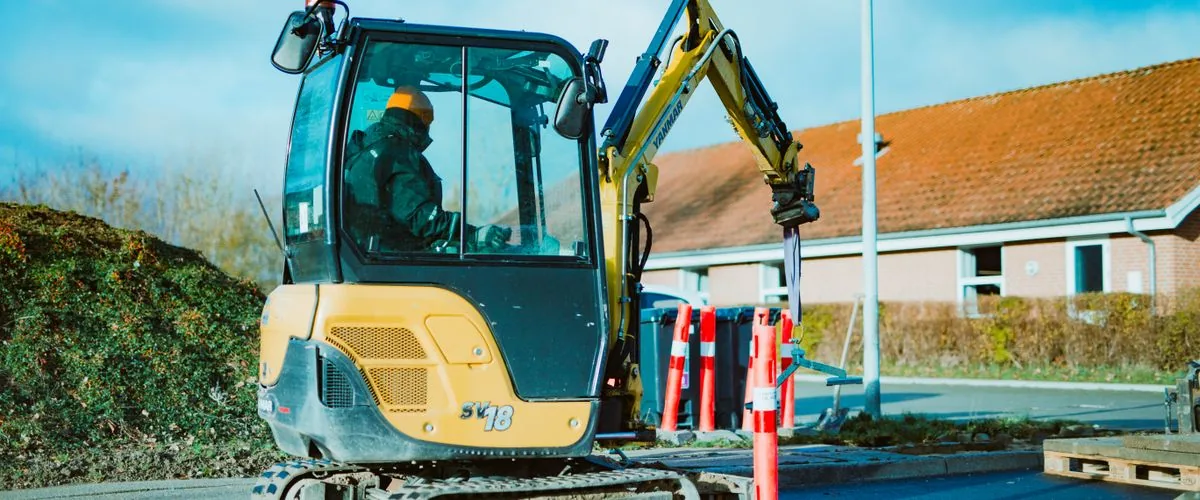
Tracked mini dumpers handle material movement on sites where a full-size dumper cannot access: basement construction, narrow-plot residential developments, extensions, and trench backfill. Swivel-dump models are particularly effective alongside mini excavator operations — the excavator digs, the dumper shifts spoil, one operator each. It is a genuinely efficient two-machine combination on confined urban sites.
Agricultural and farm use
Soft farmyard ground, waterlogged fields, animal bedding movement, and field maintenance. Tracked machines handle the ground conditions that defeat wheeled alternatives. Self-loading variants suit solo farm tasks where no second person is available to help load the bucket.
Utilities and municipal maintenance
Footpath repair, park renovation, cemetery maintenance. Access is frequently tight, ground surfaces matter, and the operator often works alone. Walk-behind tracked machines in the 350–500 kg range cover all three constraints, and their low noise profile is appropriate for residential and public environments.
Five questions. Answer them in this order.
There is no universal best mini track dumper. There is only the right one for a specific combination of access width, payload, dump height requirement, terrain, and budget. Work through these five questions before opening any product catalogue.
- What is your narrowest access point? This is the first filter. Walk-behind machines start at 580 mm. Ride-on machines are typically 900 mm or wider. Measure the gate — or the corridor, or the path — before looking at any specification sheet. A machine that cannot enter the site is not a machine for this site.
- How much material per load? Payload determines cycle efficiency. Too small: double the runs, double the time. Too large: you're paying for capacity you're not using. For most residential landscaping: 350–500 kg. For excavation support: 500–800 kg. When uncertain, size up — extra capacity costs nothing in use, and you cannot add capacity you did not specify.
- Where does the material end up? Into a skip: you need a scissor lift or high-tip. Into a trench or to the side: you need a swivel dump. Onto flat ground or a pile: standard forward tip is fine. The tipping requirement determines the mechanism before any other specification matters.
- What is the terrain? Soft clay, lawn, slope above 15°, or any surface that cannot be damaged: tracked is the correct answer. Hard flat concrete or tarmac: wheeled is acceptable and less expensive. Slopes: tracked only. This one is not a preference; it is a physics constraint.
- What is the per-job cost, not the sticker price? A machine that finishes the job in one day is worth more than a machine that waits for dry weather. Factor the rental rate against the job duration, or the purchase price against the number of uses per season. The machine that costs $1,000 more and finishes two days earlier has already paid the difference.
If you want to compare models across the 500–1,200 kg range — standard dump through high-lift and rotary — the TerraCub product line covers that range with direct model comparison across the category.
Five steps. None complicated. Most skipped once.
A good-quality mini track dumper handles poor operating practice longer than it should. It does eventually stop tolerating it. These five steps are how you avoid that conversation with the hire company or the warranty department.
Check the rated payload and do not exceed it
The payload rating is structural. Overloading stresses the tipping ram, strains the tracks, and shifts the machine's centre of gravity on slopes. The rating plate is on the machine. The rated number is the limit, not the starting point for negotiation.
Inspect tracks before every session
Look for debris caught in the undercarriage, cracking on the track rubber, and correct tension. A correctly tensioned track sags approximately 10–15 mm in the middle of the upper run. An over-tight track accelerates sprocket wear. A loose track derails. Track tensioning takes two minutes. A derailed track in the middle of a job takes considerably longer.
Load centrally in the bucket
Off-centre loading shifts the centre of gravity laterally. On flat ground this is inconvenient. On a slope with a full bucket it is a tip-over waiting for the next rut. Load material evenly across the width of the bucket before driving anywhere.
Reduce speed on slopes — drive directly up or down
Full speed on a level, hard surface is appropriate. On any incline — especially loaded — reduce speed and align the machine directly with the slope direction. Traversing across a slope with a loaded bucket is how machines tip. The manual specifies the max slope angle. It is not a challenge.
Engage the tipping mechanism fully before releasing load
Hold the tip lever until the bucket is fully elevated before letting the material fall. A half-engaged ram puts load on the pivot point rather than the hydraulic cylinder — which is where tipping rams fail. This is a 30-second discipline that prevents a 3-day repair.
Most failures are preventable. The ones that aren't are still predictable.
Mini track dumpers are not fragile machines. They are, however, honest about consequences. Understanding how they fail makes it significantly easier to not have them fail.
- Track derailment. Caused by debris caught in the sprocket, an over-loose track, or hitting a fixed obstacle at speed. Routine debris clearing and correct tensioning prevent most of these. Once a track derails mid-job, the cost is measured in time, not money — though it becomes money quickly enough.
- Hydraulic cylinder failure. Overloading the dump mechanism. The cylinder is rated for the machine's payload in a correctly loaded dump bucket — not for using the bucket as a scoop blade against compacted material. The ram is not a bulldozer attachment.
- Engine failure. Oil level, wrong fuel, and missed service intervals. These are not dramatic failures. They are administrative ones — the kind that happen when the machine is treated as a rental problem rather than an asset.
- Track wear from abrasive surfaces. Rubber tracks on bare concrete accelerate wear significantly. Tracks rated for 1,500–2,000 hours on mixed terrain can wear through in 400–600 hours on continuous abrasive surfaces. Steel protection pads exist for this application. Use them.
- Tipping instability. Off-centre loading plus a slope plus a full bucket. This is how machines tip over. It happens slowly enough that it looks preventable in retrospect — because it is. Centre the load. Check the slope angle. These steps take less time than the incident report.
FAQs
Questions we hear most often, answered directly.
What is a mini track dumper used for?
How much does a mini track dumper cost?
What payload capacity do I need?
How steep a slope can a mini track dumper handle?
Are mini track dumpers suitable for landscaping?
What maintenance do mini track dumpers require?
What is the difference between a mini track dumper and a power barrow?
Know which model you need? We'll quote it. Not sure? We'll tell you which one we'd specify.
TerraCub supplies standard dump, scissor-lift, and rotary-dump mini track dumpers from 500 kg to 1,200 kg capacity for teams that need the right format for the job.
If you've been moving 400 kg of clay one wheelbarrow at a time, that's technically cardio. It's also Tuesday through Thursday of your week. We make machines for the other option.
Recommended Products
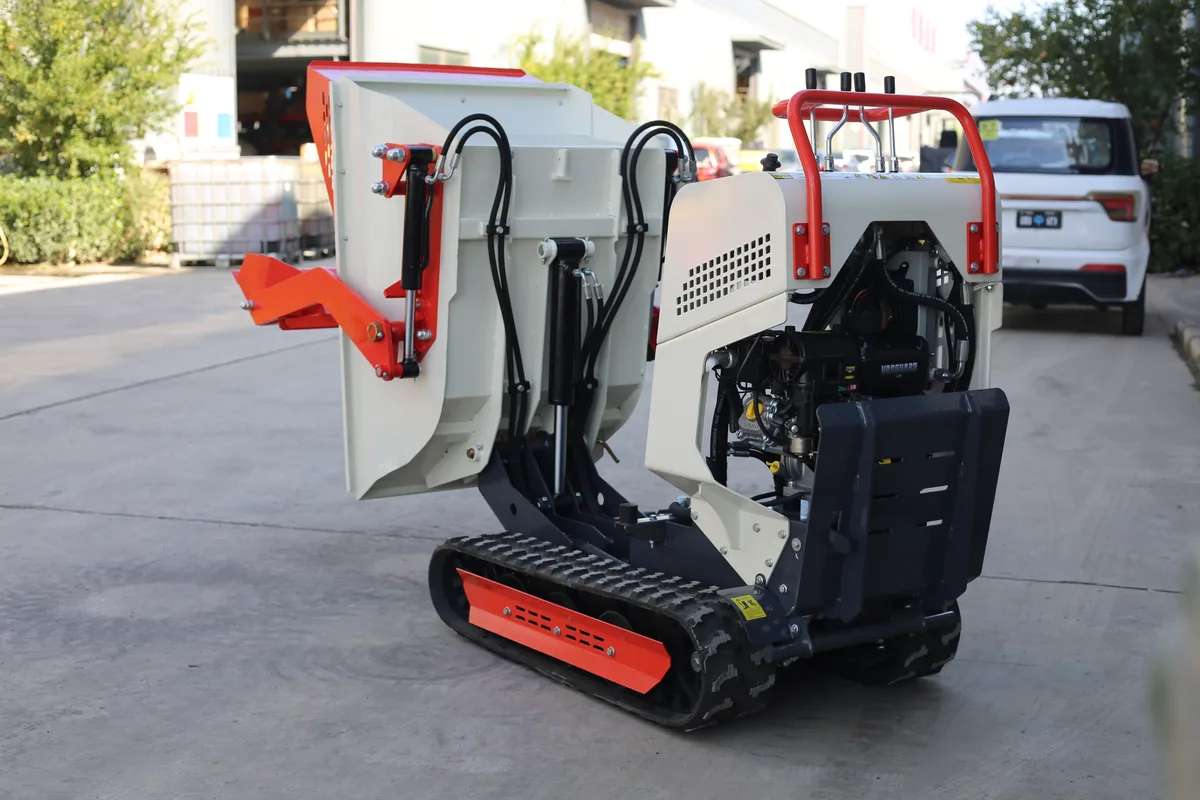 Small Dumper Truck 500kg
Entry-level tracked dumper. Passes through standard residential gates. Ideal for garden work, landscaping, and light construction.
View Product →
Small Dumper Truck 500kg
Entry-level tracked dumper. Passes through standard residential gates. Ideal for garden work, landscaping, and light construction.
View Product →
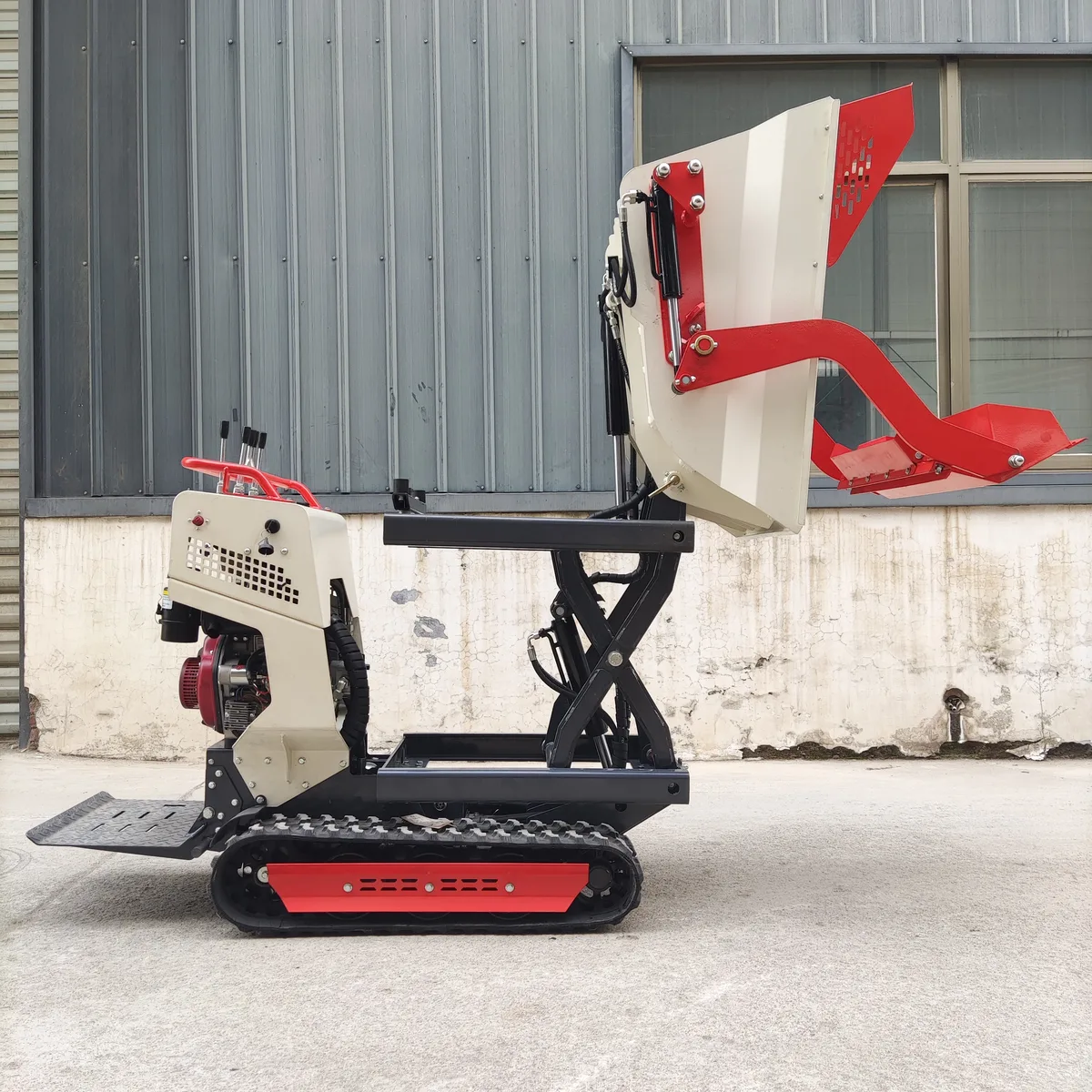 High Tip Mini Dumper
Same narrow 700 mm body. Lifts the bucket to 1,200 mm, enough to dump over scaffolding, into mixers, or above formwork.
View Product →
High Tip Mini Dumper
Same narrow 700 mm body. Lifts the bucket to 1,200 mm, enough to dump over scaffolding, into mixers, or above formwork.
View Product →
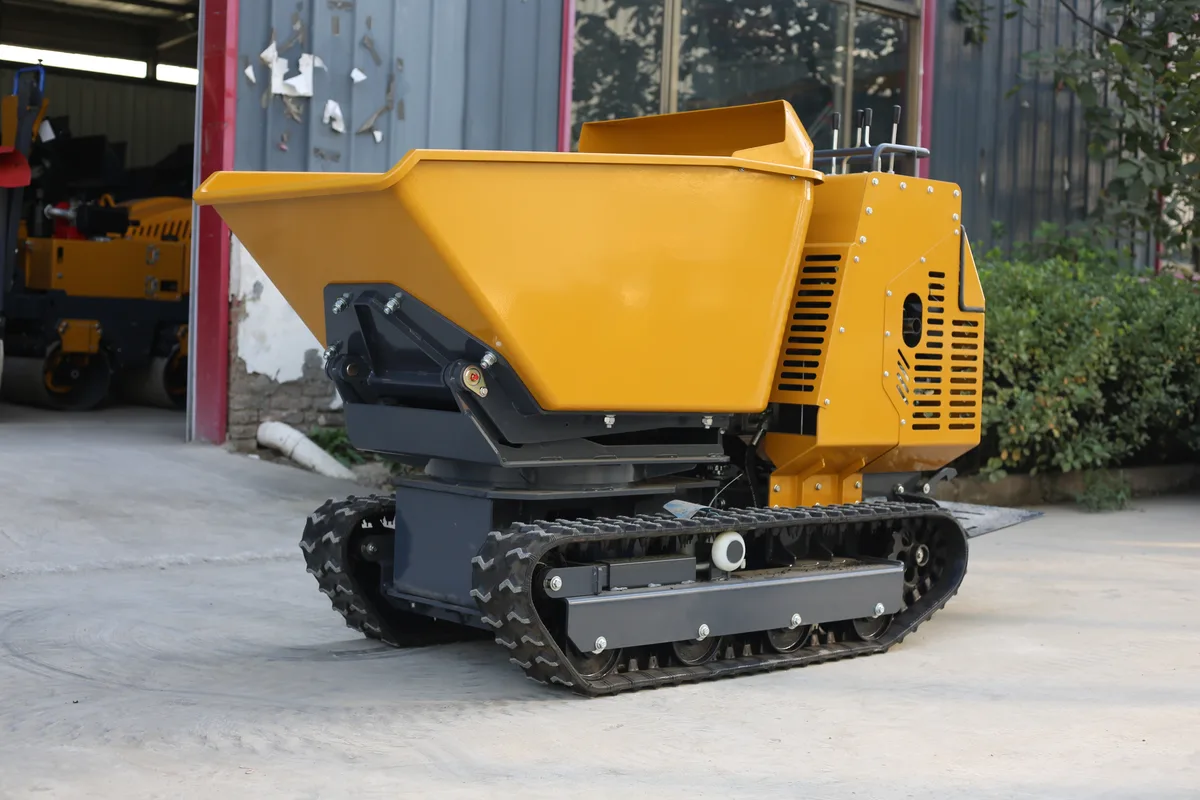 Rotary Dump Mini Dumper
2.4x the payload. Rotary base dumps in any direction without repositioning. Built for commercial sites and heavy excavation.
View Product →
Rotary Dump Mini Dumper
2.4x the payload. Rotary base dumps in any direction without repositioning. Built for commercial sites and heavy excavation.
View Product →