Power Wheelbarrow: Types, Specs & How to Choose the Right One
A power wheelbarrow hauls up to 300 kg without wrecking your crew. Types, gas vs electric, terrain limits, and five questions to ask before you buy.

TerraCub Engineering Team
Mini Track Dumper Specialists · B2B Equipment Guides
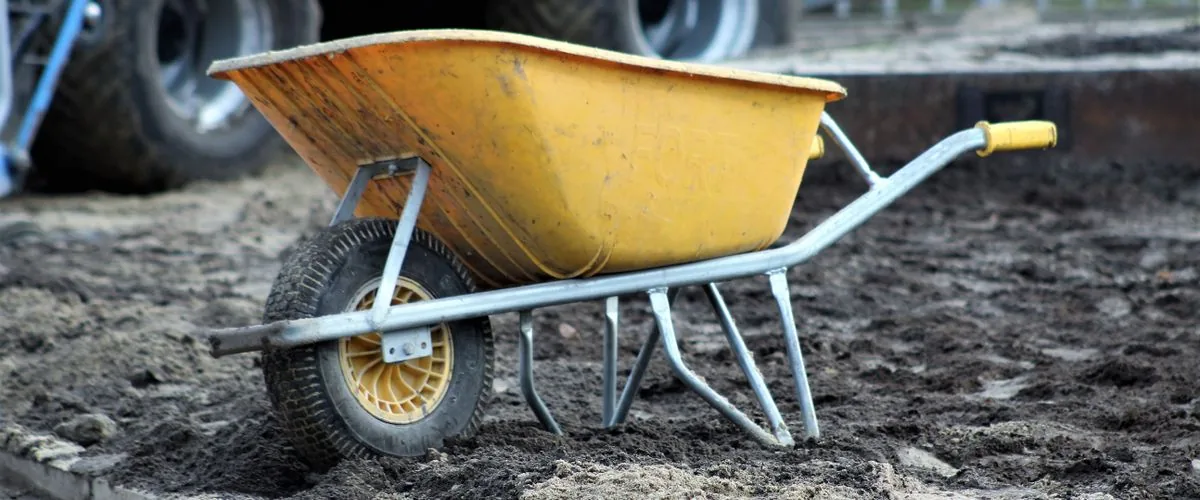
A power wheelbarrow is a motorised material-hauling machine that replaces manual pushing with a gasoline engine or electric motor. It carries 90–300 kg depending on the model, moves at 1–5 km/h, and handles slopes up to 20°. One operator guides it; the machine does the moving. Used wherever heavy material needs to travel repeatedly over short-to-medium distances without requiring a second pair of hands — or a chiropractor on retainer.
One person. 300 kg. No second operator.
The haul is the invisible cost on every construction or landscaping job. You budget the materials. You schedule the machines. Nobody budgets the two hours a worker spends pushing 80 kg of soil from the stockpile to the pour, twelve times a day. Until that worker is off with a back injury for three weeks. Then someone budgets it — retrospectively, and expensively.
A power wheelbarrow — also called a motorised wheelbarrow, powered barrow, or electric wheelbarrow — solves that problem mechanically. The operator walks alongside and steers. The motor does the pushing. On a construction site, a landscaping project, or any site where material needs to move repeatedly, that difference converts a two-person carry into a one-person run. Repeatedly. Without the physiological bill.
The powered wheelbarrow market is growing at roughly 5.5% per year. That is not because the product is new. It is because anyone who has priced a workers' compensation claim recently has done the arithmetic and found that the machine pays for itself faster than expected. The question is which machine, for which site. That is what this guide covers.
tracked models
most models
through 2030
runtime
TerraCub manufactures mini track dumpers — the machines that handle what a power wheelbarrow cannot. We've seen enough job sites to know where the wheelbarrow is the right answer and where it isn't. Both answers are in this guide.
Gas vs. electric: stop choosing by habit
Gas is the default. It has always been the default. It is familiar, parts are available everywhere, and runtime is essentially unlimited — fill the tank and keep going. On a large open outdoor site, those are genuine advantages. Gas is not wrong. It is just wrong for more situations than most buyers acknowledge.
Gas-powered wheelbarrows outsell electric on most markets — and on most sites, that reflects habit more than engineering. For any enclosed or semi-enclosed space — building interiors, basement excavation, renovation sites, greenhouse work — gas fumes are a health risk and a compliance issue. An electric model typically costs $200–$400 more upfront. Against the cost of a forced-ventilation setup, an air-quality inspection, or one WorkSafe notice, that premium disappears in week one. On any enclosed-space job, gas was never actually the cheaper option. It was just the one nobody calculated properly.
When gas is the right choice
- Large outdoor sites with no air-quality or noise constraints
- Remote locations without reliable power for battery recharging
- Shifts longer than 8 hours where battery swap logistics are impractical
- High-payload applications where gas engines still hold a torque advantage
When electric is the right choice
- Any enclosed or semi-enclosed workspace — building interiors, cellars, tight renovation sites
- Sites with noise restrictions or zero-emissions requirements
- Jobs where the machine works alongside crew for extended periods
- Any site where fuelling logistics are more complex than plugging in overnight
Electric models now deliver 150–250 kg payload — enough for the vast majority of site applications. The performance gap has closed. The default assumption has not caught up yet. *(Give it a few more WorkSafe fines and it will.)*
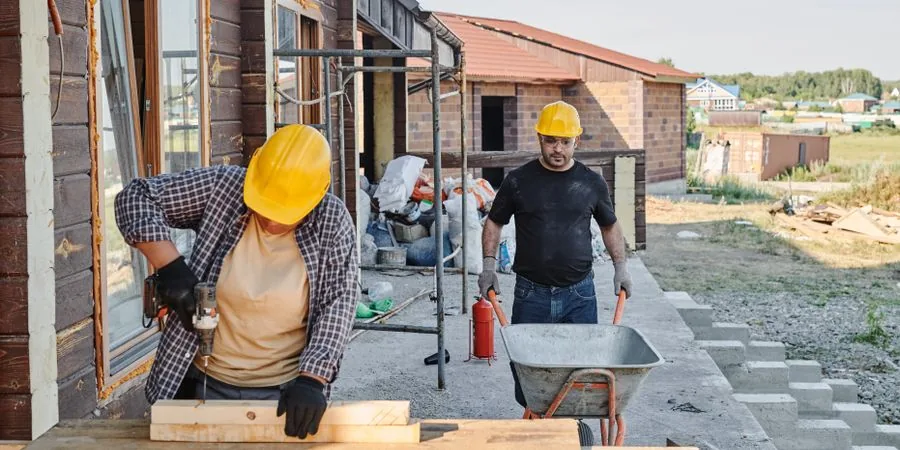
Three types of power wheelbarrow — and when each fits
The category covers three meaningfully different machines. Knowing which type you need before searching prevents buying the compact version and discovering it cannot handle the terrain — or buying the tracked version and discovering it won't fit through the doorway. Both are common. Neither is cheap to fix.
1. Wheeled self-propelled wheelbarrow
One or two powered wheels, operator walks behind and steers with handles. Payload: 90–200 kg. Width: 55–80 cm. The entry-level machine for landscaping, light construction, and garden-scale hauls. Fits through standard gates and doorways. Affordable and simple. Struggles on soft ground, mud, or gradients above 15°. If the site is reasonably flat and paved or compacted, this is all most jobs require.
2. Tracked power wheelbarrow
Rubber tracks instead of wheels. Same operator-guided principle but significantly better on soft, muddy, or uneven ground. Payload: 150–300 kg. Width: 75–90 cm. Handles slopes up to 20° reliably. Heavier and wider than the wheeled version — it won't fit through a standard 70 cm gate. The right choice for construction, demolition clearance, soft agricultural terrain, and any site where the ground is not reliably flat and firm.
3. Remote-controlled dumper
The operator walks alongside rather than directly behind. Some models complete a fixed route while the operator remains stationary. Payload: 200–500 kg. The bridge between a power wheelbarrow and a full tracked mini dumper. Higher cost and more setup time — justified when the haul route is consistent and the payload justifies the machine. Above 500 kg, you are in mini track dumper territory.
| Type | Payload | Width | Max Slope | Best For |
|---|---|---|---|---|
| Wheeled self-propelled | 90–200 kg | 55–80 cm | 15° | Garden, light construction, flat paved sites |
| Tracked power wheelbarrow | 150–300 kg | 75–90 cm | 20° | Soft ground, uneven terrain, construction sites |
| Remote-controlled dumper | 200–500 kg | 80–100 cm | 20° | Repetitive fixed-route hauls, high-payload renovation |
Load capacity: the spec most buyers misread
Every buyer looks at the payload number. Most buyers read it wrong.
Rated payload is the maximum load on flat, compacted ground in ideal conditions. Add a 10° slope and effective capacity drops 15–20%. Add soft ground and it drops further. Add both and the machine that was rated for 200 kg is doing well to move 130 kg without straining the drivetrain.
Rule of thumb: Specify a machine rated at 35–40% above your expected average load. If you're regularly moving 150 kg per run, buy a 200–210 kg rated machine minimum. Running consistently at 90–95% of rated capacity is how motors age prematurely and warranties get voided.
A contractor running a landscaping project — soil, gravel, topsoil bags, turf rolls — typically hauls 80–150 kg per run. A 200 kg rated wheeled model covers that. A construction site clearing excavated spoil runs closer to 150–200 kg per load. A tracked model rated at 250–300 kg is the correct choice. The extra cost is the correct cost.
Need more than a power wheelbarrow can handle?
TerraCub mini track dumpers carry 500–1,200 kg on rubber tracks — designed for the payload, gradient, and terrain a power wheelbarrow can't manage.
Get a QuoteBriggs & Stratton engine options, tracked dumper alternatives, and compact-site buyer support.
Power wheelbarrow vs. mini track dumper: where to draw the line
There is a job a power wheelbarrow does well. There is also a job it looks at, considers briefly, and then asks to be excused from.
A landscaping contractor we spoke with was running a garden renovation — 40 tonnes of topsoil in, old concrete and rubble out, through a standard garden gate at 72 cm, across 60 m of lawn. He ran it with a wheeled power wheelbarrow rated at 180 kg. Two days, one operator, job done. Correct tool.
The job next door was different. 200 tonnes of excavated spoil moving 120 m across a soft, waterlogged site with a 15° internal ramp. Same contractor tried a tracked power wheelbarrow. Three cycles in, the machine was bogged on the ramp with 80% of rated payload. He switched to a TerraCub Compact 500 — 500 kg per run, rubber tracks, hydraulic dump. Four days and done. The power wheelbarrow was not the wrong machine. It was the wrong machine for that particular job.
The upgrade triggers from power wheelbarrow to mini track dumper:
- Payload consistently above 300 kg per run — outside every power wheelbarrow category
- Haul distance consistently above 100 m — a tracked dumper is faster and doesn't fatigue
- Slope above 20° — outside the design limits of every power wheelbarrow on the market
- Terrain is mud, loose rubble, or heavily uneven ground — rubber tracks on a proper dumper handle this; wheels and light tracks on a power wheelbarrow do not
- Volume is high enough that cycle time matters — a 500 kg dumper in the time it takes a 200 kg wheelbarrow to complete three runs. Over a 5-day job, that arithmetic is significant.

Terrain: what your site actually allows
The payload spec gets read. The terrain spec does not — until the machine is on site and the terrain has already made its opinion known.
Flat, paved or well-compacted ground
Any wheeled power wheelbarrow works here. Pick whatever fits your payload and budget. This is the scenario every spec sheet was written for.
Soft ground — mud, loose soil, wet grass
Wheeled models sink and spin. The motor compensates, overheats, and ages faster. A tracked power wheelbarrow distributes load over a longer footprint and grips instead of spinning. If your site gets wet — and in most of the world, most sites get wet — specify a tracked model even if the payload technically fits a wheeled one. Soft ground is not a temporary condition. It is the normal condition.
Slopes up to 15°
Both wheeled and tracked models handle this. Don't fill to rated capacity on a slope. Run at 70–75% of rated payload on gradients and the machine behaves predictably, stops when you want it to, and doesn't take the operator with it down the hill. A small management point that rewards itself considerably.
Slopes 15–20°
Tracked models only. Wheeled models lose stability with any significant load at this angle. The physics is not subtle about this.
Slopes above 20°
Tracked mini dumper. Not a power wheelbarrow of any configuration. The power wheelbarrow's design envelope ends at 20°. Above that, you are asking the machine to do something it was not engineered for, and it will eventually provide a memorable demonstration of why that matters.
Narrow access points
Measure first. A compact wheeled model needs roughly 55–65 cm. Standard wheeled models need 70–80 cm. Tracked models need 75–90 cm. Remote-controlled dumpers need 80–100 cm. Measure the tightest constraint on the haul route — not the widest point — before specifying. The machine has to fit through every part of the route, every time, not just most of it most of the time.
Five questions. One right answer.
Every power wheelbarrow decision resolves to five questions. Answer them in this order. Answer them in the wrong order and you will almost certainly buy for the average case rather than the worst constraint — which is how machines end up not fitting through doorways and not climbing slopes they were supposed to climb.
What is the heaviest single load you will carry?
Take that number and add 40%. That is your minimum rated payload. Not the load itself — the minimum rating. The machine operates at 60–70% of its rated capacity under normal real-world conditions. A 200 kg rated machine on soft ground, uphill, is a 130 kg machine. Buy accordingly.
What is the narrowest point on the haul route?
Measure every gate, doorway, corridor, and passage. The machine needs to fit through all of them. Consistently. Buy for the tightest constraint, not the average width. Discovering a gate is 68 cm after the machine arrives at 80 cm wide is a specific kind of frustrating that stays with you.
What is the ground like?
Flat and firm: a wheeled model is fine. Soft, muddy, or uneven: tracked model. Slopes above 15°: tracked only. Above 20°: tracked mini dumper. The terrain question resolves the type question. Answer this one before looking at any spec sheet.
Is the workspace enclosed or open?
Enclosed or semi-enclosed: electric only. This is not a preference — it is a compliance requirement in most jurisdictions and a basic health consideration everywhere else. Open outdoor site with long shifts and no access to power: gas is a reasonable option. One of those two scenarios is most sites.
What is the haul distance?
Under 50 m repeatedly: a power wheelbarrow is well matched. 50–100 m: it works, but a tracked dumper is more efficient. Over 100 m repeatedly: the tracked dumper should be the starting point, not the fallback. Haul distance is a productivity question — a longer run on a slow machine compounds across every cycle of the job.

Six ways they stop working before they should
A properly specified and maintained power wheelbarrow runs 5–8 years without major repair. One that is overloaded, misused, or neglected runs until something expensive breaks. Here are the six most common causes, in order of how avoidable they are.
- Chronic overloading. Running at 95–100% of rated payload every cycle stresses the motor, gearbox, and frame continuously. Sustained overloading by 10% reduces service life by up to 40%. The rated capacity is the ceiling under ideal conditions. Treat it as such.
- Wrong terrain for the wheel type. Wheeled models on soft ground spin, slip, and force the motor to compensate with heat. Heat is the primary enemy of electric motors and gearboxes. One waterlogged site is not a problem. Three months of waterlogged sites on a wheeled machine is.
- Ignoring track tension on tracked models. Tracks too loose slip off the sprocket. Tracks too tight accelerate wear on sprockets and drive rollers. Check and adjust tension every 40–50 operating hours. It takes under ten minutes and prevents an expensive replacement at 300 hours instead of 2,000.
- Battery neglect on electric models. Lithium-ion batteries degrade significantly if stored at very low or very high charge states for extended periods. Store at 40–60% charge during any downtime longer than two weeks. Ignoring this turns a 5-year battery into an 18-month battery. The replacement cost is not trivial.
- Skipping the tray clean. Concrete and mortar set hard. A tray that isn't cleaned after each pour accumulates residue that adds parasitic weight, unbalances loads, and eventually cracks the tray structure. Clean it while it's still wet. The alternative is a chisel and significantly more time than anyone wants to spend on it.
- Missing the gearbox service interval. The gearbox is the most expensive component to replace. It needs oil checked and changed on schedule — typically every 200 operating hours or annually, whichever comes first. This information is in the manual, which is in the bag under the seat that nobody opens. Open the manual. (The technical term for not reading it is "expensive.")
FAQs
What is a power wheelbarrow?
How much can a power wheelbarrow carry?
Electric vs. gas power wheelbarrow — which is better?
Can a power wheelbarrow handle slopes?
How long does the battery last on an electric power wheelbarrow?
What is the smallest opening a power wheelbarrow can pass through?
When should I upgrade from a power wheelbarrow to a mini track dumper?
Further reading
- Wheelbarrow — Wikipedia History, mechanics, and load distribution principles
- OSHA Ergonomics — Materials Handling Regulatory guidance on manual handling and mechanical aids on commercial sites
- Mini Track Dumper: Types, Specs & How to Choose the Right One The next machine up — when payload, terrain, and volume exceed what a power wheelbarrow handles
If the job is outgrowing the power wheelbarrow category — higher payload, longer hauls, rougher terrain — talk to TerraCub. We'll ask four practical questions about your site and give you a straight answer on which machine fits the work. We might also tell you the power wheelbarrow is fine. We have done that before, and we will do it again.
Related Articles
Guide
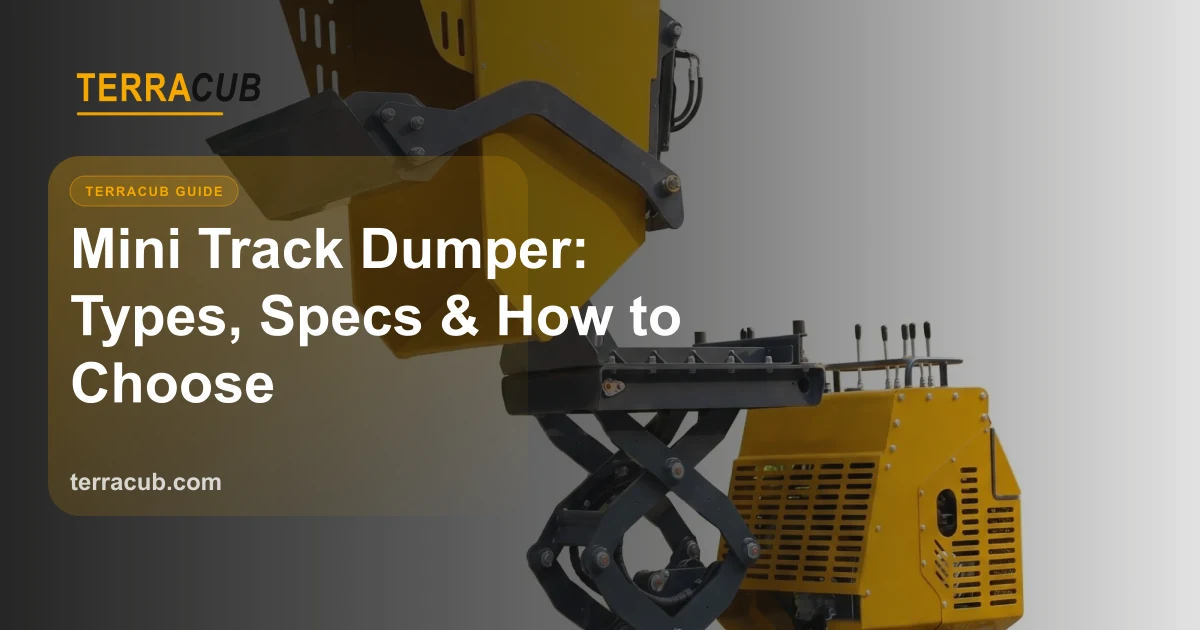
Mini Track Dumper: Types, Specs & How to Choose
Types, payload ratings, and the key track width specs compared side by side.
Guide
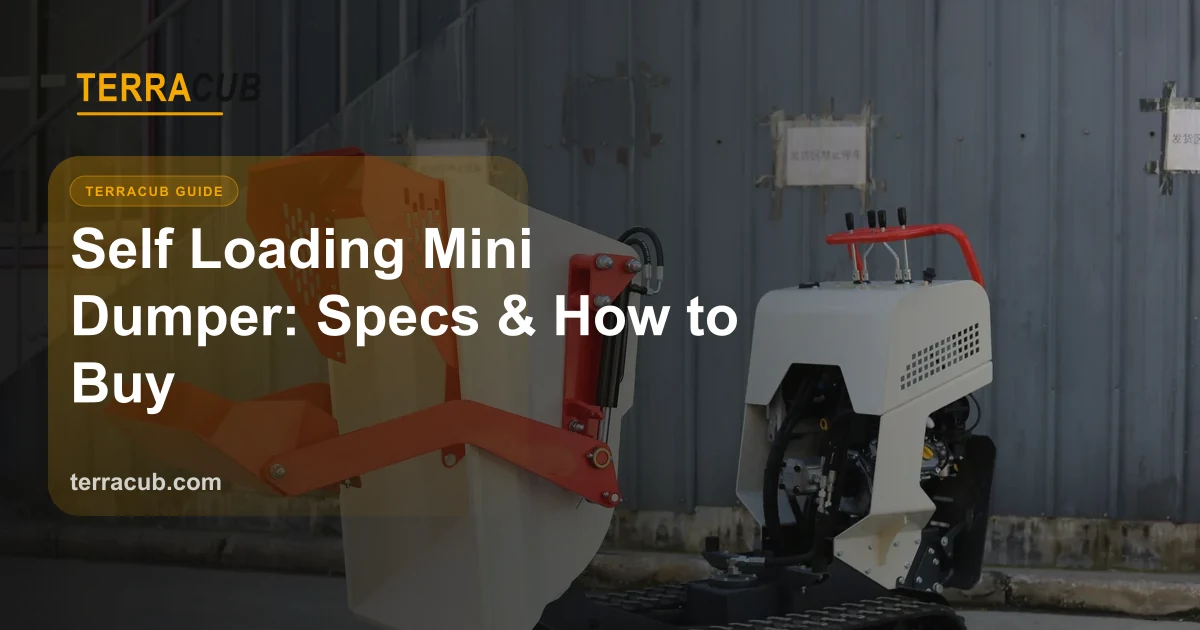
Self Loading Mini Dumper: Specs & How to Buy
How self-loading mini dumpers work and the specs that matter before ordering one for site.
Buyer Guide
Small Dumper Truck for Sale: Prices & How to Buy
Price ranges, machine types, and key checks before buying a small tracked dumper.
Recommended Products
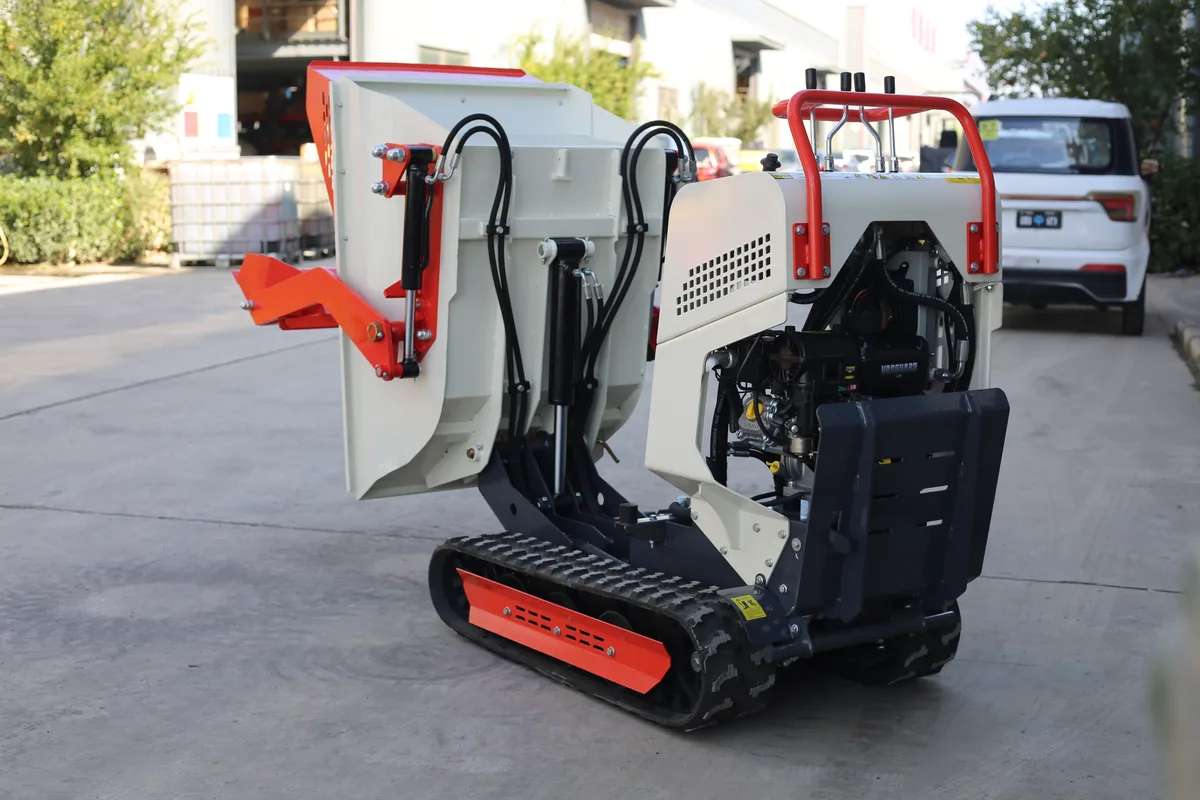 Small Dumper Truck 500kg
Entry-level tracked dumper. Passes through standard residential gates. Ideal for garden work, landscaping, and light construction.
View Product →
Small Dumper Truck 500kg
Entry-level tracked dumper. Passes through standard residential gates. Ideal for garden work, landscaping, and light construction.
View Product →
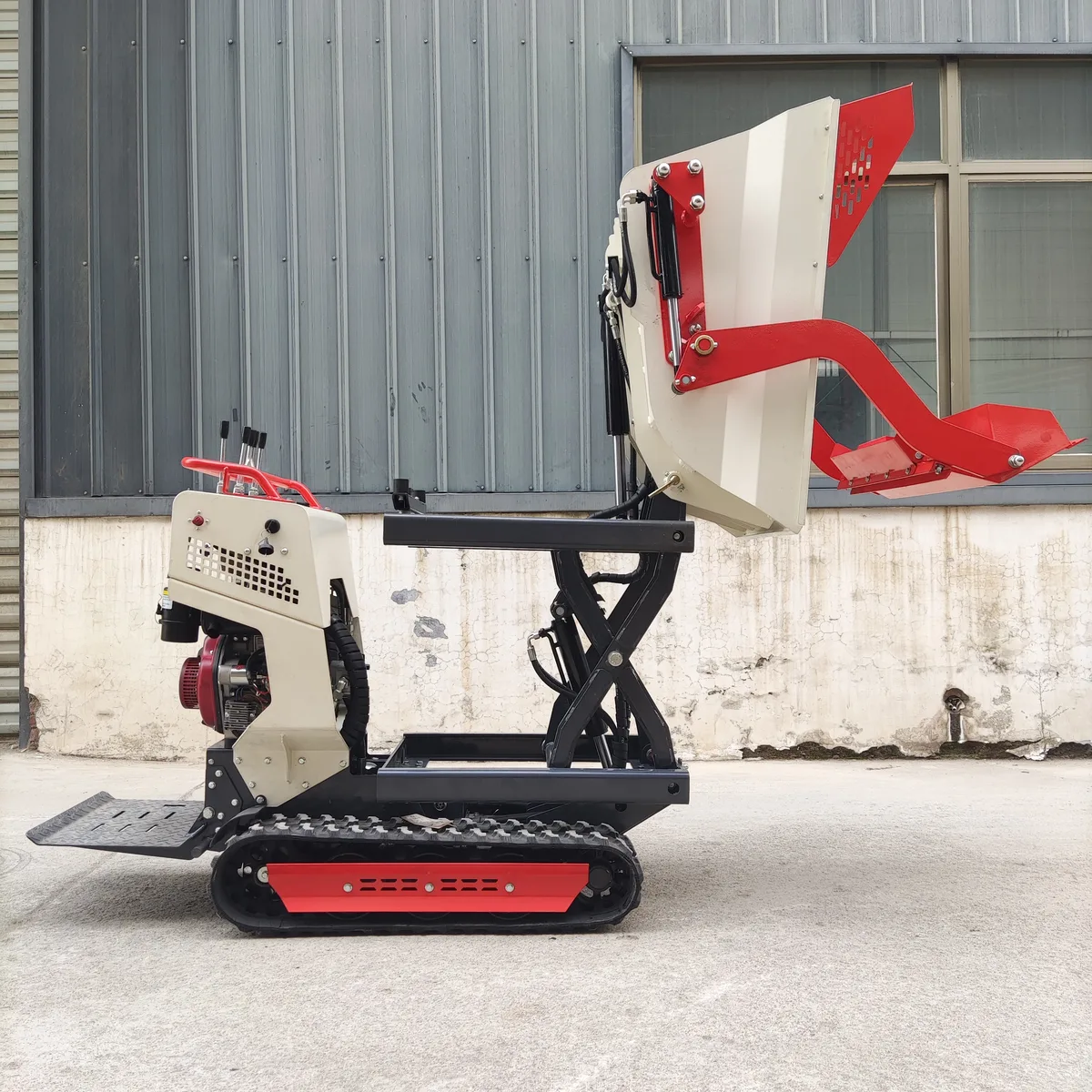 High Tip Mini Dumper
Same narrow 700 mm body. Lifts the bucket to 1,200 mm, enough to dump over scaffolding, into mixers, or above formwork.
View Product →
High Tip Mini Dumper
Same narrow 700 mm body. Lifts the bucket to 1,200 mm, enough to dump over scaffolding, into mixers, or above formwork.
View Product →
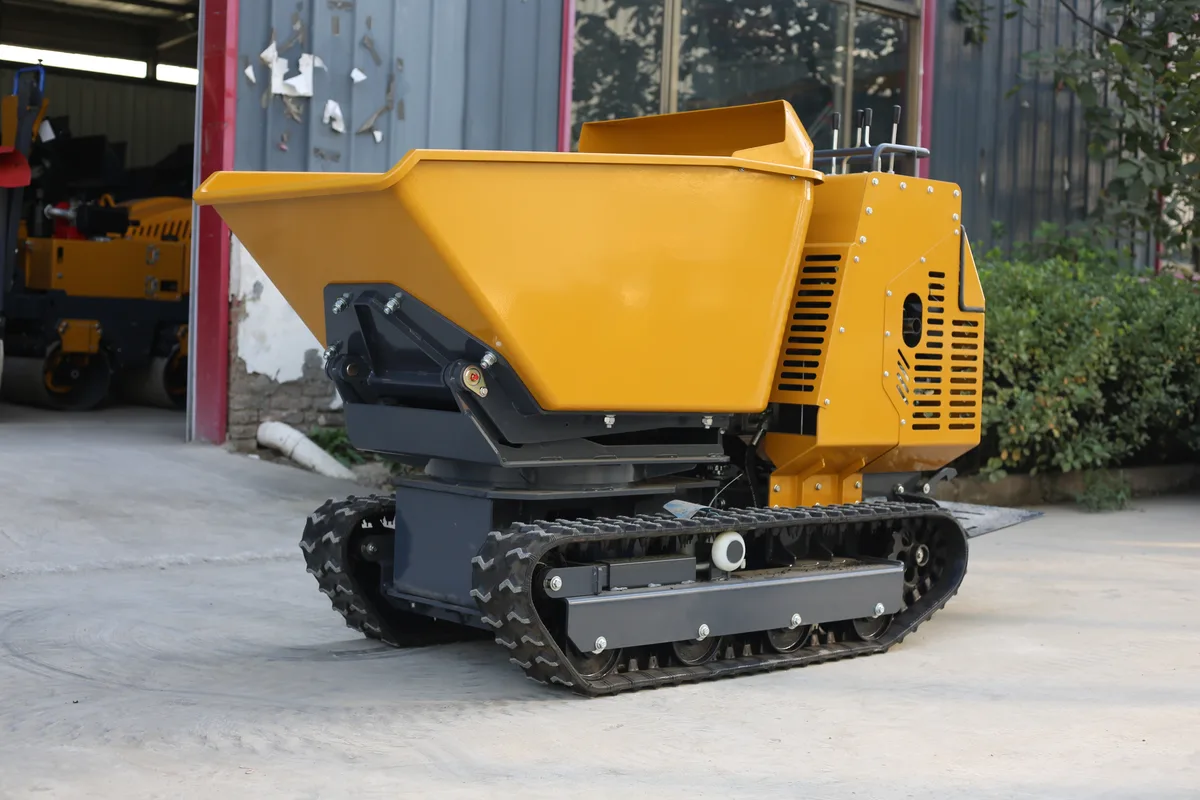 Rotary Dump Mini Dumper
2.4x the payload. Rotary base dumps in any direction without repositioning. Built for commercial sites and heavy excavation.
View Product →
Rotary Dump Mini Dumper
2.4x the payload. Rotary base dumps in any direction without repositioning. Built for commercial sites and heavy excavation.
View Product →