Mini Excavator Digging Force: Why the Same Machine Shows Two Different kN Numbers
A digging-force figure is only comparable when you know which force it describes, which standard produced it and which configuration it was measured with.

A mini excavator digging-force figure only becomes comparable when three things are known: which force it describes, which standard and measurement point produced it, and which configuration it was measured with. Change any one of them and the published number changes while the machine stays the same. A quotation that gives a single kN value and nothing else has not yet told you enough to compare it with a competing quotation.
Specification quick check
| Check | What to look for | If the sheet is silent |
|---|---|---|
| Which force field | Bucket (curl) force, arm (crowd) force, or both stated separately | Record "field not stated" and ask |
| Which standard and measurement point | A named standard beside the value, such as SAE J1179, ISO 6015 or JIS A8404, and where on the bucket it is measured | Treat the number as non-comparable until supplied |
| Which configuration | Arm length, bucket and coupler fitted when the figure was determined | Request the value for the configuration being quoted |
If you have not yet settled on a size class at all, choosing the machine size in the first place comes before any of this.
One machine, two published numbers
The clearest demonstration is a manufacturer sheet that prints both standards side by side. The Liebherr R 922 LC technical specification sheet does exactly that. The R 922 LC is a 22-25 t excavator, not a mini, and none of its values transfer to a mini machine; it earns its place here only because it reports one machine under two standards. For that machine with a 5.70 m mono boom and no quick coupler:
| Force field | ISO 6015 | SAE J1179 |
|---|---|---|
| Bucket digging force | 159 kN | 139 kN |
| Stick digging force, 2.00 m stick | 146 kN | 138 kN |
| Stick digging force, 2.50 m stick | 126 kN | 120 kN |
| Stick digging force, 2.90 m stick | 113 kN | 109 kN |
Nothing about the machine differs between the two columns. The difference is the test basis each standard defines, including where on the bucket the force is taken. This sheet does not state where each standard places that point, and the standard texts were not consulted for this article, so the useful fact is the one the document shows directly: the same hydraulics reported under two standards do not produce the same number.
A 20 kN gap between two quotations can therefore be a difference in machines, a difference in standards, or both, and the specification sheet is the only thing that tells you which. There is no conversion factor between the two columns to carry to another machine.
So the first thing to look for is not the size of the number. It is whether the sheet names a standard beside it at all.
Bucket force and arm force are different fields
The second attribute is which cylinder the number refers to. Bucket digging force comes from the bucket cylinder curling the bucket through material. Arm digging force, also called stick or crowd force, comes from the arm cylinder pulling the arm and the loaded bucket through the cut.
Mini-class machines report these separately, with the measurement reference stated. Kubota's K008-3 and U10-3 specification tables, recorded under "Main Specs JIS A8404", list:
| Field | K008-3 | U10-3 | Measurement reference as published |
|---|---|---|---|
| Arm digging force | 4.3 kN | 5.5 kN | Bucket tooth root |
| Bucket digging force | 9.3 kN | 9.9 kN | Machine stance to JIS bucket tooth root |
| The table writes each value with a "<" qualifier, its notation for a minimum the machine must meet rather than an exact measured output. | |||
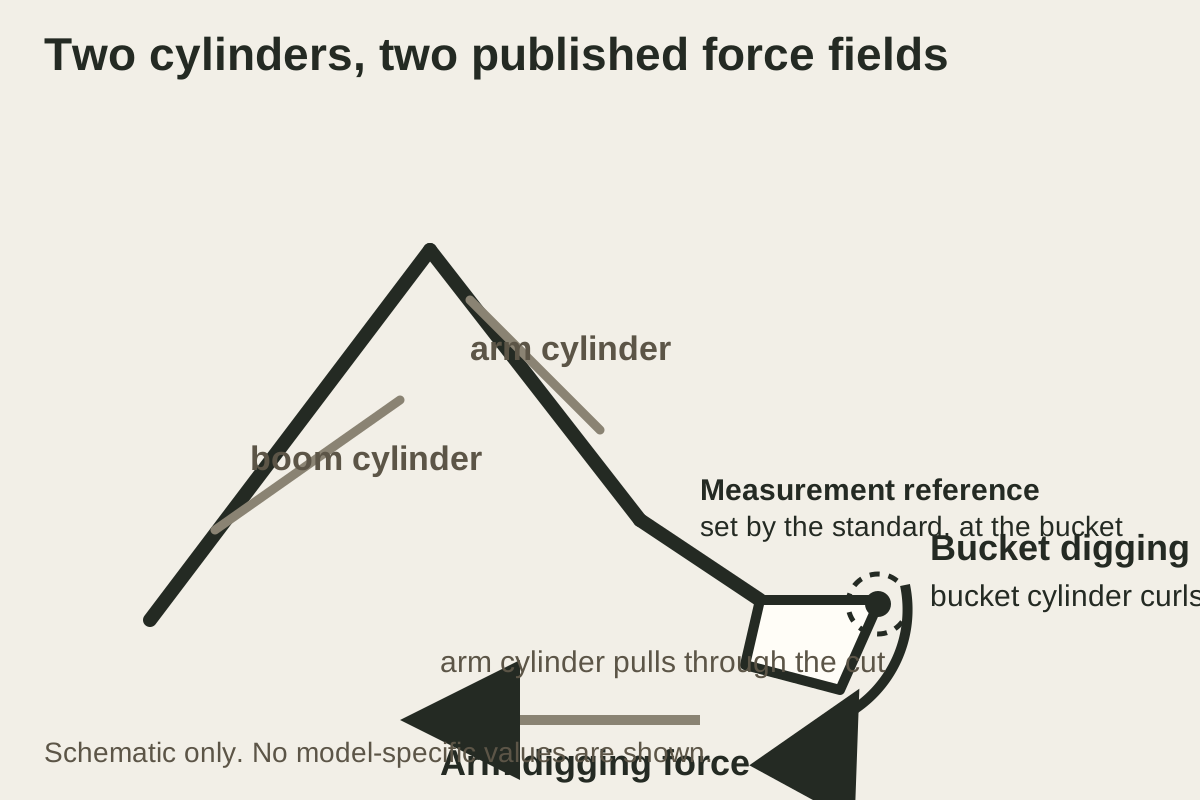
Two things are visible here that a single-number quote hides. Bucket force is at least 2.16 times arm force on the K008-3 and at least 1.80 times on the U10-3, so picking up the wrong row changes the comparison completely. And the measurement reference is printed as part of the specification, not left to the reader, which is what makes these values usable.
Which field matters depends on the work rather than on which number is larger, and no published source in this research settles which task loads which cylinder for a given machine. The useful habit is therefore to keep both rows in the comparison and to notice when a supplier has given only one of them without saying which it is.
A longer arm changes one of the two numbers
Look again at the Liebherr table, this time down the ISO 6015 column. Stick digging force falls from 146 kN to 126 kN to 113 kN as the stick grows from 2.00 m to 2.50 m to 2.90 m. Bucket digging force stays at 159 kN across all three.
That pattern follows from geometry. A longer stick puts the working point further from the cylinder's pivot, so the same cylinder produces less force at the tooth. The bucket cylinder's geometry does not change when the stick is swapped, so its number does not move.
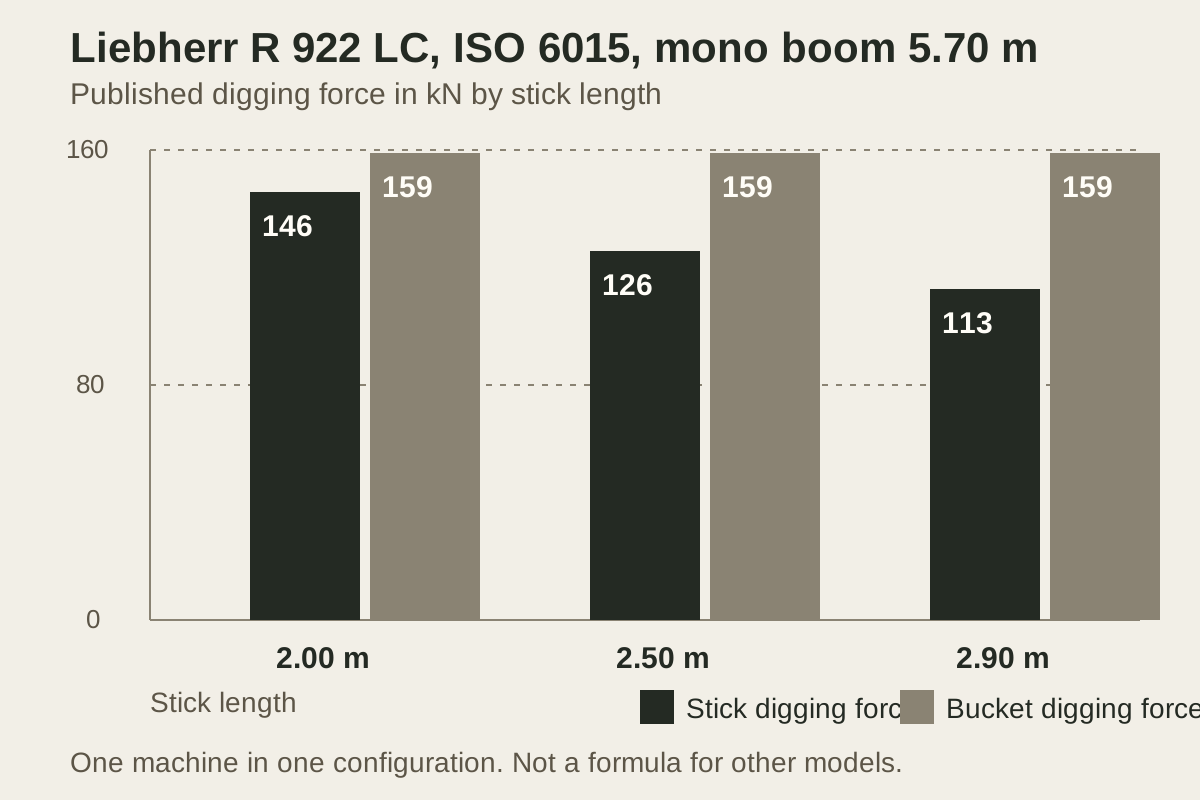
This matters whenever a quotation offers a long-arm variant, because the extra reach is not free and the force cost lands on only one of the two fields. Ask for the force values of the exact arm length being quoted. A sheet that prints one force figure for a model available in several arm lengths has left the configuration question open.
Digging force is not a lifting allowance
A force figure describes what the machine can push or pry at a point. It does not describe what it may pick up and swing. Those limits come from somewhere else.
The same Liebherr sheet is explicit about where. Its load values are based on ISO 10567 and, in the document's own words, do not exceed “75 % of tipping or 87 % of hydraulic capacity.” It also states that lifting capacity is limited by machine stability and hydraulic capacity, and directs the operator to the load chart displayed in the cab or printed in the operator's manual for the machine in question.
Read in the other direction, this means a large digging-force figure cannot raise a lifting limit, and no arithmetic converts one into the other. The machine can out-push what it is allowed to lift. Treat lifting as a separate question answered by the load chart for the exact machine, bucket and reach.
A compact loader quotation is outside this article's scope; it reports its load capability in its own fields and needs its own reading.
Applying the test to a live catalogue
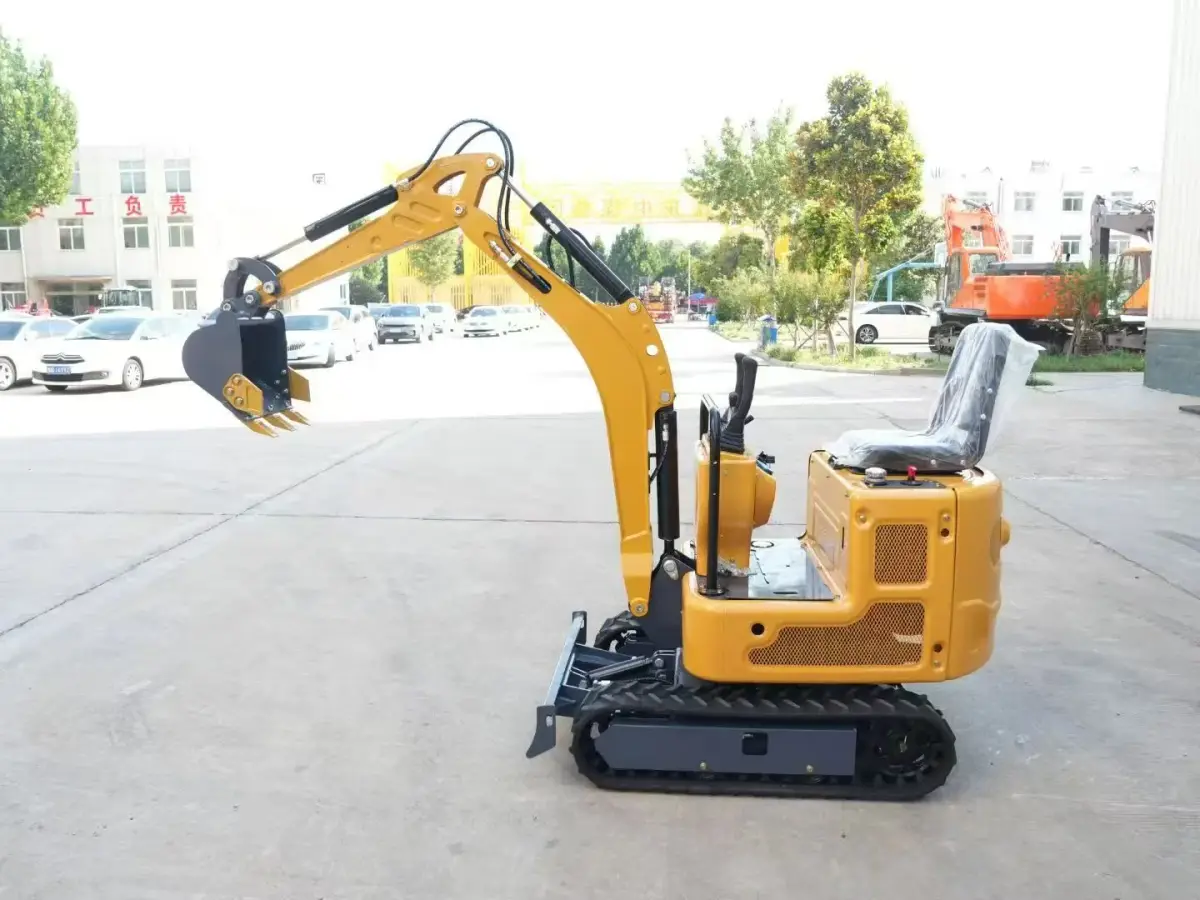
The test is only useful if you run it on real pages, including ours. TerraCub's current catalogue lists, for the 06Q, a single line: Max. digging force 7.2 kN. It names no standard, no measurement point, and does not say whether the figure is bucket force or arm force or which bucket was fitted. The 12Q entry lists no digging-force value at all.
Applying the three-attribute check to that line gives an honest result. The 7.2 kN figure sits in the same range as the mini-class values above, but it cannot be compared with the Kubota bucket row, the Kubota arm row, or a competitor's figure until its basis is supplied. The absent 12Q value is not an invitation to estimate one from operating weight or engine power; it is simply a field we do not publish.
That is the same conclusion you should reach on any catalogue, including a competitor's. A missing basis is a question to ask the supplier, not a gap to fill with an assumption. Open the TerraCub mini excavator category and read the entry you are actually considering with the three attributes in hand.
What to ask before you compare two quotations
Send the supplier a short, specific request for each machine under consideration:
- Is the quoted digging force bucket force, arm force, or both? Please state each separately.
- Which standard and measurement point was it determined under, for example SAE J1179, ISO 6015 or JIS A8404, and at which point on the bucket?
- Which arm length, bucket and coupler was fitted when the figure was determined?
- If the machine is offered in more than one arm length, what is the force value for each one?
- Separately from force, what is the rated lift capacity, and can you supply the load chart for the exact configuration?
Keep each unanswered item recorded as an unanswered item. A specification sheet with four confirmed attributes and one open question is a stronger basis for a decision than a sheet with one confident number and no basis at all.
Prepare the quoted force value exactly as written, the fitted bucket and arm length, and the attributes the sheet does not state, then send the specification request. A supplier that can name the standard, the measurement point and the configuration has given you a number you can compare; one that cannot has told you something too.
FAQs
What is the difference between bucket digging force and arm digging force on a mini excavator?
They come from two different cylinders and are reported as two different fields. Kubota's tables for the K008-3 and U10-3 list arm digging force at 4.3 kN and 5.5 kN and bucket digging force at 9.3 kN and 9.9 kN, measured at the bucket tooth root under JIS A8404. Because the two fields differ substantially on the same machine, comparing one supplier's bucket figure with another's arm figure produces a meaningless result.
Why do SAE J1179 and ISO 6015 give different digging-force numbers for the same machine?
Because the standards define different test bases. The sheet for the Liebherr R 922 LC, a 22-25 t excavator rather than a mini, publishes its bucket digging force as 159 kN under ISO 6015 and 139 kN under SAE J1179, with stick figures of 146 kN and 138 kN at a 2.00 m stick. The machine is identical in both rows, and those values are far above any mini-class figure. There is no general conversion between the two; ask which standard the quoted figure belongs to.
Does a long arm reduce digging force?
It reduces arm force, not bucket force. On the sheet for the Liebherr R 922 LC, a 22-25 t machine used here only to show the pattern, stick digging force under ISO 6015 falls from 146 kN to 126 kN to 113 kN as the stick length increases from 2.00 m to 2.50 m to 2.90 m, while bucket digging force remains 159 kN throughout. That is one machine's published data, so use it as a reason to request the values for the exact arm length you are being quoted rather than as a rule for other models.
Can I use digging force to work out how much the excavator can lift?
No. Lifting is limited by machine stability and hydraulic capacity. The Liebherr R 922 LC sheet states its load values are based on ISO 10567 and do not exceed 75% of tipping or 87% of hydraulic capacity, and points the operator to the load chart in the cab or in the operator's manual. Request the load chart for the exact machine, bucket and reach, and keep it separate from any force figure.
Sources used in this guide
- Liebherr R 922 LC technical specification sheet (print code LFR/SP-11841165-0.5-05.23_enGB, dealer-hosted copy, retrieved October 19, 2026): source of the force values under both standards, the stick-length series and the ISO 10567 lift basis. The R 922 LC is a 22-25 t class machine, not a mini excavator; it is used only because it publishes one machine under two standards, and no mini-class value is derived from it.
- Kubota K008-3 and U10-3 specification tables (Q5 Work performance, "Main Specs JIS A8404", hosted copy, retrieved October 19, 2026): source of the mini-class arm and bucket values, their "<" minimum notation and their measurement reference. The extracted section carries no publication date and the values apply to those two models only.
- TerraCub catalogue fields for the 06Q and 12Q, observed October 19, 2026 and recorded as they appear; the test basis behind the 7.2 kN figure is unknown and is not inferred.
- SAE J1179, ISO 6015 and JIS A8404 are referenced only as named by the manufacturer documents above; the standard texts are paywalled and were not consulted. This article explains how to read published specification fields. It provides no conversion between standards, no force value for any machine not quoted above, no estimate of what a given kN figure can dig in a given material, and no safe operating or lifting instruction.
Recommended Products
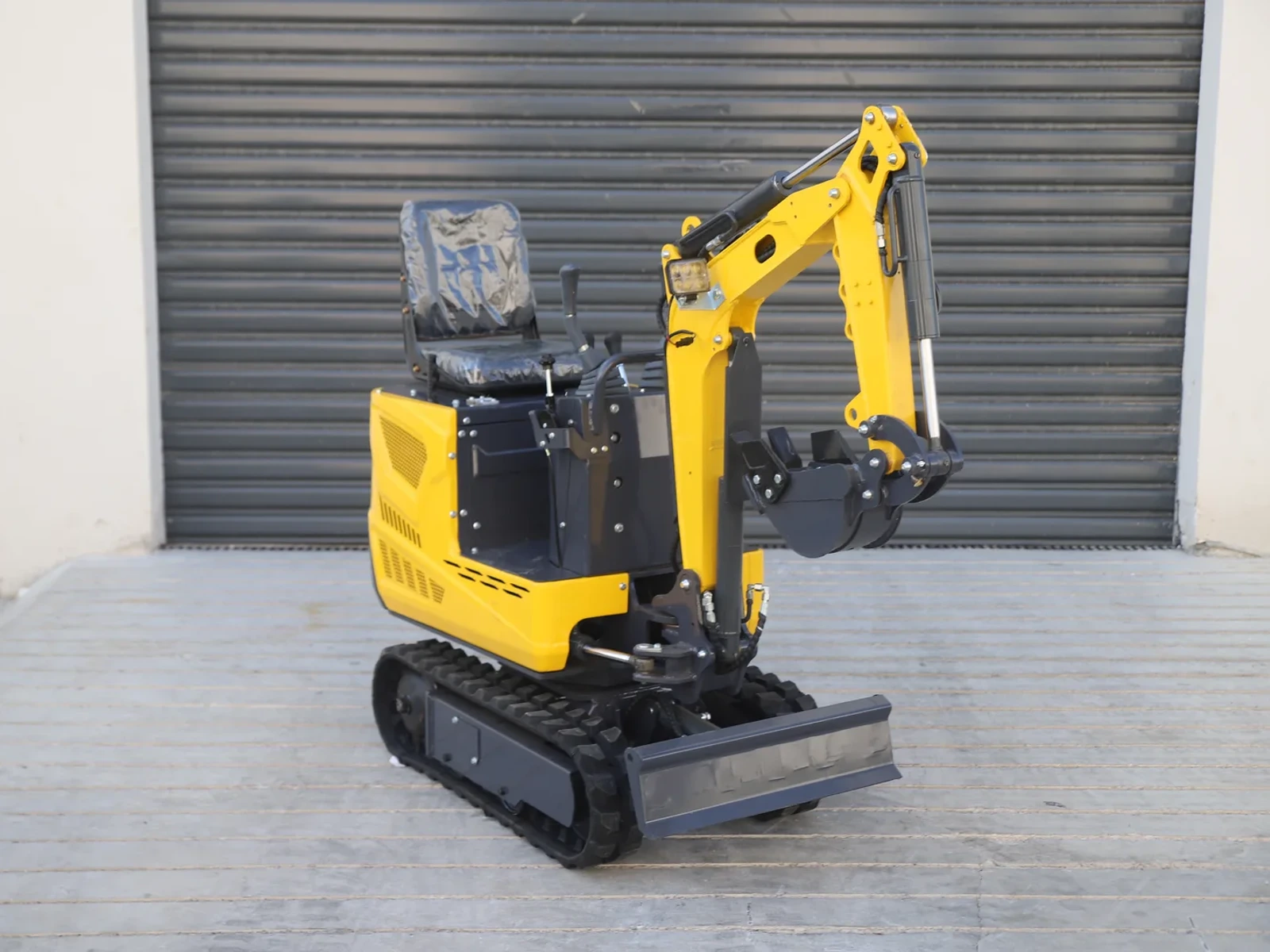 Mini Excavator 06Q
700 mm compact excavator with 1,200 mm digging depth, 360-degree swing, and application-ready attachment options for tight-space work.
View Product →
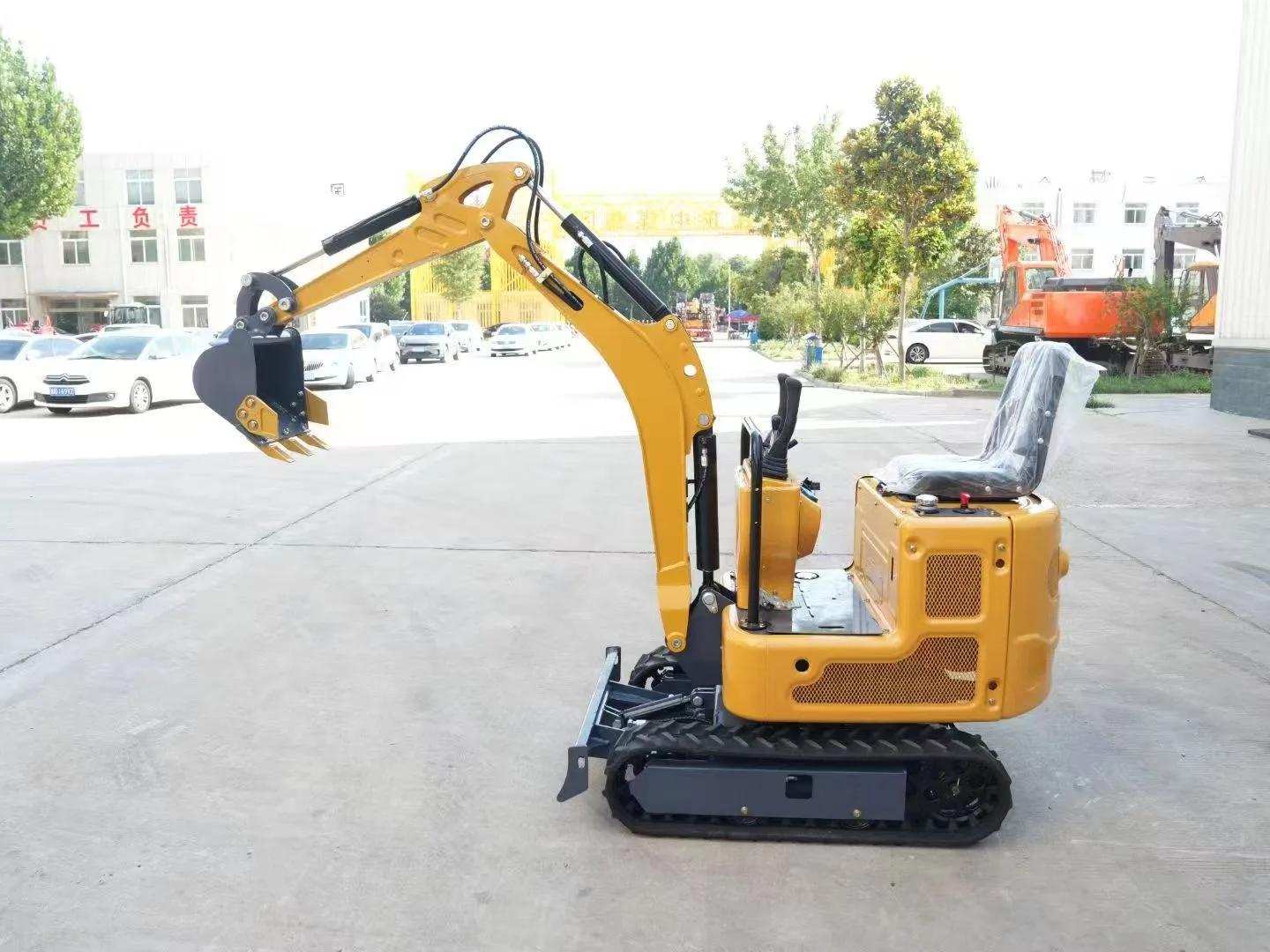 Mini Excavator 12Q
925 mm compact excavator with 1,700 mm digging depth, 2,900 mm digging radius, and an 8 kW standard engine.
View Product →