Mini Excavator Attachment Selection: Match Job, Flow and Coupler
A hammer, auger, thumb, grapple, or plate compactor only works if it matches three things at once: the job you are doing, the hydraulic flow your carrier actually delivers, and the coupler it is fitted with. Get any one of the three wrong and the "right" attachment for the job is still the wrong attachment for your machine.

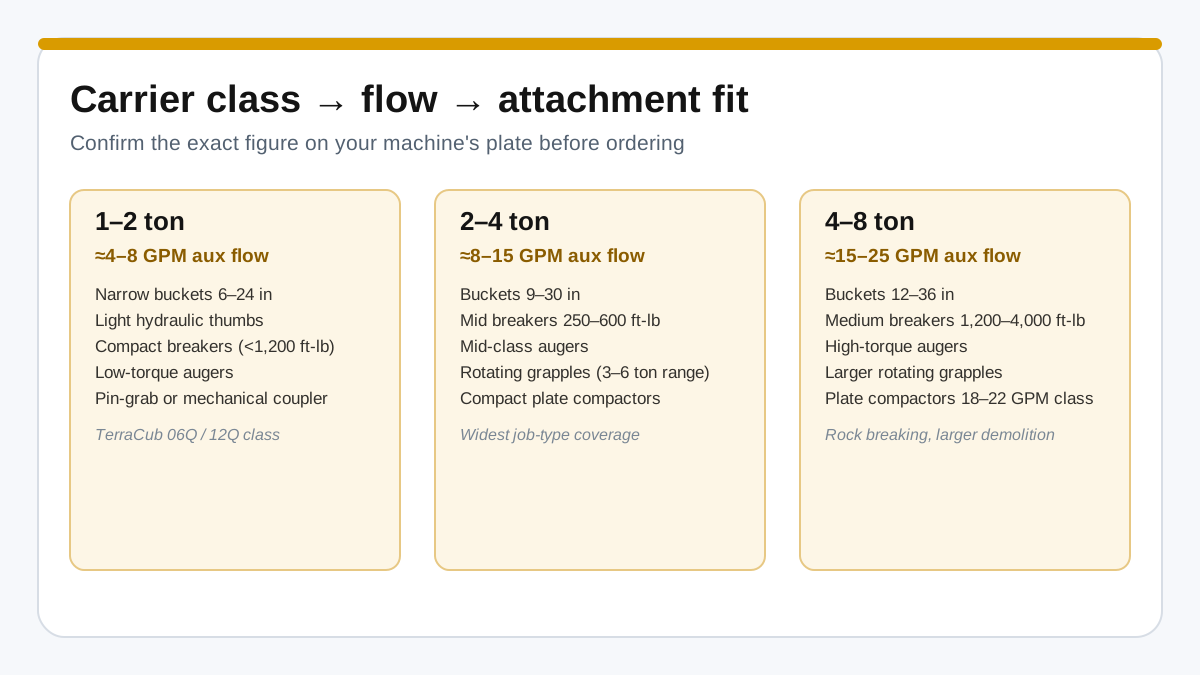
Direct answer: select a mini excavator attachment in this order: identify the job task (trenching, breaking, drilling, grading, demolition handling, or compaction); confirm your carrier's operating weight class, roughly 1–2 ton, 2–4 ton, or 4–8 ton, and its auxiliary hydraulic flow and pressure from the machine's own spec sheet, not a class average; confirm the coupler type fitted to the machine (pin-grab, wedge, or hydraulic quick coupler); check the attachment's own flow, pressure, and weight requirement against those two numbers; then check what the added attachment weight does to net lift capacity and stability at the reach you will actually work. Manufacturer flow ranges in this guide are typical for each class — always confirm the exact figure on your machine's plate or manual before ordering.
1. Carrier class decides more than the job name
Two buyers can both search for a mini excavator attachment and need different answers, because the job name (breaker, auger, grapple) is only half the specification. The other half is the carrier: what weight class it sits in, what auxiliary hydraulic flow and pressure it actually delivers, and what coupler is bolted to the dipper arm.
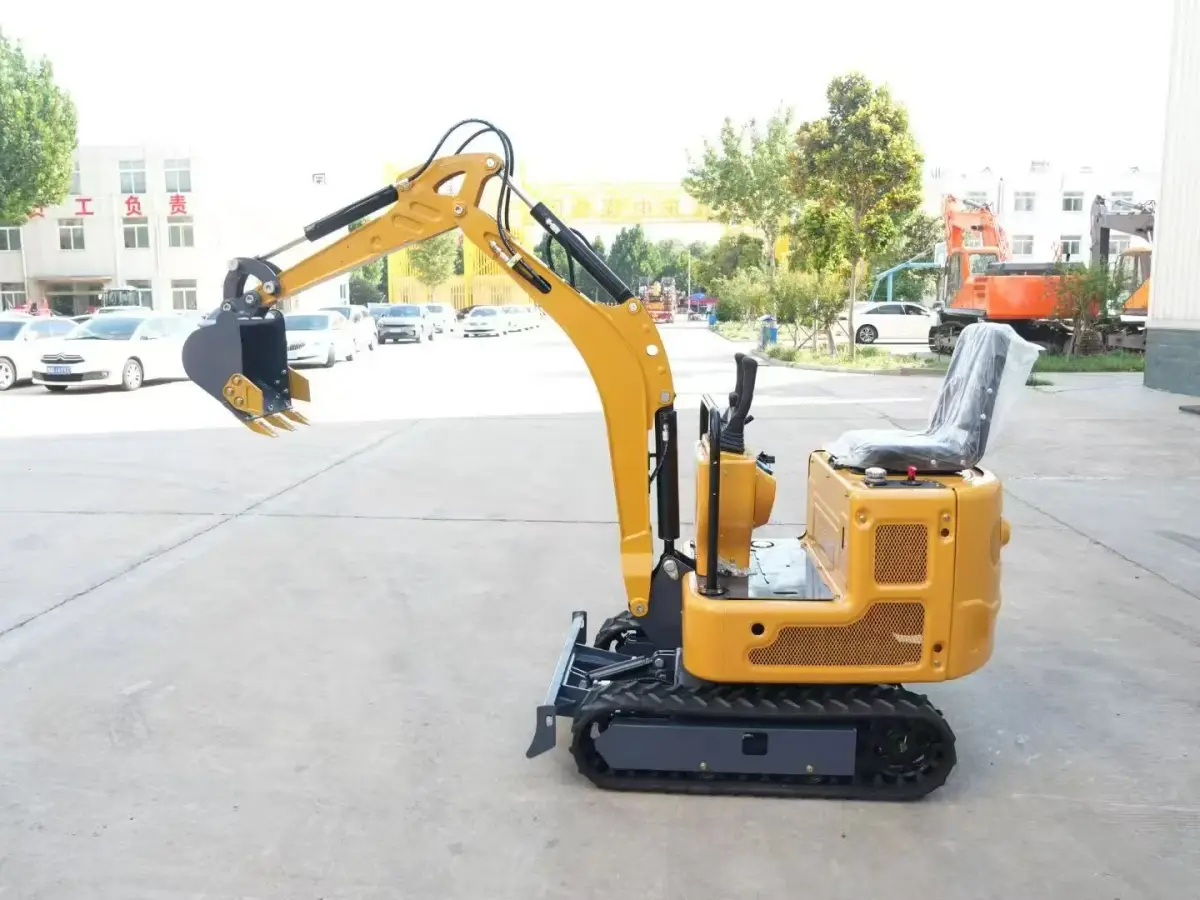
This guide uses three working carrier classes that attachment manufacturers commonly size against: 1–2 ton (micro/compact mini excavators, TerraCub's 06Q and 12Q class), 2–4 ton (small mini excavators), and 4–8 ton (mid-size mini excavators, the upper end of what most people mean by "mini"). These bands are a planning tool, not a regulatory standard — always confirm your specific machine's own auxiliary flow, pressure, and operating weight rather than assuming the class average applies.
2. Match hydraulic flow before you match anything else
Every powered attachment (breaker, auger, plate compactor, rotating grapple) has a flow requirement in gallons per minute (GPM) or litres per minute (LPM), and your excavator's auxiliary circuit delivers flow at a pressure. The two have to line up, or the tool runs slow, stalls, overheats the oil, or in the case of a breaker, is starved and hammers itself apart internally.
| Carrier class | Typical auxiliary flow | What that flow typically runs |
|---|---|---|
| 1–2 ton | Roughly 4–8 GPM on the smallest machines, rising toward 8–10 GPM near the top of the class | Small hydraulic thumbs, light breakers, hydraulic quick couplers |
| 2–4 ton | Roughly 8–15 GPM | Mid breakers, augers at the lower end, grapples, compact plate compactors |
| 4–8 ton | Roughly 15–25 GPM | Larger breakers, high-torque augers, plate compactors, screening buckets |
These bands come from attachment-fitment guidance rather than from a single carrier manufacturer's full model line, because TerraCub's own 06Q and 12Q spec sheets do not publish auxiliary hydraulic flow (both are digging-bucket-only base configurations at this time). Treat them as a starting filter, then request the exact auxiliary flow and pressure figure for your specific machine and configuration before ordering a powered attachment.
3. Coupler type: pin-grab, wedge, or hydraulic
The coupler decides how fast you can change tools and how safely. There are two mechanical families, and either can be operated manually or hydraulically from the cab:
- Pin-grab couplers grip the attachment's mounting pins directly, usually with a hydraulic cylinder forcing one or both jaws to close around the pins (manual lead-screw or cam-over versions also exist). Pin-grab designs let the operator reverse the bucket to dig against a wall or under a pipe, and they generally accept a wider range of pin centers and third-party attachments.
- Wedge-lock couplers use a bucket fitted with a special set of mounting lugs; the coupler's front hooks into the front lugs while a wedge is driven between the back lugs and a mating part on the coupler, then secured with bolts. Wedge couplers cannot reverse the bucket and lock you into attachments built for that specific lug spacing.
- Hydraulic quick couplers — either pin-grab or wedge-style — let the operator change tools from the seat in roughly 10–15 seconds by releasing and re-locking hydraulically instead of removing pins by hand. Manual couplers require the operator to leave the cab.
Coupler safety standards (ISO 13031, EN 474-1, and Australia's NSW quick-coupler directive) exist specifically because an attachment that detaches in use is a serious hazard; a triple-locking, ISO 13031-compliant hydraulic pin-grab coupler is generally regarded as the safer configuration for frequent attachment changes, since the safety locking is built into the coupler frame rather than added as bulk afterward.
Confirm before you quote attachments: which coupler type, if any, is fitted to your machine. A bucket or breaker built for a wedge coupler will not fit a pin-grab machine, and vice versa, regardless of matching weight class.
4. Buckets by width and flow
Digging and grading buckets are sized primarily by carrier weight class and coupler pin centers, not by flow, since a standard digging bucket has no hydraulic circuit of its own:
| Carrier class | Typical bucket width range | Typical grading-bucket width |
|---|---|---|
| Under 2 ton | 6–24 in | 30–39 in |
| 2–3.5 ton (overlaps this guide's 2–4 ton band) | 9–30 in | 48 in |
| 4–6 ton (overlaps this guide's 4–8 ton band) | 12–36 in | 60 in |
A wider bucket moves more material per pass but needs more breakout force to fill in hard ground; a narrower bucket concentrates the same digging force into a smaller edge, which is why trenching buckets run narrow and grading buckets run wide. If the carrier also runs a hydraulic tilt or screening bucket, that adds a flow requirement (screening buckets typically need roughly 10–25 GPM depending on class) that a plain digging bucket does not have.
5. Hydraulic breakers by carrier class
Breaker sizing is driven by carrier operating weight, not job description alone, because an oversized breaker can damage the boom and stick pins, and an undersized breaker will not develop useful impact energy. A commonly used starting rule from breaker manufacturers is that the breaker should weigh roughly 10% of the carrier's operating weight, and manufacturers publish a recommended carrier-weight range for each breaker model that should be checked directly.
| Carrier class | Typical breaker class | Typical impact energy |
|---|---|---|
| 1–2 ton (mini excavators under ~7 ton generally) | Compact / light breakers | Roughly 200–1,000 ft-lb, generally under 1,200 ft-lb |
| 2–4 ton | Light-to-medium breakers | Roughly 250–600 ft-lb at the lower end of this class, extending toward the medium band |
| 4–8 ton | Medium breakers (upper end approaches the range used on large mini excavators and small crawler excavators) | Roughly 1,200–4,000 ft-lb toward the top of this band |
Concrete and light demolition sit at the lower end of each class's breaker range; rock and larger-scale demolition need the medium-to-large classification, which generally means moving up a carrier class rather than overloading a mini excavator's boom.
6. Augers
Auger drives are matched to the carrier by shaft type and flow, and to the job by torque (which controls hole diameter and ground hardness) rather than by carrier weight alone:
- Compact auger drives sized for roughly 6,000–10,000 lb class carriers commonly use a 2 in hex or 2⁵⁄₁₆ in round output shaft and run on roughly 10–26 GPM, depending on the specific drive unit.
- Mid-class drives for roughly 10,000–14,000 lb class carriers use similar shaft standards with a comparable or slightly wider flow window.
- A compact auger drive rated around 5–13 GPM can deliver roughly 3,020 ft-lb of torque on some models — torque, not flow alone, is what lets an auger bore through compacted soil or small rock rather than stalling.
Post holes and small footings on a 1–2 ton carrier generally need less torque than tree-planting or larger footing augers on a 2–4 ton carrier; confirm the drive's torque rating and shaft type against both the job (hole diameter, ground condition) and the carrier (flow, coupler, shaft fit) before ordering.
7. Thumbs and grapples
Hydraulic thumbs pick up pipe, debris, and rock alongside the bucket. Flow requirements vary noticeably by source and thumb design: small fixed or lightly powered thumbs can run on roughly 4–8 GPM, while some non-rotating thumb and grapple combinations are quoted at 15–20 GPM — the practical takeaway is to check the specific thumb model's flow rating rather than assume all thumbs sit at the low end.
Rotating grapples are generally sized to a carrier weight band by the manufacturer, similar to breakers. As one example fitment range across a common commercial grapple line: models exist scoped for roughly 1–3 ton carriers, 3–6 ton carriers, 5–9 ton carriers, and 8–13 ton carriers — note the deliberate overlap between bands, which exists because a grapple's fit depends on the carrier's specific lift and flow capacity at working reach, not weight class alone. Non-rotating grapples typically draw less flow than rotating models, since a rotating grapple adds a hydraulic rotation motor on top of the open/close function.
8. Plate compactors
Hydraulic plate compactors trade flow for compaction force and are among the most flow-hungry common attachments in this class range:
| Carrier class | Typical flow | Typical operating pressure |
|---|---|---|
| 1–3 ton | Toward the low end of the general 12–28 GPM range published for this attachment type | Roughly 2,000–2,500 psi |
| 3–8 ton | Mid-to-upper end of the 12–28 GPM range; one 7–10 ton class example runs 18–22 GPM | Roughly 1,800–3,500 psi depending on model and relief setting |
Because plate compactors need more sustained flow than most other attachments in this class range, a 1–2 ton carrier that is otherwise well matched to breaker or auger work may still be underpowered for a plate compactor — check this attachment's flow requirement separately rather than assuming "if the breaker fits, the compactor fits."
9. Job-to-attachment decision table
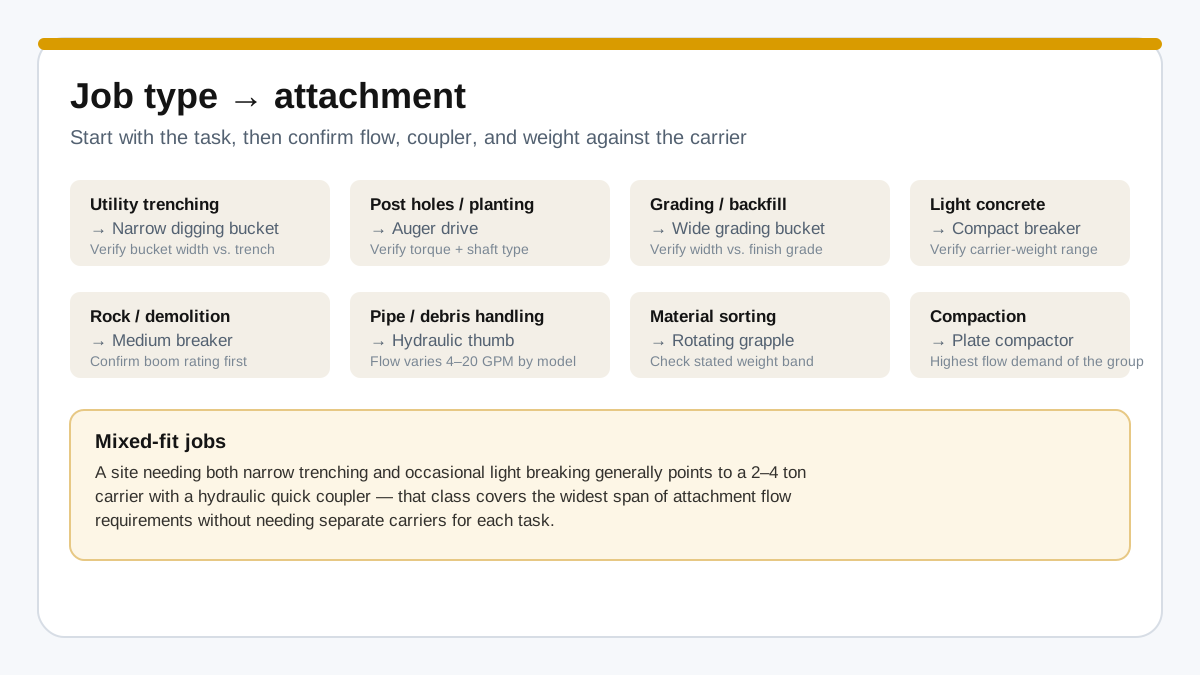
Use this table to go from job type to the attachment class most likely to fit, then confirm the exact flow, pressure, coupler, and weight figures in the sections above before ordering.
| Job type | Best-fit attachment(s) | Typical carrier class | Verify before ordering |
|---|---|---|---|
| Utility trenching, narrow footings | Narrow digging bucket, mechanical thumb | 1–2 ton | Bucket width vs. trench width; coupler pin fit |
| Post holes, small tree planting | Auger drive (2 in hex, low-torque) | 1–2 ton or 2–4 ton | Auger torque vs. ground condition; drive flow vs. carrier flow |
| Grading, backfilling | Wide grading bucket | 1–2 ton through 4–8 ton (width scales with class) | Bucket width vs. required finish grade and reach |
| Light concrete/demolition breaking | Compact breaker (under ~1,200 ft-lb class) | 1–2 ton or 2–4 ton | Breaker weight vs. 10%-of-carrier-weight guidance; carrier-weight range on breaker's own spec sheet |
| Rock breaking, larger demolition | Medium breaker (1,200 ft-lb-plus class) | 4–8 ton (or route to a larger carrier) | Same as above; do not force a medium breaker onto an undersized boom |
| Pipe/debris/rock handling | Hydraulic thumb | 1–2 ton through 4–8 ton | Thumb flow rating (varies 4–20 GPM by model); pin location and reach |
| Material sorting, tree/brush clearing | Rotating grapple | 2–4 ton through 4–8 ton (grapple models scope to specific weight bands) | Grapple's stated carrier-weight range; rotation motor flow add-on |
| Trench and pad compaction | Hydraulic plate compactor | 2–4 ton through 4–8 ton (higher flow demand than most other attachments) | Sustained flow requirement; carrier pressure and relief setting |
Mixed-fit jobs — for example, a site that needs both narrow trenching and occasional light breaking — generally point to a 2–4 ton carrier with a hydraulic quick coupler, since that class covers the widest span of attachment flow requirements without needing separate carriers for each task.
10. Attachment weight, tip load, and stability
A powered attachment changes more than what the machine can do — it changes what the machine can safely lift and how stable it is at reach. Heavier attachments (breakers, grapples, larger buckets) shift the center of gravity further from the machine's base, and the farther a load sits from the pivot point, the greater the leverage against the carrier — which is why lift capacity drops as boom reach increases, independent of the attachment question.
Manufacturer lift-capacity charts state the load permissible at the bucket pin for a given boom position; the coupler, bucket, or attachment weight must be subtracted from that chart figure to get the true net load capacity. For example, if a chart shows 2,000 kg permissible at a given reach and the fitted coupler plus attachment weighs 300 kg, the actual net capacity at that reach is 1,700 kg, not 2,000 kg. This matters most on grapple, breaker, and auger work, where the attachment itself can weigh a meaningful fraction of what a 1–2 ton class carrier is designed to lift.
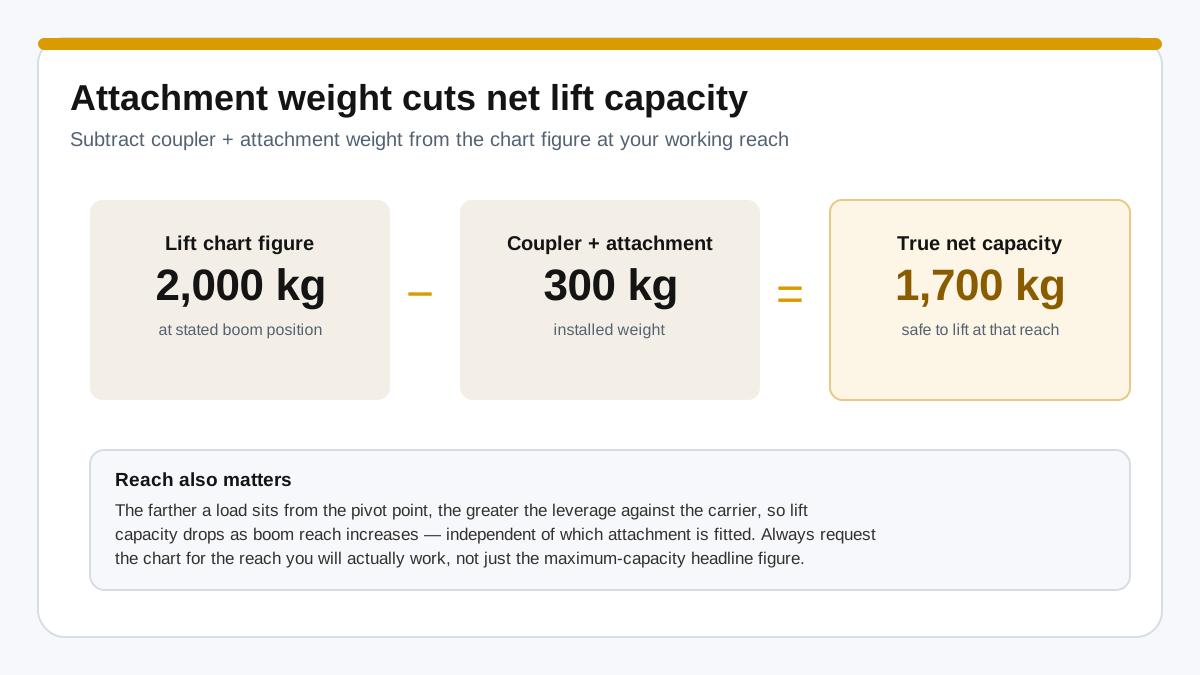
Before committing to an attachment for a class of job, request the specific lift-capacity chart for your machine and boom configuration, and ask the attachment supplier for the exact installed weight (attachment plus any coupler adapter) so the net capacity can be calculated rather than estimated.
11. Where TerraCub's 06Q and 12Q fit
TerraCub's current mini excavator range sits in the 1–2 ton carrier class covered in the first row of every table above: the 06Q has a confirmed 660 kg operating weight and 700 mm width, and the 12Q offers greater digging depth (1,700 mm) and radius (2,900 mm) at 925 mm width (see the current model comparison and specification sheets on the mini excavator range page). Neither model's published specification currently lists auxiliary hydraulic flow, so any auxiliary-hydraulic attachment (breaker, auger, plate compactor, rotating grapple) needs its exact flow and pressure requirement confirmed against the specific unit's configuration before ordering — do not assume a class-typical GPM figure applies to either model without that confirmation.
For non-powered attachments (standard buckets sized to the 06Q/12Q's confirmed width and coupler pin centers), the buyer decision is mainly about bucket width versus the job's trench or footing width, and about coupler pin fit. This article's job here is to help size the attachment side of that decision, not to replace the machine-selection guidance already covered in the site's mini excavator selection guide, which walks through access, digging range, transport and ground conditions before you get to attachments at all. For company background, warranty process and after-sales support behind either model, see About TerraCub.
Get an attachment matched to your carrier
Send TerraCub your job type, the exact model or confirmed specification of your carrier, and the coupler fitted to it. We can help you cross-check bucket width, flow, and coupler fit before you order.
Request an attachment fit check12. Final checklist before you order an attachment
- Confirm the job task: trenching, grading, breaking, drilling, material handling, or compaction.
- Confirm the carrier's operating weight class and exact auxiliary flow/pressure — request this from the manufacturer or check the machine's own plate/manual, not a class average.
- Confirm the coupler type fitted to the dipper arm: pin-grab, wedge, mechanical, or hydraulic quick coupler.
- Check the attachment's flow, pressure, and installed weight against the carrier's confirmed figures, not the class range alone.
- Recalculate net lift capacity at the reach you will actually work, subtracting coupler plus attachment weight from the machine's lift chart.
- Get the match in writing from the attachment supplier — a tool that physically fits the coupler is not proof that it matches the hydraulic circuit.
FAQs
What hydraulic flow does a mini excavator need for a breaker?
It depends on carrier class and breaker size rather than one universal number. Per attachment-fitment guidance, breakers commonly run in the 5–12 GPM range, with smaller compact breakers on 1–2 ton carriers toward the lower end and larger breakers on 4–8 ton carriers toward the upper end. Confirm the specific breaker model's flow rating and your carrier's auxiliary flow before ordering.
Can I use the same coupler for a bucket and a breaker?
Yes, if both attachments are built for the same coupler type (pin-grab or wedge) and the same pin centers, since the coupler is a mechanical connection separate from the hydraulic circuit that a breaker also needs. A hydraulic quick coupler additionally needs its auxiliary hose connections matched for a powered tool like a breaker; a simple bucket does not use the hydraulic side of the coupler.
Does a bigger mini excavator always mean a bigger attachment?
Not automatically. Carrier weight class sets a general range (heavier carriers can run heavier, higher-flow attachments), but the exact match still depends on the carrier's specific auxiliary flow, pressure, coupler type, and lift capacity at the working reach — two machines in the same weight class can have different auxiliary hydraulics.
How much does an attachment reduce my mini excavator's lift capacity?
By the attachment's installed weight (attachment plus any coupler adapter), subtracted from the lift-capacity chart figure at the boom position you are working. A heavier attachment also shifts the center of gravity further from the machine's base, which is why manufacturer lift charts, not a flat percentage rule, should be used to confirm the net safe load.
What is the difference between a pin-grab and a wedge coupler?
A pin-grab coupler clamps directly onto an attachment's mounting pins and can generally reverse the bucket for digging against a wall or under a pipe. A wedge-lock coupler uses buckets with special mounting lugs, locks the front lugs in place, and drives a wedge between the back lugs and the coupler, secured with bolts; it cannot reverse the bucket and is generally attachment-specific to that lug spacing.
Do all mini excavator attachments need auxiliary hydraulics?
No. Standard digging and grading buckets, most thumbs in their simplest fixed configuration, and rippers typically run off the machine's mechanical linkage or a basic pin connection with no separate hydraulic circuit. Breakers, augers, plate compactors, and rotating grapples are powered attachments and need the carrier's auxiliary hydraulic flow and pressure matched to the tool.
Sources and limitations
- MechMaxx, Mini Excavator Attachments Guide: 3 Golden Rules + GPM Charts (attachment-class GPM ranges for breakers, thumbs, augers, grapples, plate compactors and hydraulic couplers; example auxiliary-flow figures for compact excavator models; used here as typical attachment-class ranges, not a universal specification for any specific carrier)
- Geith, Pin Grab versus Wedge Style Coupler (pin-grab vs. wedge-lock coupler mechanics, bucket-reversal capability, and ISO 13031 / EN 474-1 safety-standard context)
- Heavy Equipment Guide, Kubota introduces new compact excavators, hydraulic quick coupler (roughly 10–15 second cab-operated tool change on a hydraulic quick coupler, reported for Kubota's 3–4 ton class; used here as a representative example of hydraulic-coupler change speed, not a universal figure for every coupler)
- GrinderCrusherScreen, Mini Excavator Screening Buckets (bucket width, flow and throughput reference by excavator weight class)
- General hydraulic-hammer sizing and carrier-matching guidance published by breaker manufacturers and attachment suppliers (the roughly-10%-of-carrier-weight breaker guideline; weight-class-to-hammer-class and impact-energy ranges)
- Published auger-drive attachment fitment listings (2 in hex and 2⁵⁄₁₆ in round shaft classes by carrier weight class; example flow-to-torque figures)
- Published excavator-grapple fitment guidance (carrier-weight scoping example across a common commercial rotating-grapple line)
- Published compact-equipment plate-compactor attachment guidance (flow and pressure ranges by carrier class, including a 7–10 ton class example at 18–22 GPM)
- Wacker Neuson, How many kilograms can a mini-excavator lift? (attachment weight, net lift capacity, and reach-vs-capacity relationship)
- TerraCub 06Q and 12Q confirmed specifications (operating weight, width, digging depth and radius) from current TerraCub product data
This guide gives typical flow, weight, and sizing ranges for planning purposes across the 1–2 ton, 2–4 ton, and 4–8 ton mini excavator classes. It does not set a universal specification for any specific machine or attachment model. Auxiliary hydraulic flow, pressure, coupler type, and lift capacity vary by exact model and configuration; confirm every figure against your carrier's own specification sheet and the attachment manufacturer's fitment chart before ordering.
Recommended Products
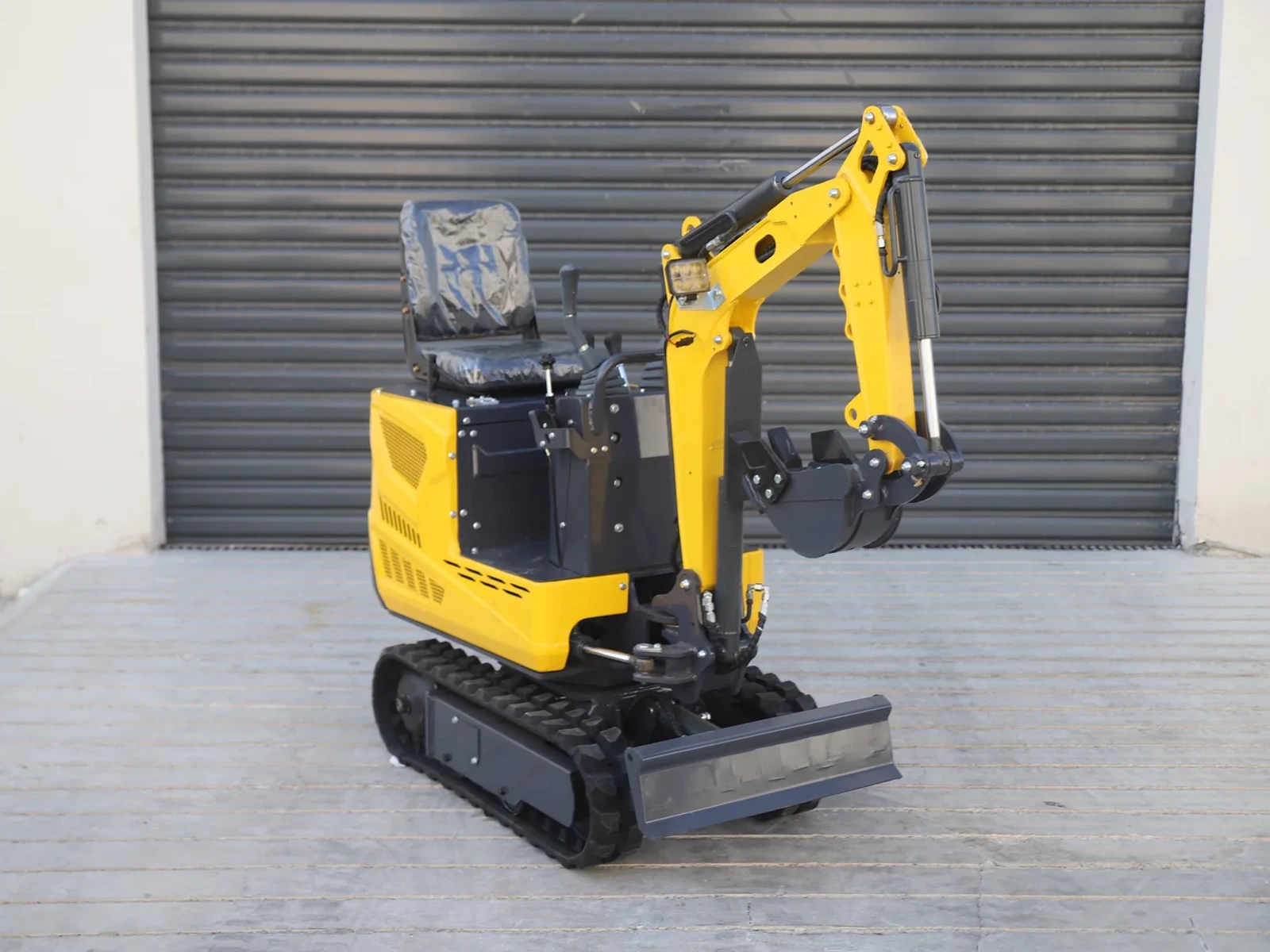 Mini Excavator 06Q
700 mm compact excavator with 1,200 mm digging depth, 360-degree swing, and application-ready attachment options for tight-space work.
View Product →
Mini Excavator 06Q
700 mm compact excavator with 1,200 mm digging depth, 360-degree swing, and application-ready attachment options for tight-space work.
View Product →
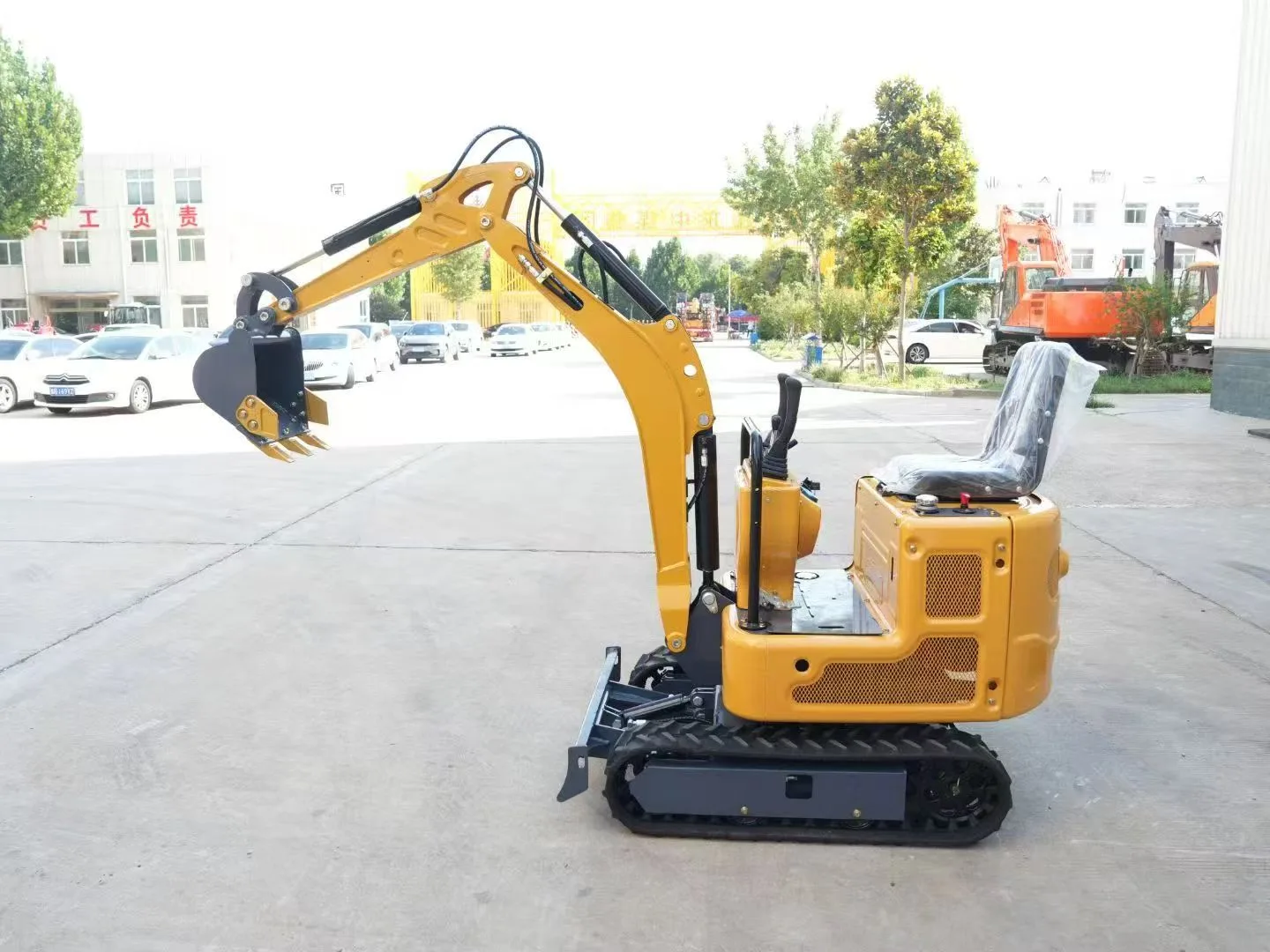 Mini Excavator 12Q
925 mm compact excavator with 1,700 mm digging depth, 2,900 mm digging radius, and an 8 kW standard engine.
View Product →
Mini Excavator 12Q
925 mm compact excavator with 1,700 mm digging depth, 2,900 mm digging radius, and an 8 kW standard engine.
View Product →