Working on Mud, Turf or Soft Soil? Choose Equipment by Ground and Recovery Risk
Ground pressure is one input, not the whole answer. Match the loaded machine, travel and turning pattern, access, slope, surface-protection target and recovery plan before selecting tracks, tires or machine class.

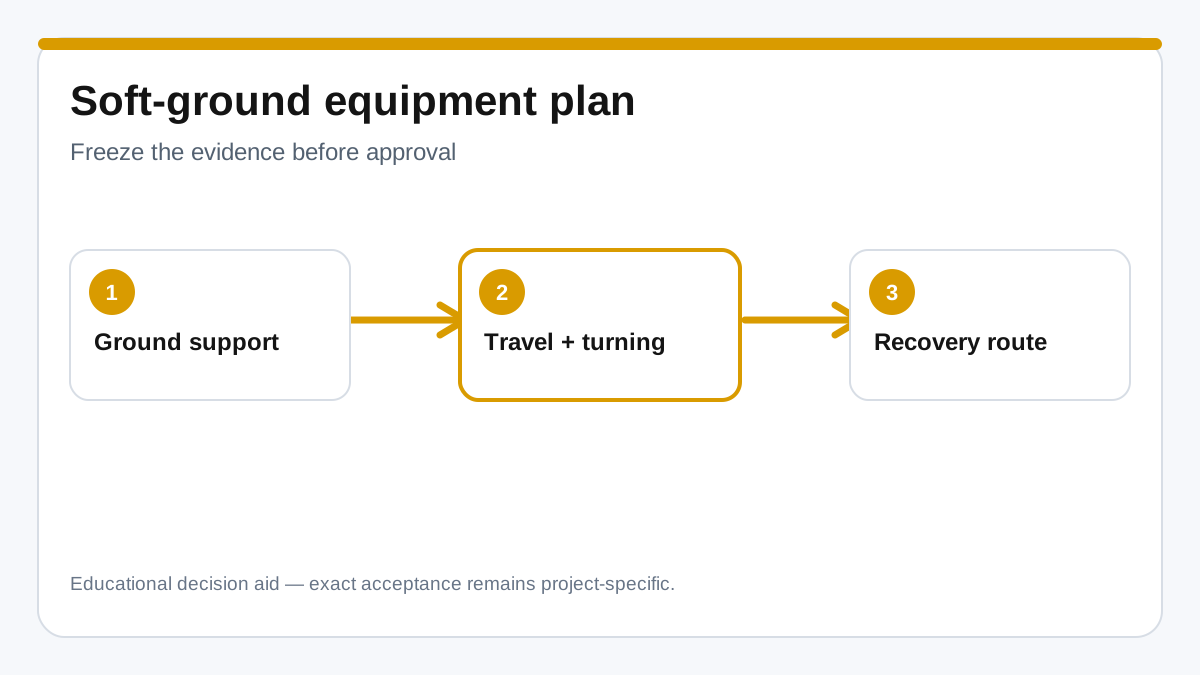
Direct answer: choose equipment for mud, turf or soft soil only after checking whether the ground can support the complete loaded machine, how it will turn, where it will travel, what surface damage is acceptable and how it can be recovered without entering a worse area. Tracks or wide tires can spread load, but machine mass, payload, attachment, slope, steering and repeated passes can still cause rutting, sinkage or instability. Validate the shortlisted configuration on the representative route with a defined stop and recovery plan.
Describe what the ground must support
Record soil or surface type, recent rain or irrigation, drainage, compaction, organic layer, standing water, hidden trenches or utilities, slope, edges and the consequence of damage. “Soft” may mean saturated clay, loose fill, cultivated soil, peat, turf over topsoil or a prepared surface that must stay visually intact. These are different operating cases.
OSHA’s crane and derrick construction standard, 29 CFR 1926.1402, defines “ground conditions” as “the ability of the ground to support the equipment (including slope, compaction, and firmness)” and requires that ground be “firm, drained, and graded” enough that the equipment manufacturer’s specification for adequate support is met. That rule governs cranes, not compact-equipment selection, but the principle carries over: support conditions must be assessed against the machine’s own specification, not assumed from appearance.
Define the surface objective separately: must the machine avoid getting stuck, limit rut depth, protect roots, preserve finished turf, cross a temporary route or work productively for repeated cycles? A machine can remain mobile and still create unacceptable disturbance.
Use the complete loaded configuration
Average ground contact pressure is a useful comparison only when the calculation basis is known. ISO 16754:2008, Earth-moving machinery — Determination of average ground contact pressure for crawler machines, specifies a uniform method for calculating that figure for crawler earth-moving machines on soft surfaces with empty equipment or attachment. ISO states the value is for comparing machine models only; actual pressure under operating conditions varies with load, centre-of-gravity position, terrain, track-shoe type and size, and surface conditions. It does not prove mobility, stability or turf protection in any field condition.
Record operating mass, operator, fuel or battery state, payload, attachment, any ballast and the contact system actually fitted. The load shifts while lifting, dumping, climbing, braking and turning. Static average pressure cannot describe every local peak or dynamic event.
Do not compare: an empty machine’s brochure number against another machine carrying its working payload. Put both in the same operating state and preserve each manufacturer’s calculation basis.
Map travel, turning and repeated-pass exposure
Mark the entry, haul path, work zone, dump point and exit. Add the narrowest access, overhead limit, cross slope, turning points, edges and no-go areas. Repeated use of one line can damage soil even when a single pass looks acceptable.
Skid steering scrubs across the surface during turns. The effect varies with machine, contact system, load, radius and ground. Use wide sweeping turns where the site and manual allow, avoid pivoting on sensitive turf and reduce unnecessary passes. Do not claim that tracks automatically prevent surface damage. Manufacturer soft-ground guidance makes the same point: a larger track footprint spreads load and reduces compaction compared with a small tire contact patch but does not eliminate it, low rated ground pressure does not protect ground whose surface crust is already broken or saturated, and repeating one line after a track breaks through compounds the damage regardless of the rated figure. Travel up and down slopes rather than across, and plan turns at the flattest point on the route.
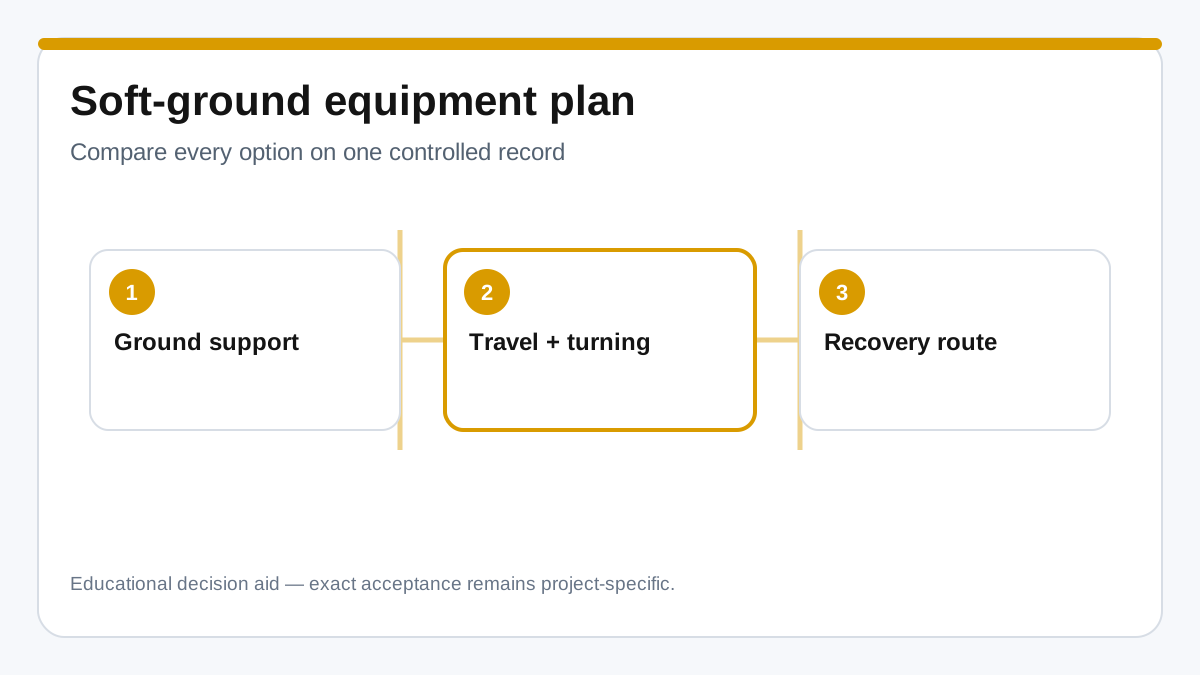
Compare equipment architectures by the whole job
| Architecture | Potential fit | Key risk | Evidence to request |
|---|---|---|---|
| Tracked mini dumper | Narrow repetitive material movement with a low, distributed footprint | Turning scrub, overloaded body, slope or edge exposure | Loaded mass, track contact, width, route and dump cycle |
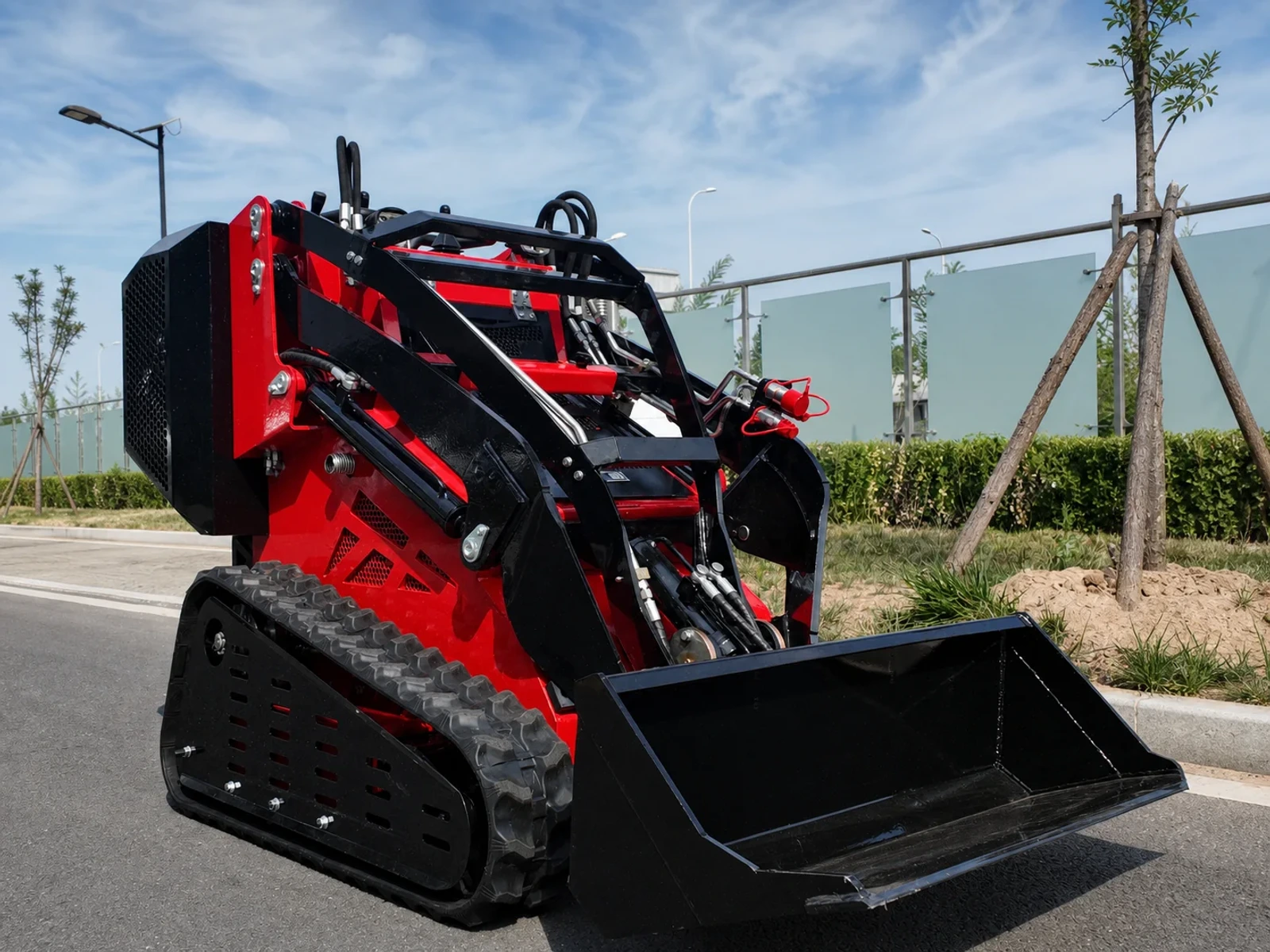
| Tracked compact loader | Attachment work, loading and traction on changing ground | Higher mass, steering disturbance and undercarriage wear | Operating mass, track, attachment, lift and turning plan |
| Mini excavator | Stationary digging with controlled repositioning | Local loading during digging, travel and spoil handling | Configured mass, blade/bucket, reach, route and working platform |
| Wheeled compact machine | Firm routes or surfaces where travel efficiency matters | Sinkage or concentrated rutting when support falls | Tire size, approved inflation/load data and site trial |
| Temporary access system | Protect a known route or bridge weak areas | Installation, edge, displacement and recovery hazards | Engineered mat/road design and site authority approval |
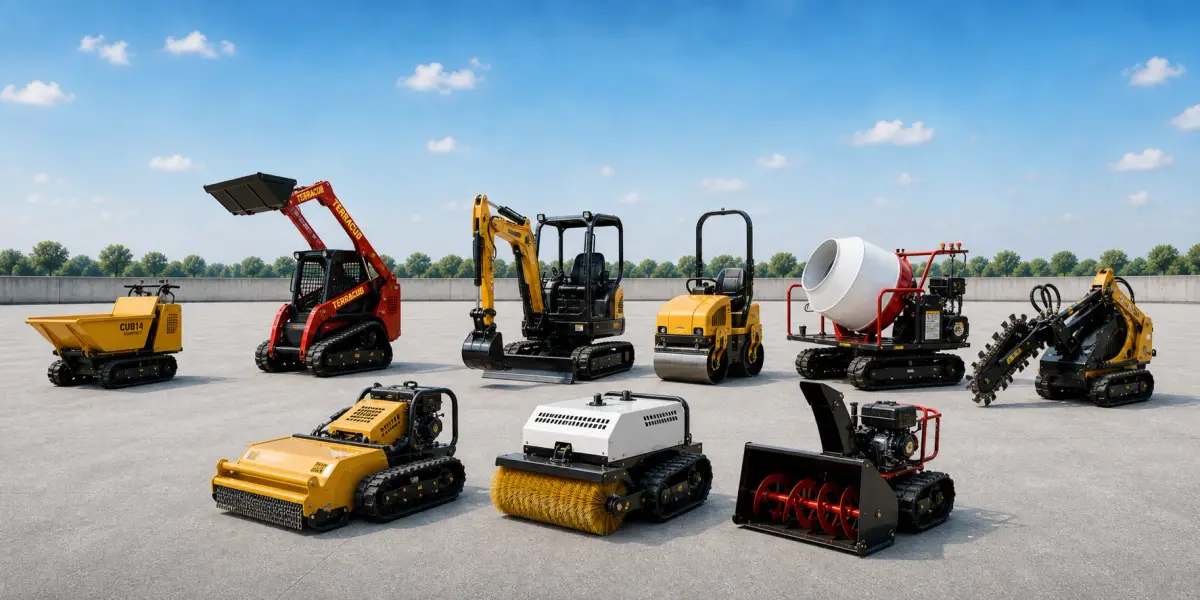
The existing skid steer versus compact track loader guide owns the tire-versus-track carrier comparison. This article owns the wider site evidence and recovery decision. For repeated material movement, review TerraCub’s tracked dumper range only after the route and payload are known.
Plan recovery before the machine enters
Identify stop triggers such as increasing rut depth, rising track slip, loss of steering response, bogging, visible ground failure, water movement, unstable edge or an exceeded slope or load boundary. The operator should not “try one more pass” after a trigger.
Define a recovery direction toward firmer ground, approved attachment points and methods from the exact manual, a recovery machine that stays on supportable ground, communication and exclusion zones. Manufacturer guidance is explicit that recovery must follow the operation and maintenance manual for tie-down and attachment points, release valves, disconnects, towing speed and distance, and that recovery equipment must be rated for the load. Never improvise a tow from an unknown point or place personnel in a tensioned-line or rollover zone.
If recovery equipment must enter the same weak ground, the plan may multiply the problem. Consider route improvement, reduced load, smaller cycles, different timing or a temporary access system before work begins.
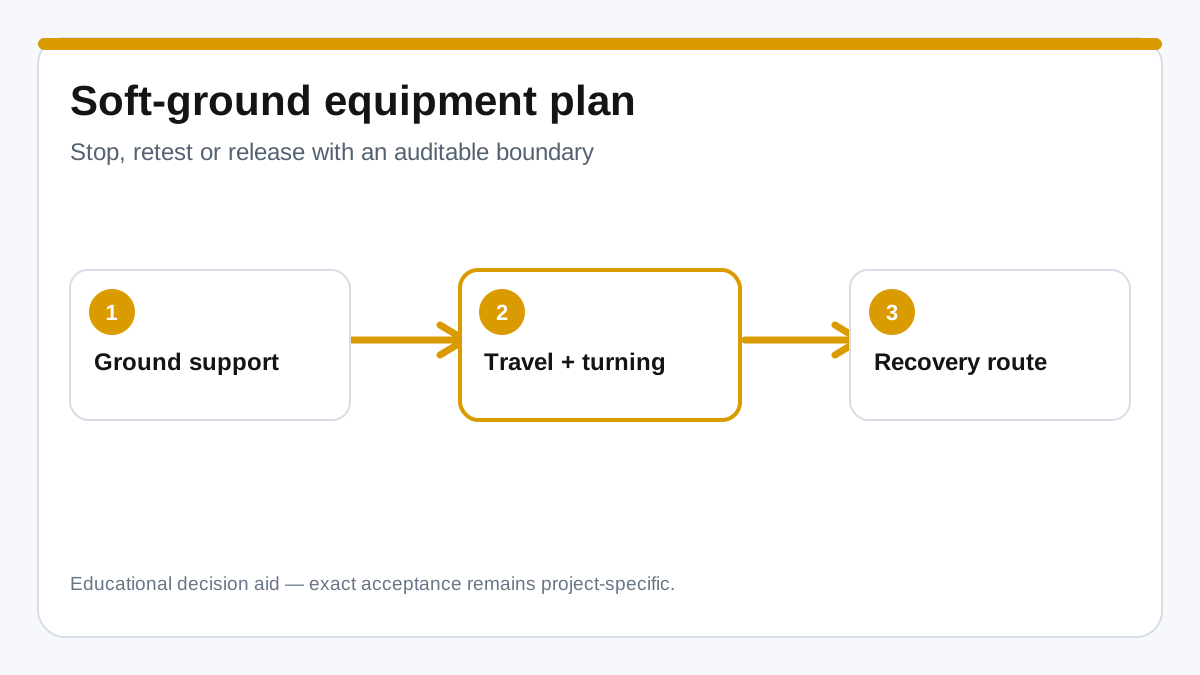
Run a controlled route trial
Use the exact machine, contact system, attachment and representative load. Start on the firmest part of the route and increase exposure only under the site plan. Record weather, surface condition, payload, passes, route, turning, operator, visible rutting or disturbance and any loss of traction.
Compare the result with the written acceptance boundary. If the ground changes after rain, irrigation, thaw or excavation, the prior trial may no longer represent the route. Treat the trial as evidence for stated conditions, not a permanent guarantee.
Prepare a ground-and-recovery quote brief
- Ground type, moisture, drainage, slope, edges and buried-risk information.
- Narrowest access, route length, turns, overhead limits and surface-protection target.
- Material, payload per cycle, dump/load method and required production pattern.
- Complete machine/attachment configuration and transport constraints.
- Stop triggers, recovery direction, approved recovery method and responsible site authority.
- Required manuals, parts, operator information and support handover.
Use the agriculture equipment page for the commercial application context, then send the route, load and recovery brief for a configuration discussion.
Match the machine to the ground and recovery plan
Share the route, surface, payload, access, slope, surface-protection target and destination. TerraCub can help shortlist a machine configuration without promising universal ground performance.
Request a configuration reviewFAQs
Do tracks always have lower ground pressure than tires?
No. Compare the exact loaded machines and calculation methods. Contact area, mass, payload, tire/track specification and operating state all matter.
Will a tracked machine avoid damaging turf?
Not automatically. Turning, repeated passes, load, moisture and turf/root conditions can still cause rutting or tearing. Define and trial the route.
Is brochure ground pressure enough to choose equipment?
No. It does not describe ground strength, local peaks, dynamic loading, slope, steering disturbance, repeated passes or recovery risk.
Should payload be reduced on soft ground?
It may be one risk-control option, but the exact safe load and operating method must come from the machine documentation and site assessment.
What should a recovery plan include?
Include stop triggers, firm recovery position, direction, manufacturer-approved points and methods, rated equipment, exclusion zones, communication and responsible authority.
Sources and limitations
- ISO 16754:2008 — Earth-moving machinery — Determination of average ground contact pressure for crawler machines (comparison method, empty machine; operating values vary)
- OSHA 29 CFR 1926.1402 — Ground conditions (cranes and derricks in construction; used here only for the definition and support principle, not as a compact-equipment standard)
- Bobcat — Compact Track Loaders for Soft Ground buyer’s guide (manufacturer operating guidance on footprint, single-pass discipline, slope travel and recovery)
This guide does not provide a universal ground-bearing limit, slope limit, payload, recovery procedure or damage guarantee. Use the exact manual and competent site authority.
Recommended Products
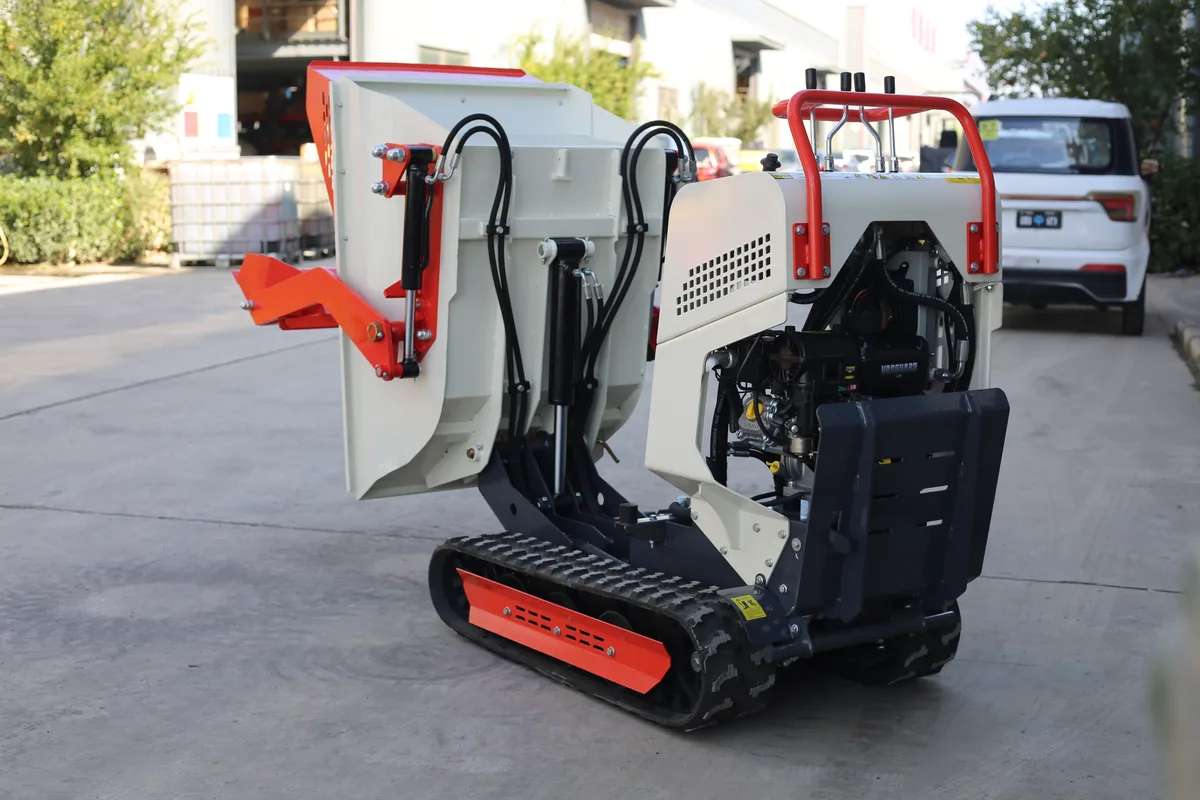 Small Dumper Truck 500kg
Entry-level tracked dumper. Passes through standard residential gates. Ideal for garden work, landscaping, and light construction.
View Product →
Small Dumper Truck 500kg
Entry-level tracked dumper. Passes through standard residential gates. Ideal for garden work, landscaping, and light construction.
View Product →
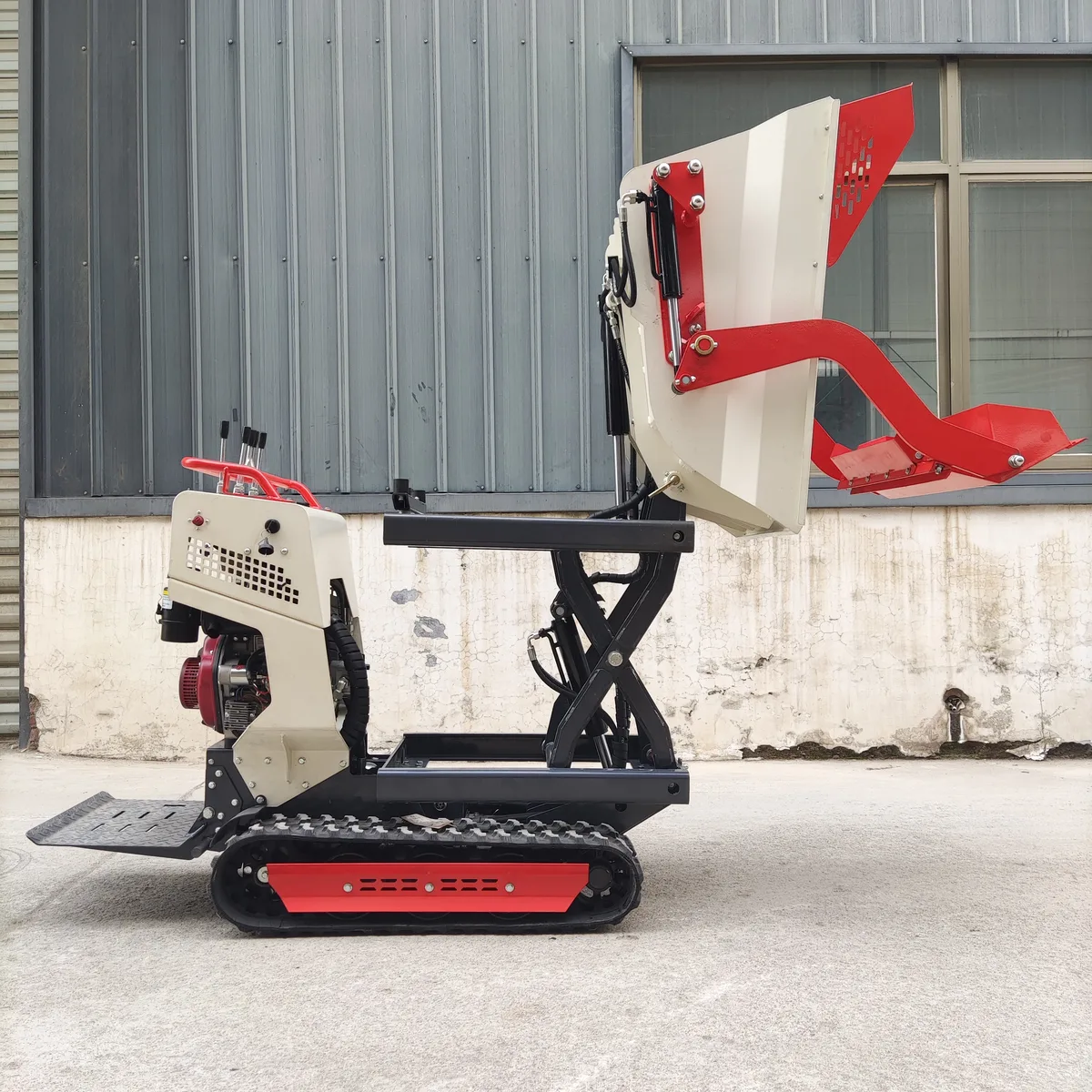 High Tip Mini Dumper
Same narrow 700 mm body. Lifts the bucket to 1,200 mm, enough to dump over scaffolding, into mixers, or above formwork.
View Product →
High Tip Mini Dumper
Same narrow 700 mm body. Lifts the bucket to 1,200 mm, enough to dump over scaffolding, into mixers, or above formwork.
View Product →
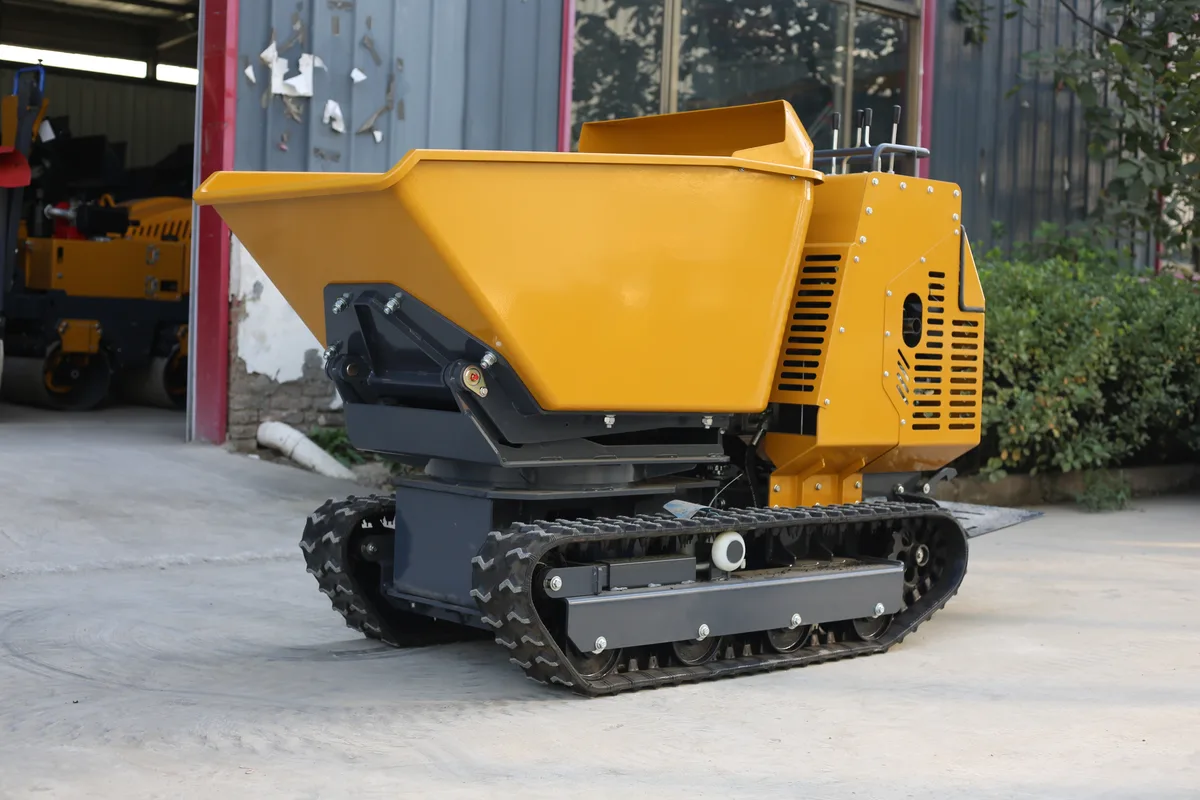 Rotary Dump Mini Dumper
2.4x the payload. Rotary base dumps in any direction without repositioning. Built for commercial sites and heavy excavation.
View Product →
Rotary Dump Mini Dumper
2.4x the payload. Rotary base dumps in any direction without repositioning. Built for commercial sites and heavy excavation.
View Product →