Electric Mini Dumper: Range, Payload & Buying Guide
Electric mini dumper guide covering runtime, payload classes, charging reality, and when battery power is a better buy than petrol on modern jobsites.

TerraCub Engineering Team
Compact Equipment Team · Since 2015
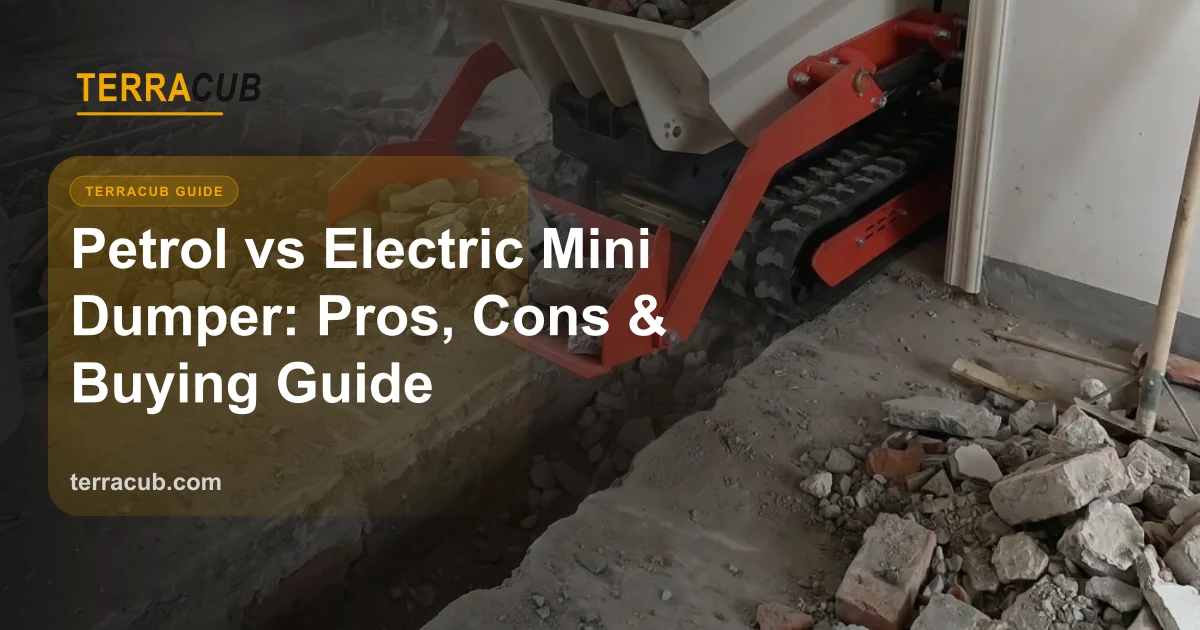
An electric mini dumper is a battery-powered compact material carrier chosen mainly for indoor work, noise-sensitive projects, and jobs where petrol exhaust is the wrong idea before the engine even starts. In the current market, light units sit around the 300-500 kg class, larger professional units reach 1,000 kg, and heavy industrial models can hit 2,000 kg. Runtime ranges from a few hard-working hours to a full shift, depending on battery size, terrain, and duty cycle.
Electric mini dumper means quiet hauling, not magic
An electric mini dumper does the same core job as a petrol mini dumper: load, carry, tip, return. The difference is the powertrain. Instead of an internal-combustion engine, it uses battery power and electric drive. That changes four buying decisions immediately: noise, exhaust, runtime planning, and charging logistics.
That is why the strongest use case is not "modern technology." It is site constraint. If the machine must work indoors, in a basement, inside a partially enclosed build, or on a residential job with tight noise rules, electric starts making sense fast. The CDC warns against operating gasoline-powered engines inside buildings or partially enclosed areas because carbon monoxide can accumulate rapidly. That tends to ruin the day.
Current TerraCub product pages: TerraCub currently shows petrol tracked dumpers from 500 kg to 1,200 kg. This article is an electric-category guide, not a claim that TerraCub already has a public electric range.
Range is a runtime problem, not a distance problem
Buyers ask about range because they are thinking like EV drivers. On a dumper, the more practical question is runtime per shift. A compact site dumper does short loops all day, not highway miles. Payload, slope, stop-start duty, and hydraulic tipping frequency matter more than headline battery capacity.
Current market examples show how wide the spread is. The Wacker Neuson DT10e advertises 8 hours of runtime with 8 hours of charging. The Makinex HG Electric 2T lists a 12-hour run time with a 2.5-hour recharge from 20% to 80%. On the lighter end, MechMaxx lists battery-powered mini dumper and dump-cart units in the 48V class, which tells you immediately that these are very different machines from a 1- or 2-ton site dumper.
| Class | Typical payload | What it fits | Runtime reality |
|---|---|---|---|
| Battery barrow / light cart | 300-500 kg | Landscaping, residential haulage, lighter material runs | Several hours under moderate work; plan for spare battery or midday charging |
| Compact professional electric dumper | 500-1,000 kg | Noise-restricted construction, interior demolition, urban sites | Up to a workday on some models, but only if the duty cycle is realistic |
| Heavy industrial electric dumper | 1,500-2,000 kg | Larger commercial sites with charging support | Full-shift capable on premium units, with a price tag to match |
So the buying rule is simple: if your job cannot tolerate a charging pause, you do not buy runtime based on the best-case line item. You buy it based on the worst hour of the day. Mud, ramps, cold weather, and impatient operators all consume battery faster than the catalogue does. The catalogues remain emotionally resilient.
Payload decides whether you are buying a powered barrow or a site dumper
Payload class is the first filter because it controls productivity. If the machine carries too little, your crew gains clean power but loses time. That is not progress. That is just quieter frustration.
300-500 kg: the light battery class
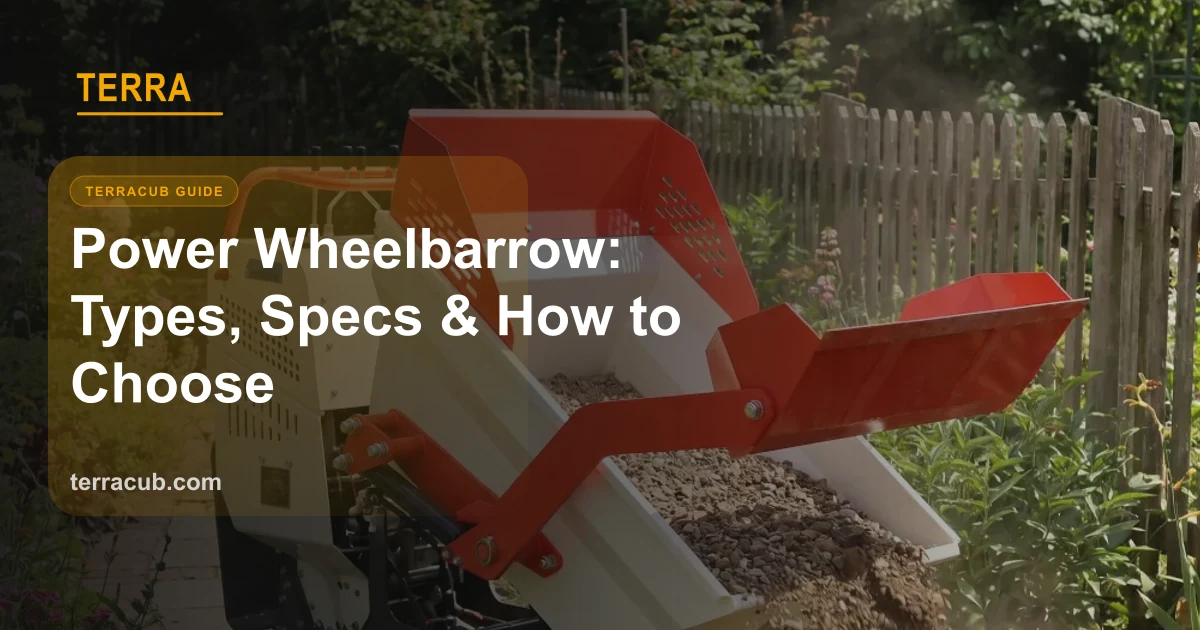
This is where many battery-powered mini dumpers start. The MechMaxx electric units shown in current retail listings sit around the 1,100 lb class, which is basically the 500 kg working band. These are useful for landscaping, garden renovation, light construction support, and jobs where access is tight and the loads are frequent but not brutal.
500-1,000 kg: the professional crossover class
This is where electric stops being a powered barrow with good PR and starts becoming a serious site machine. Wacker's electric dumper overview lists the DT05e at 500 kg and the DT10e at 1,000 kg payload. That matters because many buyers who want electric are not trying to replace a wheelbarrow. They are trying to replace a conventional tracked dumper on a specific type of restricted site.
1,500-2,000 kg: the industrial electric class
The Makinex HG Electric 2T shows where the heavy end is heading: 2,000 kg payload, 892 L volume, and full-day runtime claims on a lithium platform. That is not a casual buy. It is a fleet or project-specification decision, and the price reflects that. Sometimes dramatically.
"For buyers in the light class, the wrong comparison is electric vs petrol as a moral statement. The right comparison is job constraint vs budget. When one current retailer shows a light electric mini dumper around $2,299 and similar gas-powered wheelbarrow units around $1,899, the battery premium only makes sense if the site actually needs zero tailpipe emissions or lower noise. Outdoors on an open site, sentiment is expensive."
Electric beats petrol in the right jobs, and loses badly in the wrong ones
Electric is not the universal upgrade. It is the better answer in a narrower set of conditions. The trick is knowing which conditions are real, and which are just fashionable.
Where electric wins
- Indoor and partially enclosed work where combustion exhaust is unacceptable.
- Noise-sensitive neighborhoods, campuses, hospitals, zoos, hotels, and public-space renovation.
- Sites with short daily haul cycles and easy overnight charging.
- Buyers who prioritize lower operating noise and fewer routine engine-service tasks.
Where petrol still wins
- Long outdoor shifts with no practical charging window.
- Remote jobs where grid access is unreliable or absent.
- Budget-led purchases where upfront cost matters more than site restrictions.
- Applications that need immediate refuel-and-go recovery instead of charge planning.
A common basement strip-out job makes the split obvious. A petrol dumper may have the better sticker price, but once the work moves into enclosed space, battery power stops being a premium preference and starts being basic risk control. On open landscaping work with eight messy hours and no charger, the same battery machine can become the wrong tool wearing the right politics. Use the petrol mini dumper price and spec comparison to match payload, width, dump style, and current quote scope before deciding. Both things can be true. Usually on the same Tuesday.
Construction, landscaping, and interior work do not ask the same thing
Interior demolition and basement work
This is the cleanest electric use case. Exhaust risk, air quality, and noise all push in the same direction. If the payload requirement stays inside the compact class and the site can charge overnight, electric is usually the sensible answer.
Residential landscaping
Electric works well when the crew is moving soil, mulch, gravel, and turf through gates or around finished property. The lower noise matters. So does not smelling like a small engine by 10 a.m. The limit is shift length. If the job involves endless uphill spoil runs, battery capacity becomes part of crew scheduling whether anyone likes that fact or not.
Urban construction and public works
Electric dumpers make the most sense where emissions, local authority restrictions, and start-time rules are real commercial constraints. Wacker markets electric dumpers specifically for noise-restricted and protected environments, which tells you how manufacturers see the category: not as a universal replacement, but as a machine that unlocks jobs conventional units complicate.
Outdoor contractor work with long cycles
This remains petrol territory more often than buyers admit. TerraCub's current tracked lineup is built around that reality. If the job is open-air, long-shift, and charge-poor, a petrol tracked dumper is still the cleaner decision in business terms even if it is not the cleaner decision at the tailpipe.
Buy the battery, the charger, and the workflow as one system
Good buyers do not just compare payload and price. They compare the whole operating loop.
- Measure the narrowest access point. Width is still the first filter, electric or not.
- Set the real payload target. Not what the operator hopes for. What the job actually needs per cycle.
- Map the shift pattern. How many hours of hauling, what slope, how many tips, how many pauses.
- Check charging reality. Normal outlet, higher-output charger, battery-swap option, or none of the above.
- Ask about recharge window. Overnight only is fine if the machine sleeps where power exists. Less fine if it lives on a trailer in a field.
- Match duty to machine class. Light battery carts are not 1-ton tracked dumpers with good manners.
- Verify service support. Battery, controller, charger, hydraulic system, and wear parts. All of them.
If you only remember one line from this section, make it this one: the charger is part of the machine. Buyers often evaluate the dumper and treat charging as an afterthought. That is how a good machine becomes a stationary sculpture with excellent intentions.
Use it correctly or the battery becomes your most expensive wheelbarrow
Electric dumpers are simple to operate. They are less forgiving of lazy planning.
- Start with a full or known battery state. "Probably enough" is not a charging strategy.
- Load to rated capacity, not to optimism. Overloading kills runtime first and components second.
- Use smoother throttle and route discipline. Stop-start abuse drains battery faster than steady cycles.
- Charge during predictable pauses. Lunch, shift change, indoor finishing work, or trailer wait time.
- Store intelligently. Batteries hate neglect more than engines do. If the manual specifies storage practice, follow it before the warranty conversation becomes educational.
That is also the quiet strength of a good electric dumper: operation is simple, torque is immediate, and the machine is easy to place precisely. The weakness is that nobody notices the charging plan until there is no charging plan. Then everybody notices at once.
Most failures are planning failures in a yellow jacket
- Buying on payload alone. A 500 kg rating means little if runtime collapses under your real slope and cycle count.
- Ignoring the site power situation. A charger on paper is not the same thing as a workable charging routine on site.
- Using electric for the wrong outdoor duty. Long haul distances, no charger, and no spare battery is a management choice, not a machine fault.
- Underestimating cold, mud, and ramps. All three drag runtime down. Usually together, because jobs have a sense of humor.
- Assuming maintenance disappears. Batteries remove engine servicing, not hydraulic checks, tires or tracks, controls, or operator abuse.
FAQs
The questions buyers ask before the quote gets serious.
What is an electric mini dumper?
How long does an electric mini dumper run on one charge?
What payload should I expect?
When is electric better than petrol?
Do I need special charging infrastructure?
Can TerraCub quote an electric mini dumper today?
Need help deciding whether the job should stay petrol or go electric?
TerraCub currently supplies petrol tracked mini dumpers from 500 kg to 1,200 kg. If your site is indoor, emission-sensitive, or noise-restricted, send the access width, payload target, shift length, and charging reality. We will tell you honestly whether an electric brief is justified or whether a conventional tracked dumper is still the better buy.
If the charger matters more than the dump bed, you are not overthinking it. You are doing procurement properly for once.
Further Reading
Related Articles
Guide
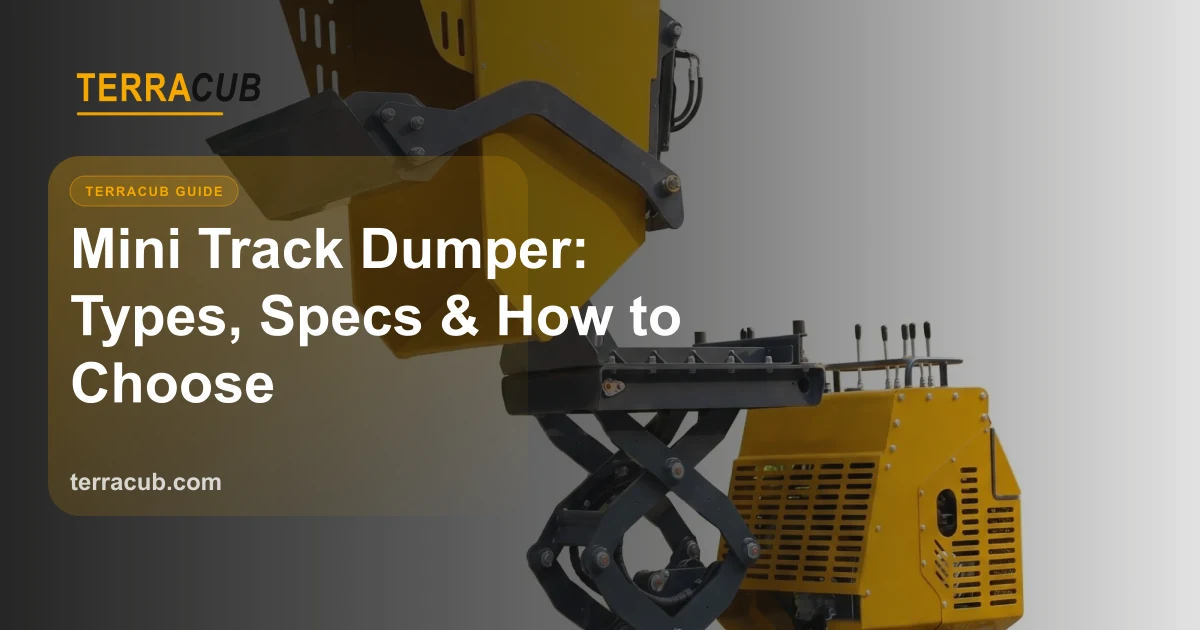
Mini Track Dumper: Types, Specs & How to Choose
Types, payload ratings, and the key track width specs compared side by side.
Guide
Power Wheelbarrow: Gas vs Electric and Terrain Limits
Petrol vs electric power wheelbarrows compared on terrain type, payload, and daily cycle efficiency.
Buyer Guide
Small Dumper Truck for Sale: Prices & How to Buy
Price ranges, buying checks, and key decisions before buying a small tracked dumper.
Recommended Products
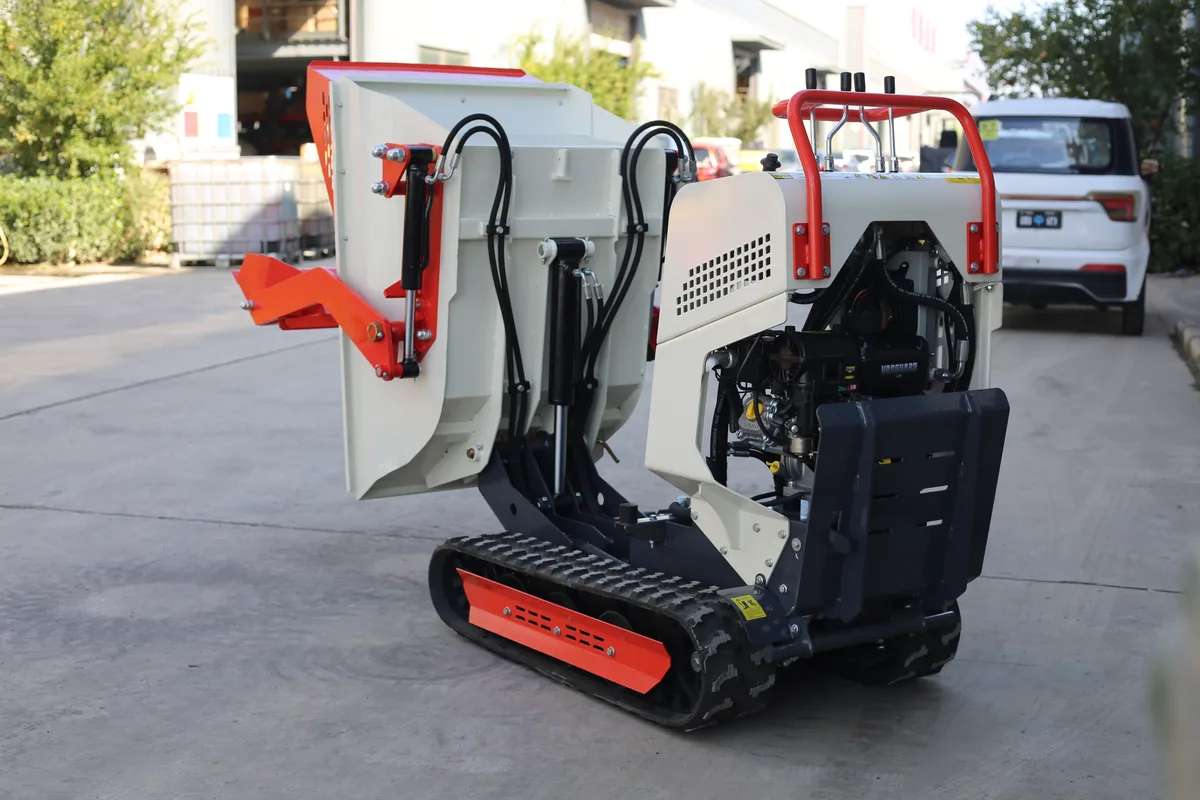 Small Dumper Truck 500kg
Entry-level tracked dumper. Passes through standard residential gates. Ideal for garden work, landscaping, and light construction.
View Product →
Small Dumper Truck 500kg
Entry-level tracked dumper. Passes through standard residential gates. Ideal for garden work, landscaping, and light construction.
View Product →
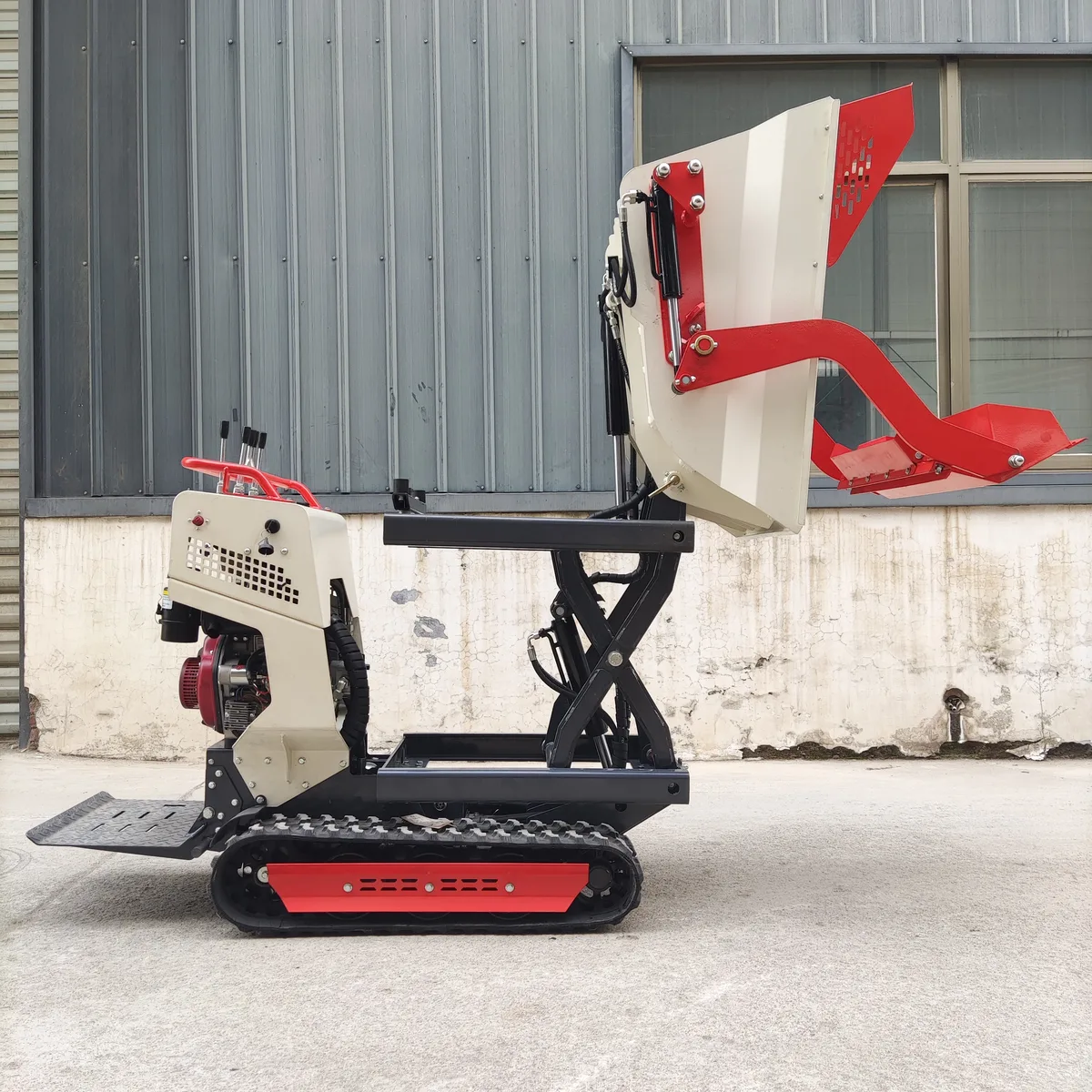 High Tip Mini Dumper
Same narrow 700 mm body. Lifts the bucket to 1,200 mm, enough to dump over scaffolding, into mixers, or above formwork.
View Product →
High Tip Mini Dumper
Same narrow 700 mm body. Lifts the bucket to 1,200 mm, enough to dump over scaffolding, into mixers, or above formwork.
View Product →
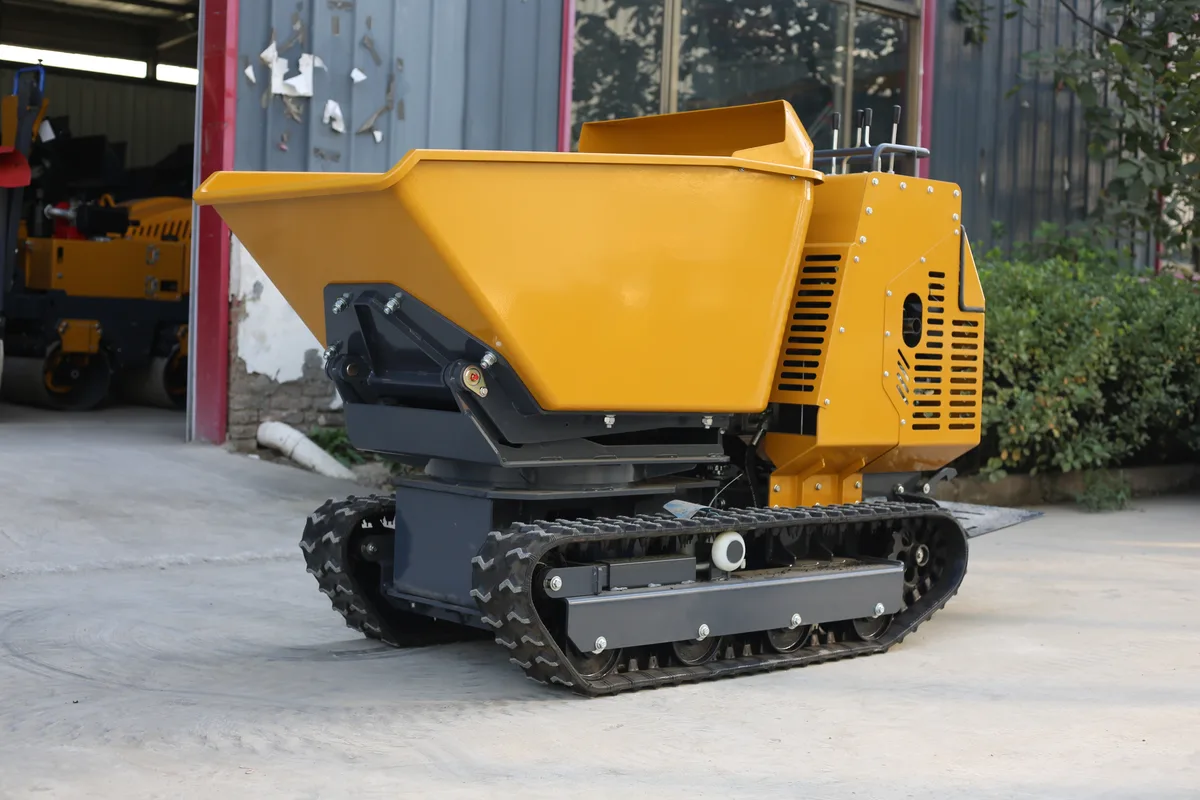 Rotary Dump Mini Dumper
2.4x the payload. Rotary base dumps in any direction without repositioning. Built for commercial sites and heavy excavation.
View Product →
Rotary Dump Mini Dumper
2.4x the payload. Rotary base dumps in any direction without repositioning. Built for commercial sites and heavy excavation.
View Product →