Walk-Behind or Stand-On Mini Loader? Compare Access, Control, Fatigue and Transport
Choose the operator format from the real route and work cycle—not the label on a sales listing. Platform length, sight lines, controls, surface, slope, mounting frequency, attachment demand, and trailer limits all change the answer.

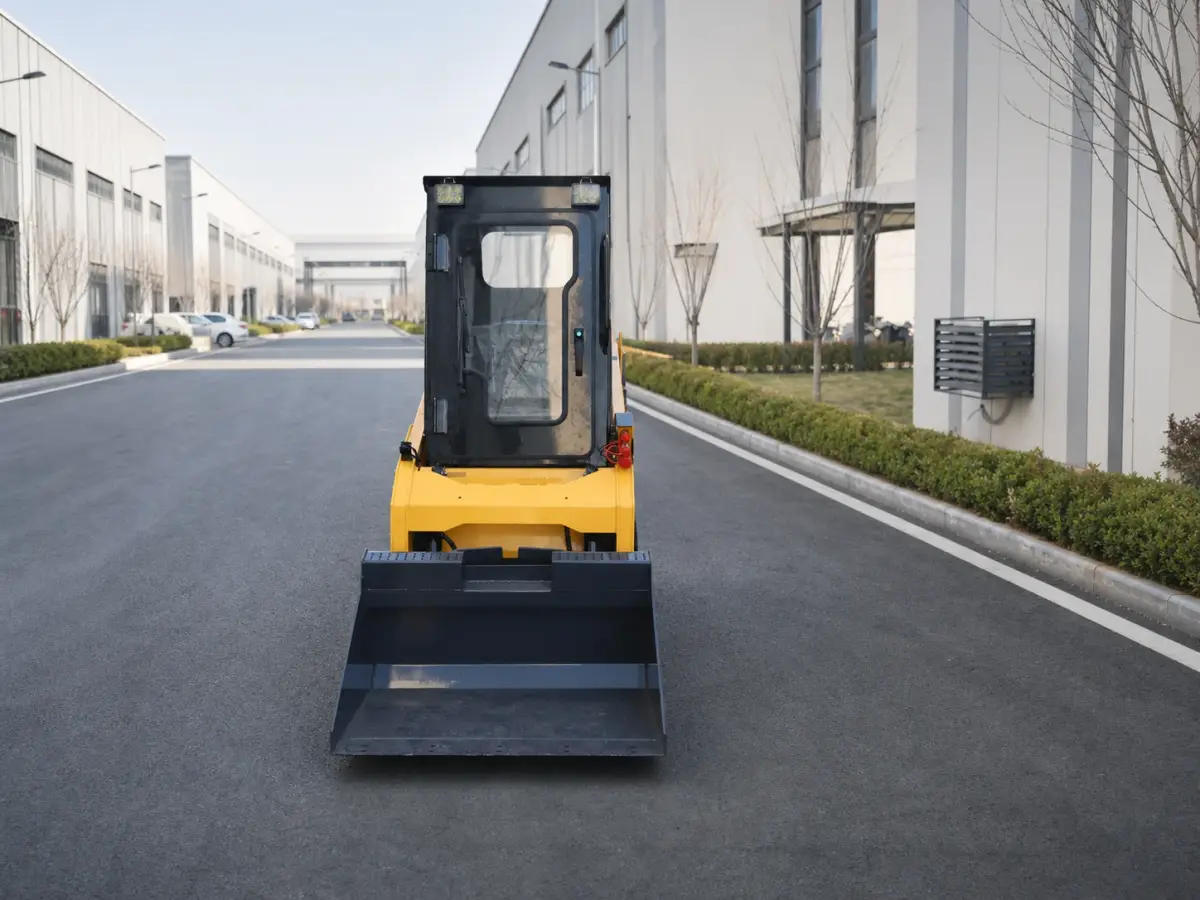
Direct answer: a walk-behind-capable mini loader can be useful for very short, precise cycles and routes where an extended platform changes the fit. A stand-on platform can reduce walking, improve the view over the attachment, and make repeated travel easier. Neither format wins by name alone. Confirm the exact model's approved operating modes, complete dimensions, operator-presence system, control layout, slope instructions, attachment hydraulics, and transport weight.
Start by defining what walk-behind and stand-on mean on the exact model
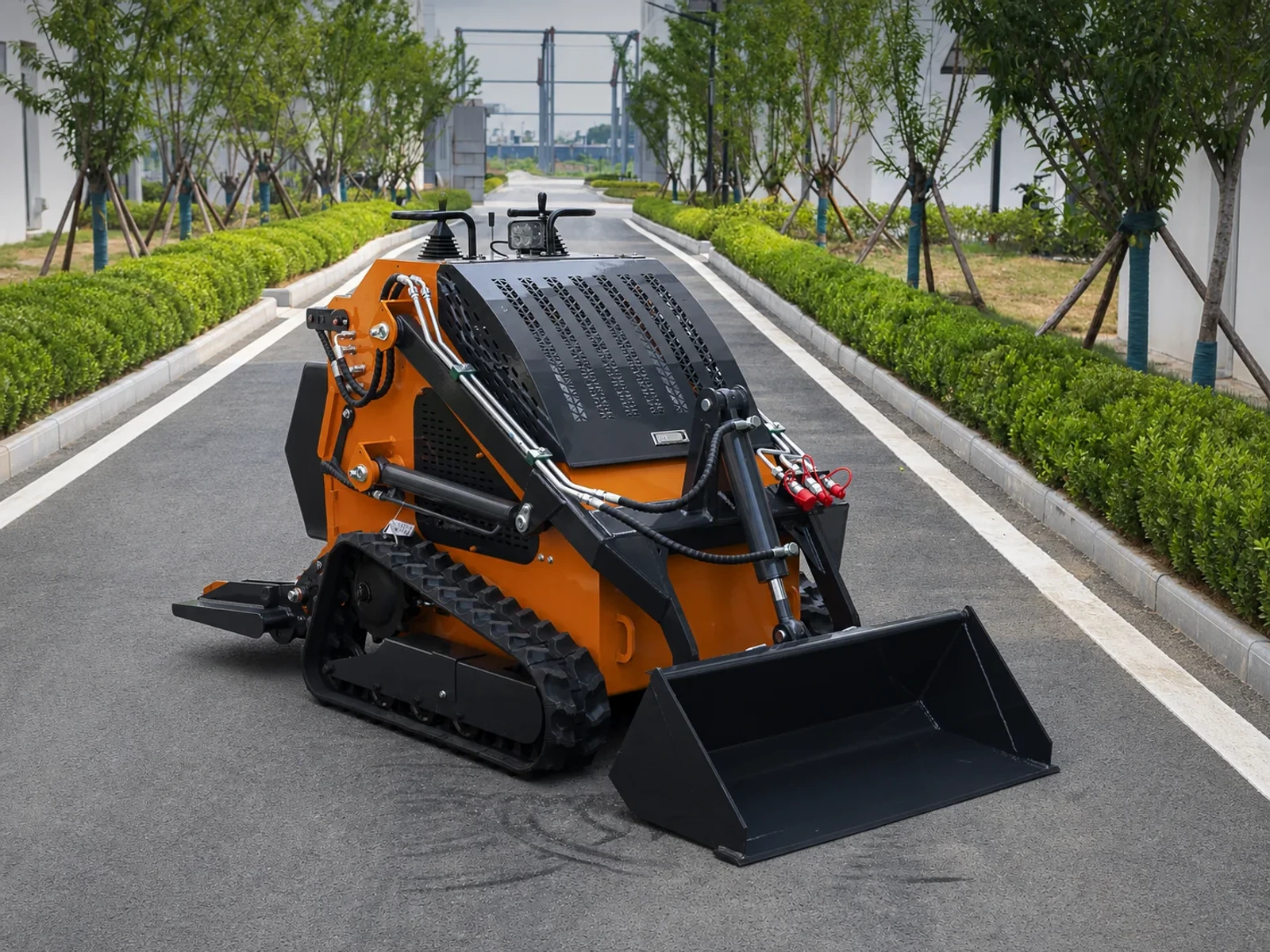
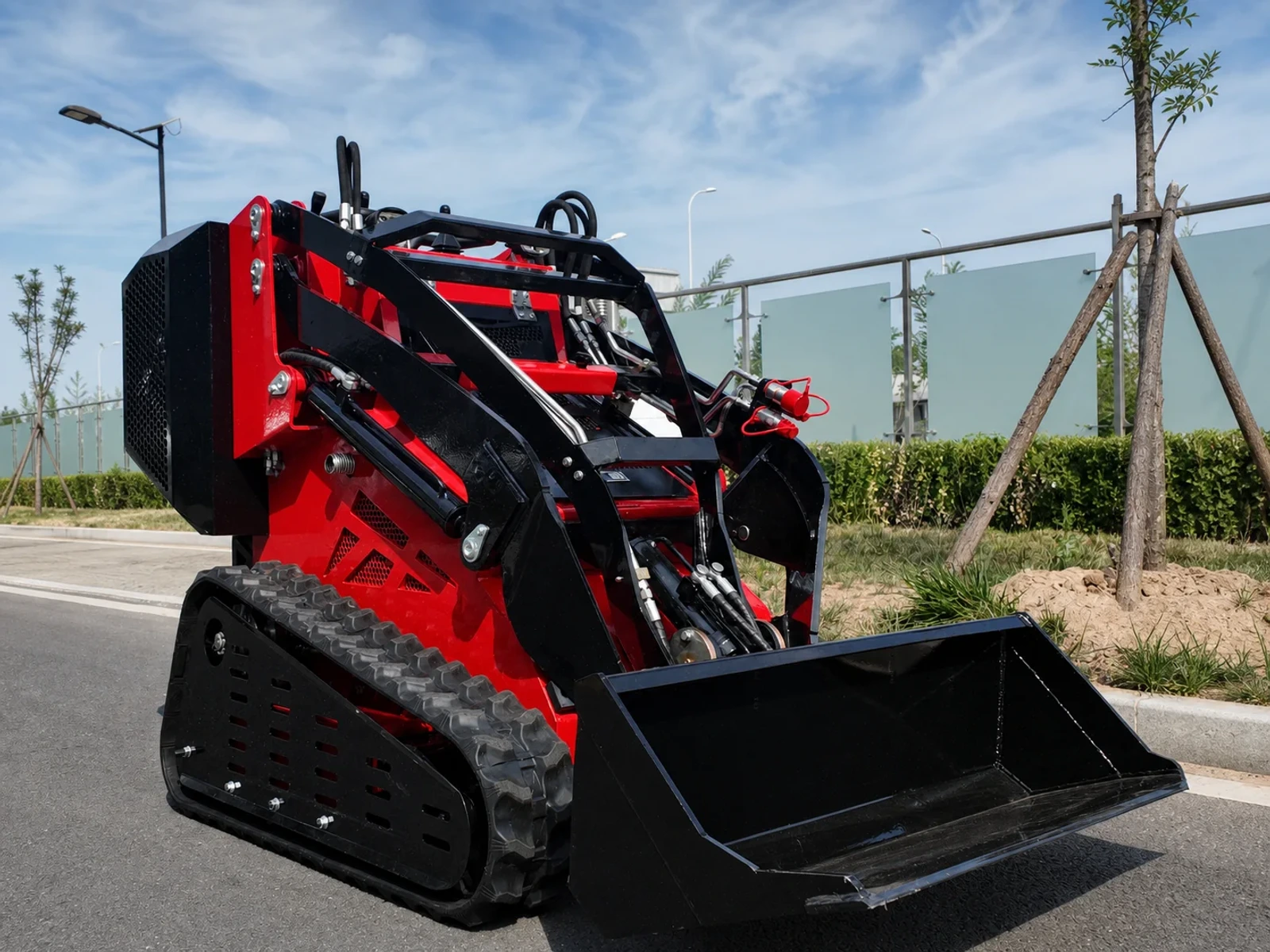
Mini track loader, mini skid steer, compact utility loader, walk-behind loader, and stand-on loader are often used for overlapping products. The operator arrangement is more precise than the category name. Some machines use an integrated ride-on platform. Others accept a removable or folding platform and may permit both ride-on and ground operation. A listing photograph does not prove both modes are approved.
Bobcat describes a pin-on ride platform that can alternate between approved ride-on and walk-behind operation, while its MT100 uses an integrated platform and operator-presence shutdown. Those examples show why the model manual and configuration sheet must control the decision. Do not improvise ground operation on a machine designed only for its platform.
| Question | Walk-behind-capable format | Stand-on format | Evidence to request |
|---|---|---|---|
| Access | May shorten the machine when the approved platform is removed or folded | Platform stays inside the working envelope and can improve sight lines | Transport and working dimensions in every approved mode |
| Travel cycle | Operator walks beside or behind the machine | Operator rides with the machine | Route length, surface, speed, vibration, mount/dismount count |
| Controls | Ground position changes eye line and hand position | Raised station may improve bucket-edge and side visibility | Control photos, presence interlock, dealer demonstration |
| Transport | Platform position may change overall length | Integrated platform mass and length stay in the transport package | Actual machine, bucket, fluids, tie-down and trailer figures |
Measure the gate, turns, platform, attachment, and trailer as one system
The narrowest machine width is only the first number. Record the gate opening, route width, ninety-degree turns, overhead obstacles, side clearance for the operator, and the space required to reverse or turn with the attachment. Measure the platform in its travel and operating positions. Then repeat the check for the widest regular attachment.
Transport can reverse an apparently good choice. Confirm operating weight with the chosen bucket or tool, trailer payload, ramp width and angle, tow-vehicle limits, tie-down points, and local transport requirements. A removable platform may help packaging, but its mass and secure transport location still belong in the load plan.
Compare visibility and controls during the real task
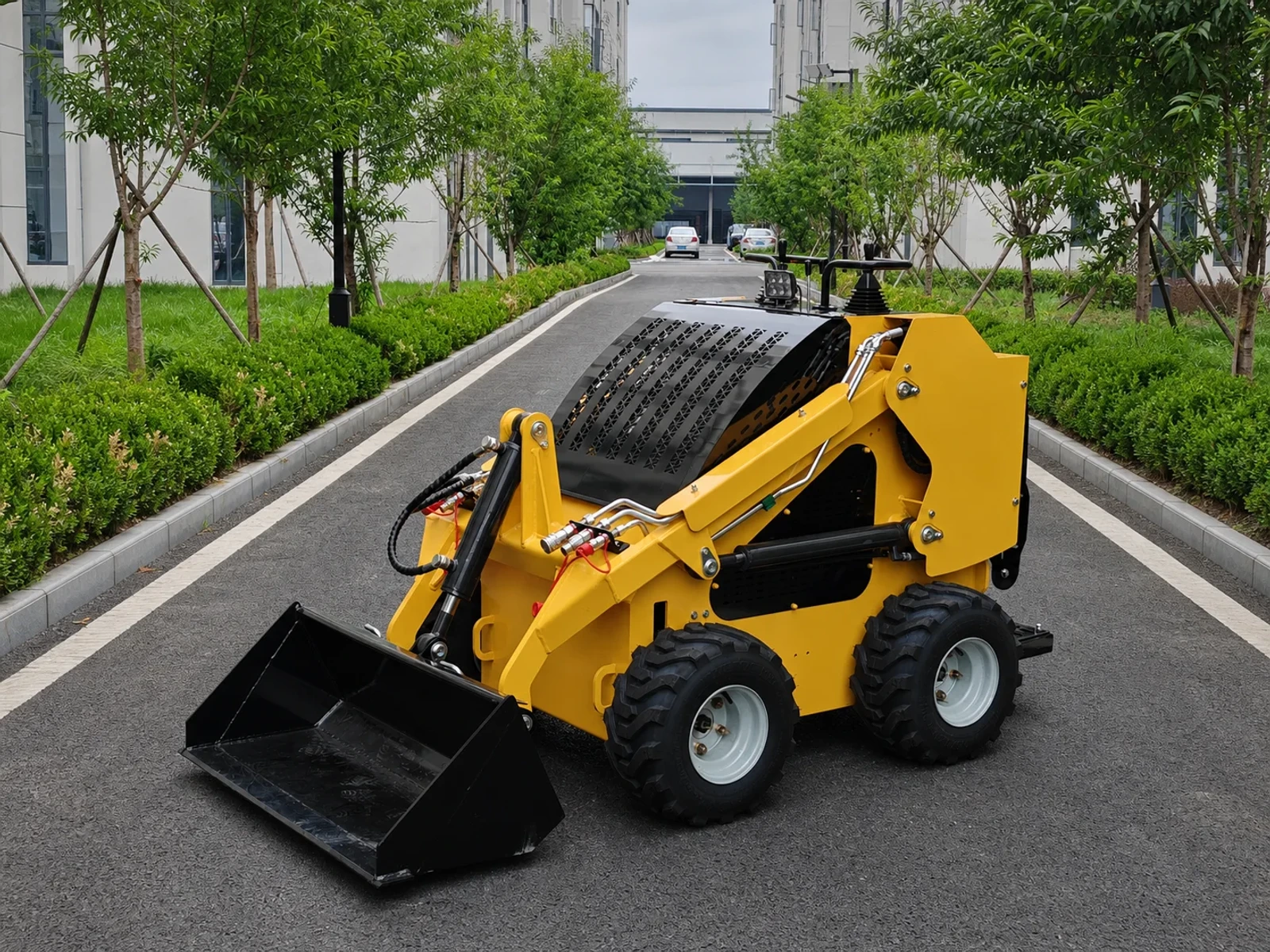
A raised stand-on position can provide a clearer view to the bucket cutting edge, attachment, and sides. Bobcat makes that visibility point for its mini track loaders. But visibility must be tested with the actual attachment raised, lowered, curled, and carrying the intended load. A grapple, trencher, forks, or tall material can create different blind areas.
Ask the operator to perform a slow demonstration: approach the pickup, engage the attachment, reverse, turn, place the load, park safely, and dismount. Note hand position, neutral return, auxiliary-hydraulic control, presence interlock, emergency stop behavior, and whether the operator can keep the load and travel path in view without leaning into an unsafe position.
Fatigue depends on vibration, walking, standing support, and cycle length
There is no honest universal statement that walking or standing is always more comfortable. A suspended platform can isolate some vibration and remove repeated walking, which matters on long travel cycles. Ground operation can avoid standing on a vibrating machine, but it adds walking and may create a lower sight line. Surface roughness, speed, track design, control effort, footwear, weather, and rest planning all change the result.
Score the normal shift rather than a five-minute demo. Count travel minutes, short stops, mount/dismount events, tool changes, and time spent stationary at the attachment. If different operators will use the loader, include stature, reach, training, and the adjustment range of hip supports or controls.
Do not use operator format as a shortcut for slope safety
A platform does not create a safe slope rating. The machine manual, attachment, load height, travel direction, surface, moisture, drop-offs, and route preparation determine the usable boundary. Vermeer’s mini-skid safety resources direct operators back to the machine manual and safe operating procedure; that is a better starting point than a forum rule.
Stop condition: if the slope, edge, surface, or load falls outside the manufacturer’s procedure—or the operator cannot keep the machine stable and the route controlled—change the route or equipment. Do not “test” the limit with a raised load.
Choose the platform together with the attachment and hydraulics
The operator must control the attachment precisely and safely. Record coupler pattern, rated operating capacity, tipping load, hydraulic flow and pressure, case drain, electrical connection, tool mass, load center, and required visibility. A tool that mounts physically may still exceed capacity or block the view.
The platform choice also affects how often the operator steps away to connect hoses, inspect the cut, move a marker, or check grade. Easy access can help short service cycles, but all connection and inspection work still requires the machine to be parked and isolated according to the manual. Continue with TerraCub's attachment compatibility owner after the operator-format decision.
Send seven facts before requesting a mini-loader quote
- Access: narrowest gate, turns, overhead limits and side clearance.
- Surface and slope: hard, soft, wet, turf, loose fill, cross-slope and edge conditions.
- Work cycle: pickup, travel distance, turns, unload point and cycles per hour.
- Operator routine: hours per shift, mount/dismount frequency and number of operators.
- Attachments: tool, mass, load center, hydraulic and electrical requirements.
- Transport: trailer payload, deck, ramps, tow vehicle and tie-down plan.
- Evidence: complete model dimensions, weight, approved modes, controls, interlocks and manual.
Use the skid steer loader category to shortlist machines, then apply the mini skid selection guide for capacity, tracks, attachments, and support.
Build a machine-specific shortlist
Send TerraCub the gate, route, surface, slope, work cycle, attachment list, and trailer limits. We can compare operator format and machine data without treating one platform as universally best.
Request a loader shortlistFAQs
Is a walk-behind mini loader the same as a stand-on loader?
Not always. Some models support an approved removable platform and both modes; others are designed around one integrated station. Confirm the exact manual.
Which format fits a narrow gate?
Measure the complete machine, platform, attachment, turns and operator clearance. Width alone cannot prove site fit.
Is a stand-on loader safer on slopes?
No. Follow the exact model's slope and load instructions and assess the route. Operator format does not override the manual.
Which format is less tiring?
It depends on walking distance, vibration, controls, surface, cycle length and mounting frequency. Test the normal work cycle.
Can I remove the platform for transport?
Only if the manufacturer permits it. Record the approved transport configuration and secure every removed component.
Sources used in this guide
Recommended Products
Wheeled Skid Steer Loader S480
Wheeled loader with 350 kg rated load, 0.1 m3 bucket, and high-tip angles for small-site loading work.
View Product →
Stand-On Track Skid Steer Loader T470
Tracked stand-on loader with 240 kg rated load, 0.12 m3 bucket, and stronger reach than entry compact models.
View Product →
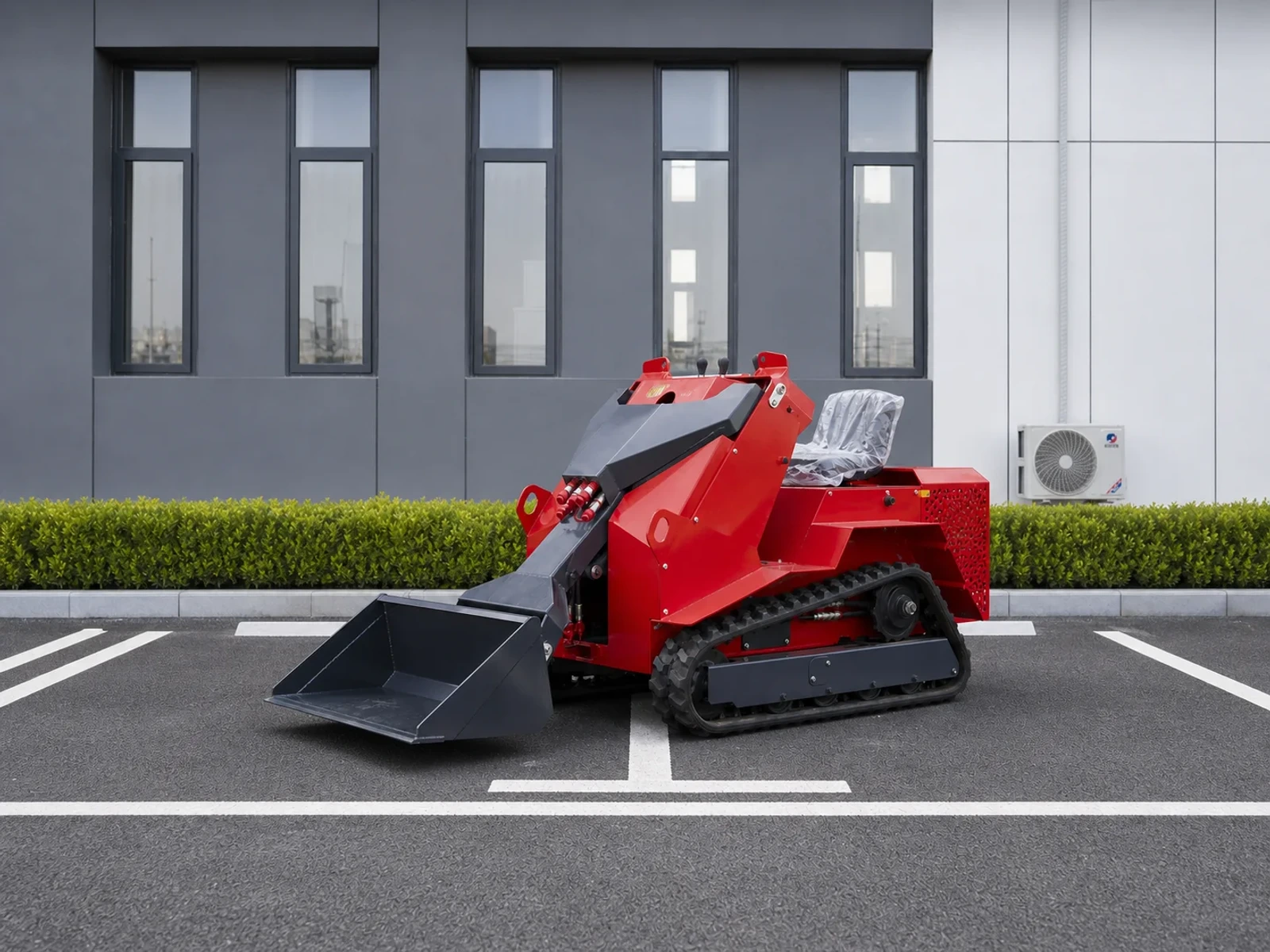 Ride-On Track Skid Steer Loader T490
Ride-on tracked format for repetitive travel, compact-site loading, and attachment work with an integrated operator platform.
View Product →
Ride-On Track Skid Steer Loader T490
Ride-on tracked format for repetitive travel, compact-site loading, and attachment work with an integrated operator platform.
View Product →